 English EN
 Germany DE
 French FR
 Portuguese PT
 Spanish ES
.webp)
.webp)
Residual Bone Detection in Boneless Chicken with Dual-Energy X-ray and AI
RaymanTech provides dual-energy X-ray inspection s...
More

Reducing food waste with X-ray inspection starts with a simple objective: reject the affected product without removing acceptable meat from the line. In meat processing, accurate detection and controlled rejection can reduce false rejects, limit good-product loss, and help processors recover more value from poultry, pork, beef and other meat products.
RaymanTech combines X-ray imaging, AI-based image recognition and dual-energy technology for residual bone detection, foreign object inspection and fat content analysis. For a broader view of equipment and applications across the production line, visit our meat X-ray inspection solutions page.
Key point: Waste reduction depends on both detection and rejection. A system must identify the target hazard while keeping false rejects and the amount of good product removed with each reject under control.
Inspection waste is not limited to contaminated or defective meat. Acceptable product can also be lost when a system produces a false reject or when the rejection method removes a larger portion than necessary. The waste impact increases when the affected material has already passed through cutting, deboning, formulation or other value-adding stages.
A practical waste-reduction strategy therefore considers the complete inspection decision: what must be detected, how accurately it can be distinguished from normal meat structures, and how the affected product is removed from the line.
Meat has variable density, shape and structure. AI-based image recognition helps the inspection system distinguish expected product variation from residual bones or foreign objects according to the configured criteria. More accurate classification can reduce unnecessary rejection of acceptable products while maintaining the required inspection standard.
Detection alone does not determine how much product is lost. Multi-lane independent inspection and a rejection method matched to the line can separate the non-conforming portion more precisely. This helps prevent acceptable meat beside the detected hazard from being removed unnecessarily.
Meat X-ray inspection can be applied during deboning, cutting and other processing stages. The system can identify residual bones and foreign objects such as metal, glass, high-density plastics and stones, including broken needles and blade fragments that may enter the product stream during processing.
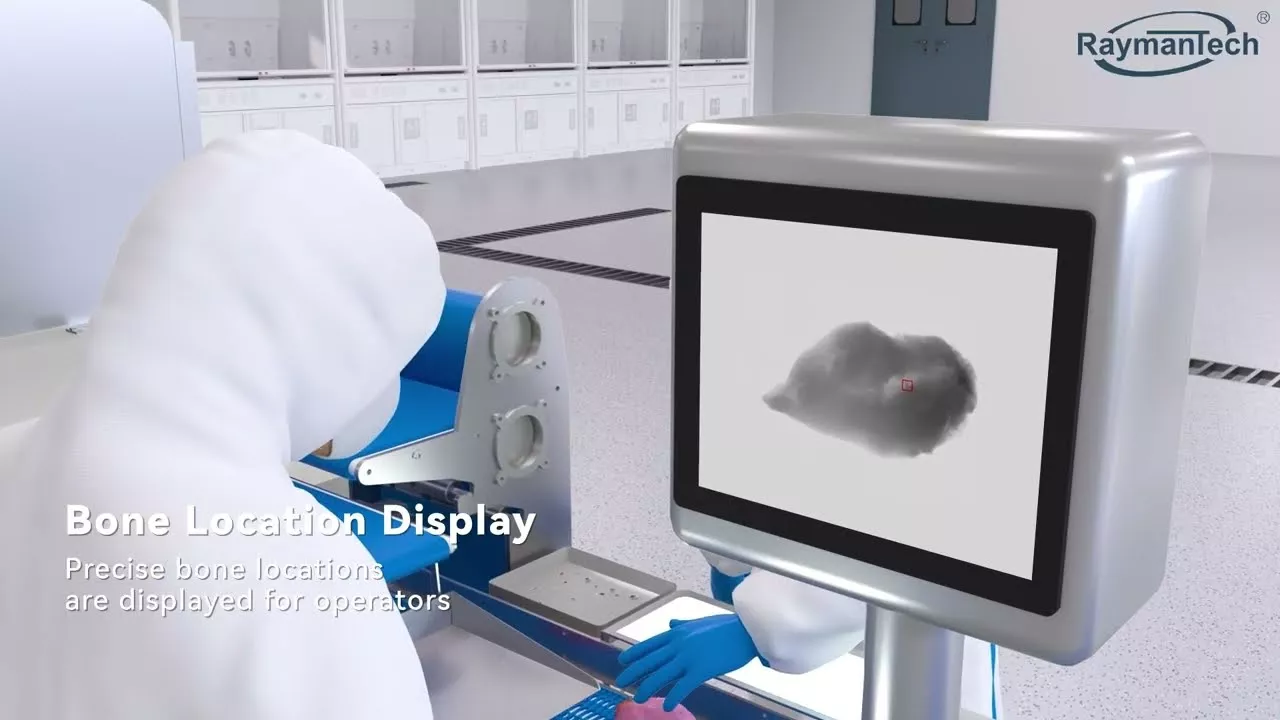
For difficult bone applications, dual-energy X-ray for residual bone detection works with AI-based recognition to identify low-density chicken bones with hollow structures. Locating the inspection point close to the relevant processing risk can reduce the amount of additional work and material affected by a non-conforming product.
Waste can also occur as lean-meat giveaway or inconsistent formulation. Dual-energy X-ray fat content analysis supports lean-to-fat ratio management, product grading and raw material utilization. Better visibility into fat content helps processors control product targets without relying only on manual sampling.
For meat processors, reducing food waste with X-ray is not a single feature. It is the combined result of accurate detection, controlled rejection, correct inspection placement and better use of raw material data.
X-ray inspection equipment can be configured for poultry, pork, beef and other meat products. The required system depends on the product form, target hazard and position in the process. Typical applications include:
Residual bone inspection after deboning or cutting.
Foreign object detection for metal, glass, stones and high-density plastics.
Detection of broken needles, blade fragments and other processing-related hazards.
Fat content analysis for lean-to-fat ratio control and product grading.
Inline quality control configured around the meat type, product form and line layout.
Explore the RaymanTech meat industry inspection applications to compare bone detection, contaminant inspection, fat analysis and related equipment options.
A useful evaluation begins with representative product and defect samples. Processors should define the meat format, target bone or foreign material, acceptable product variation, current rejection method and the amount of good product lost with each reject.
The equipment should also match the plant environment. RaymanTech offers hygienic designs for cleaning and routine maintenance, IP69K protection options for demanding high-moisture and washdown conditions, and flexible inspection and rejection configurations based on product form and line layout.
Application testing should evaluate both detection and yield protection. A useful test records which target hazards are detected, which normal product features create false rejects, and how much acceptable meat leaves the line with each rejection event.
It helps identify foreign objects and residual bones more accurately, lowers false rejects, and supports precise rejection of non-conforming product. This helps prevent acceptable meat from being discarded with the affected portion.
Depending on the product and configuration, it can detect residual bones and foreign objects such as metal, glass, high-density plastics and stones, including broken needles and blade fragments.
Dual-energy X-ray and AI-based recognition can help identify residual bones, including low-density chicken bones with hollow structures. Performance depends on the product, bone characteristics, line conditions and inspection settings.
Dual-energy X-ray can analyze fat content to support lean-to-fat ratio management, product grading and raw material utilization. Better control of formulation targets can limit unnecessary lean-meat giveaway.
Use representative product and defect samples to compare detection performance, false rejects and good-product loss under your actual processing conditions.
Review RaymanTech's meat X-ray inspection and quality control solutions to plan the right inspection point for your application.

We provide you with comprehensive foreign trade solutions to help enterprises achieve global development
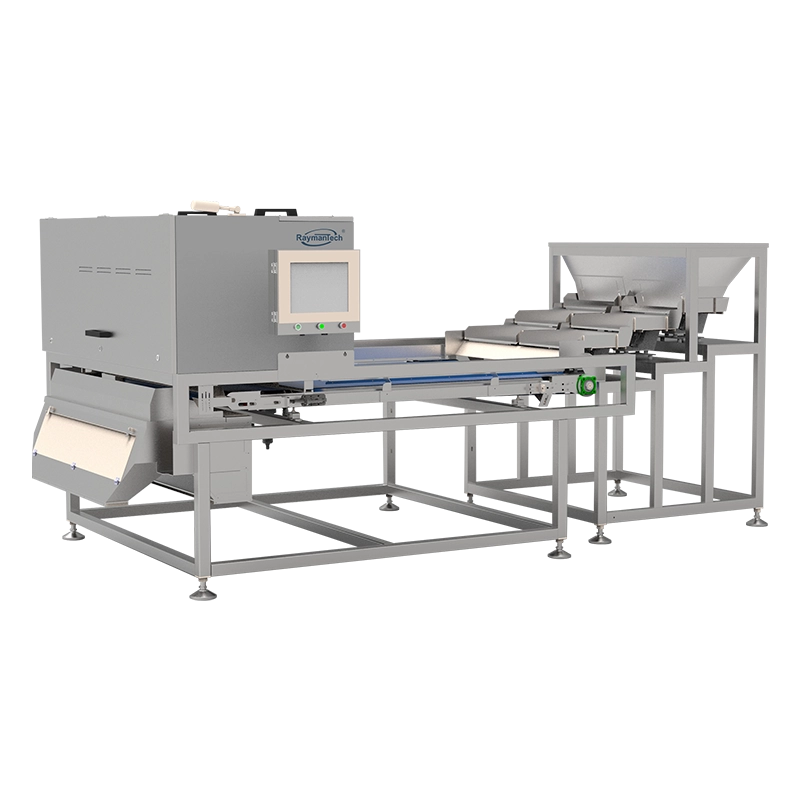
Recommedation: Small particle, flat products such ...
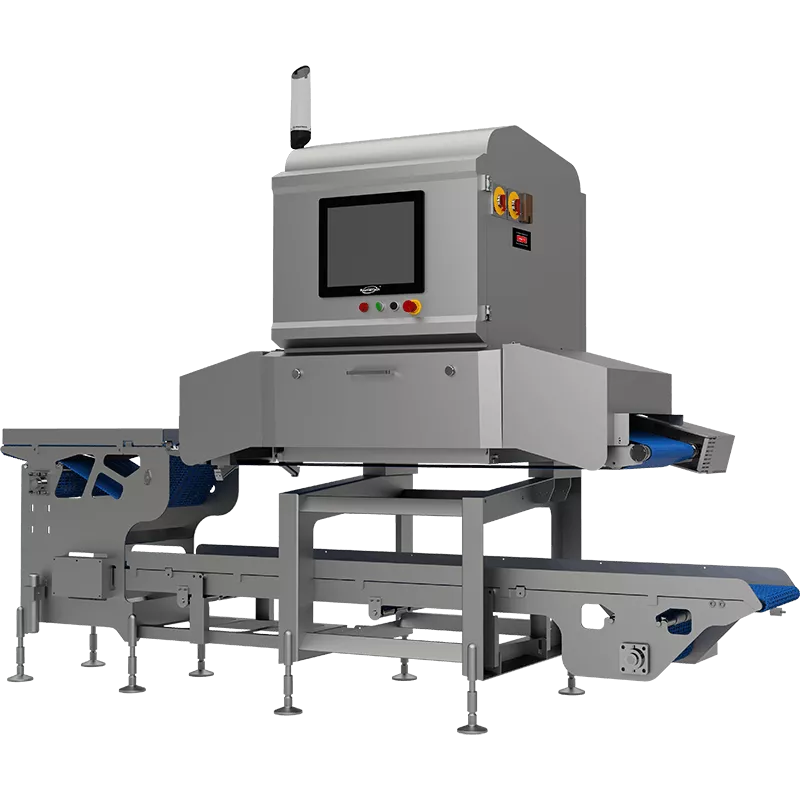
Chicken bone inspection, global poultry AI databas...
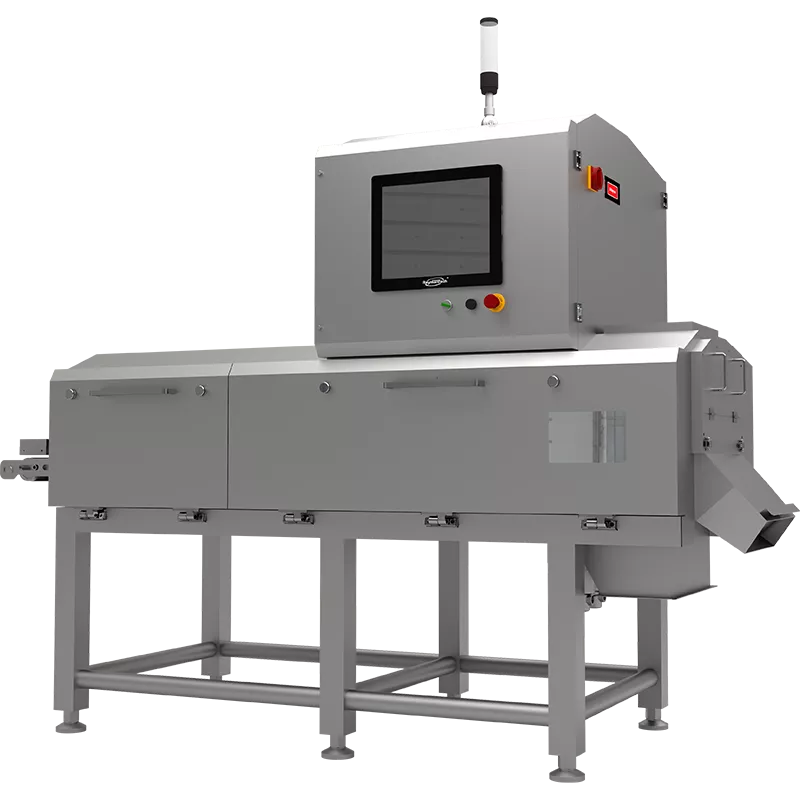
Conventional and unconventional contaminant detect...
.webp)
Designed to inspect small- and medium-sized food p...
Select the most popular foreign trade service products to meet your diverse needs
Select the most popular foreign trade service products to meet your diverse needs






User Comments
Service Experience Sharing from Real Customers
Ethan
Quality Control SupervisorWe’ve been using this X-ray system for about four months now, and it’s cut our foreign object complaints by nearly 70%. The setup was a bit finicky at first, but once we dialed in the sensitivity, it’s been rock solid. The real-time imaging is a lifesaver when you’re running multiple lines at once. Definitely worth the investment for high-volume plants.
Maya
Shift Lead / Line OperatorHonestly, I was skeptical at first—thought it’d be another machine that slows us down. But after training, it’s actually pretty straightforward. The touchscreen interface is intuitive, and the alerts are loud enough to hear over the grinders. Only reason I’m not giving 5 stars is because the conveyor belt jams sometimes if we overload it, but that’s probably on us.
Liam
HACCP CoordinatorThis X-ray unit finally let us move away from outdated metal detectors. We process bone-in products, so false rejects were a nightmare before. Now we catch dense bone fragments and even some plastics that used to slip through. The data logging feature makes audits a breeze—our last USDA inspector was impressed. Highly recommend for any serious meat plant.
Olivia
Maintenance TechnicianIt works great when it’s running, but I’ve had to replace the X-ray source module twice in the last year. The manufacturer’s support is decent, but the downtime hurts production. Also, the software could use an update—sometimes it freezes after a long shift. Good detection, just not as durable as I’d hoped for the price tag.