 English EN
 Germany DE
 French FR
 Portuguese PT
 Spanish ES
.webp)
.webp)
Revolutionizing Quality Control with Advanced Hazelnuts Sorting Machines
Advanced nut sorting machine technology combines H...
More

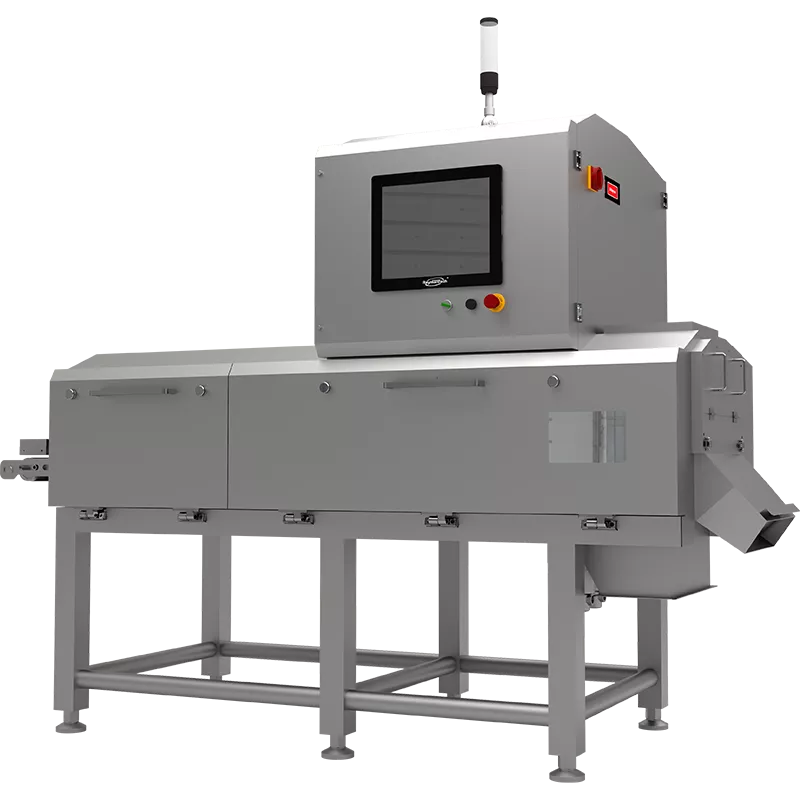
An almond sorting machine automatically grades in-shell almonds by size and specification, checks visible shell quality, and removes non-conforming product and foreign materials. RaymanTech can combine AI-powered optical sorting with X-ray inspection to address both surface defects and internal characteristics before further processing or packing.
This page focuses specifically on almond sorting. For equipment options across almonds, walnuts, pecans, hazelnuts, pistachios and other nut products, see RaymanTech's complete nut sorting solutions.
Key point: Optical sorting evaluates visible size, color, shape and shell condition. X-ray inspection adds information about internal characteristics that cannot be confirmed from the surface alone.
In-shell almonds vary in size, shell condition and internal quality. The sorting configuration should reflect the processor's product specification and the actual defects found in the incoming crop. Depending on the selected inspection technology, the system can evaluate:
Size and specification: separates almonds into defined size or product grades.
Shell integrity: identifies broken, damaged or incomplete in-shell almonds.
Color and appearance: detects immature, green-colored or otherwise non-conforming almonds when the difference is visually expressed.
Internal characteristics: supports inspection for empty shells, mold and insect damage when X-ray technology is configured for the application.
Foreign material: removes branches, stones and other unwanted materials from the product stream.
The detection result depends on almond variety, product presentation, defect expression, loading conditions and the sorting criteria established during application testing.
AI-powered optical sorting equipment uses imaging and product-specific recognition to compare each almond against defined criteria. It is suited to visible grading tasks such as size, color, shape and shell condition, as well as the removal of visually distinguishable debris.
X-ray inspection systems evaluate differences inside the shell. For in-shell almonds, this additional inspection layer can support the identification of empty shells, mold, internal insect damage and other internal non-conforming conditions that may not be visible to optical cameras.
Optical sorting and X-ray inspection can be installed individually or combined. The correct configuration depends on whether the processor needs surface grading, internal inspection, foreign material removal or all three.
Consistent automated grading: applies defined sorting criteria across the product stream to support repeatable quality control.
Reduced manual inspection: automates repetitive visual sorting and helps operators focus on line supervision and quality verification.
Better control of acceptable product: separates target defects and foreign materials according to the processor's quality standard.
Flexible inspection configuration: combines optical and X-ray technologies according to visible and internal inspection needs.
Adaptable sorting parameters: settings can be adjusted for almond varieties, product forms, defect profiles and production requirements.
A useful equipment evaluation starts with the product and defect sample, not a generic machine specification. Before selecting an almond sorting machine, define:
The almond varieties and size grades processed on the line.
The visible shell defects and color abnormalities that must be rejected.
Whether empty shells, mold or insect damage require internal inspection.
The branches, stones and other foreign materials present in the incoming product.
The production conditions, feeding method and required throughput range.
Sample testing helps determine which defects are visible, which require X-ray inspection, and how the reject criteria affect good-product carryover. RaymanTech can then configure the inspection technology and sorting parameters around the processor's actual material.
Almonds are one application within a wider nut-processing environment. Processors handling multiple products may need different recipes, feeding arrangements and inspection combinations for walnuts, pecans, hazelnuts, pistachios or other nut varieties.
Visit the RaymanTech nuts industry page to compare optical sorting and X-ray inspection options for different nut products and processing stages.
It can grade in-shell almonds by size and specification, identify broken or damaged shells and color abnormalities, and remove branches, stones and other unwanted material. With X-ray inspection, the system can also inspect internal conditions such as empty shells, mold and insect damage.
Yes. X-ray inspection can be configured to identify internal differences in in-shell almonds, including empty shells and other non-conforming internal conditions that may not be visible to an optical camera.
Optical sorting evaluates visible characteristics such as color, shape, size and shell condition. X-ray inspection evaluates internal characteristics. The two technologies can be used separately or combined according to the processor's inspection requirements.
RaymanTech sorting configurations can be adapted to almonds, walnuts, pecans, hazelnuts, pistachios and other nuts. Inspection parameters should be set for the product variety, product form, target defects and production requirements.
Send representative almond samples and a clear list of target defects to evaluate the appropriate optical sorting, X-ray inspection or combined configuration.
For broader equipment selection, explore RaymanTech's nut sorting machines and processing solutions.

We provide you with comprehensive foreign trade solutions to help enterprises achieve global development

Improve Product Purity While Reducing Raw Material...
.webp)
RaymanTech Combined Weighing and Labeling System a...
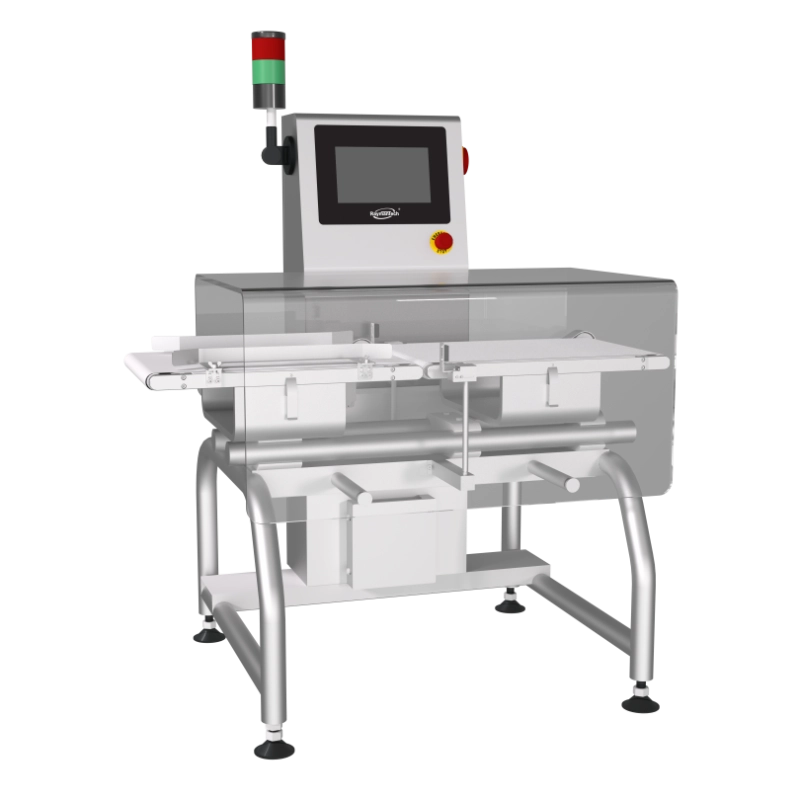
Check product weight on the production line and re...
.webp)
Glass-in-glass / Metal-in-metal inspection, small ...
Select the most popular foreign trade service products to meet your diverse needs
Select the most popular foreign trade service products to meet your diverse needs









User Comments
Service Experience Sharing from Real Customers
Liam
Small farm ownerFinally got this in-shell nut sorter set up in my barn last week. I was skeptical at first because my operation is pretty small—just pecans and some walnuts—but this thing handles the mixed sizes like a champ. No more sorting by hand for hours after a harvest. The calibration took me about 20 minutes to figure out, but once it's set, it just runs. Saved my back, honestly.
Maya
Production line supervisorWe brought this in to replace an older pneumatic sorter at our mid-size processing facility. The throughput is decent—around 1.2 tons per hour on almonds—and the false reject rate is lower than I expected. My only gripe is that the chute jams occasionally if the nuts are too dusty, but we added a quick pre-wash step and it's been smooth since. Solid upgrade for the price.
Elena
R&D engineerI tested this sorter in our lab against three other models for a client project. The optical sensors caught even hairline cracks on hazelnuts that the competition missed. The software interface is intuitive, and I appreciate that you can tweak the sorting parameters on the fly without a full recalibration. It’s not cheap, but for quality control, it’s a beast.
Oscar
Retired home gardenerBought this for my personal use after a huge black walnut harvest from my backyard trees. It works, but it's honestly way more machine than I need. The setup manual assumes you have a workshop and tools ready—I spent a whole afternoon just bolting the frame together. Once running, it sorts beautifully, but the noise level is higher than I'd like for a home setting. Great for pros, maybe overkill for hobbyists like me.