 English EN
 Germany DE
 French FR
 Portuguese PT
 Spanish ES
.webp)
.webp)
IQF Frozen Carrot Sorting Solution for Color Defect Detection, Specification Control, and Foreign Material Removal
AI optical sorting for IQF frozen carrots: color d...
More

Many beginners find walnut shell removal challenging. Experts often recommend hand peeling, using a wire brush, rolling the nuts on a hard surface, or moistening the husks to simplify the task. These approaches offer safe and effective ways for individuals to access fresh walnuts with minimal effort.
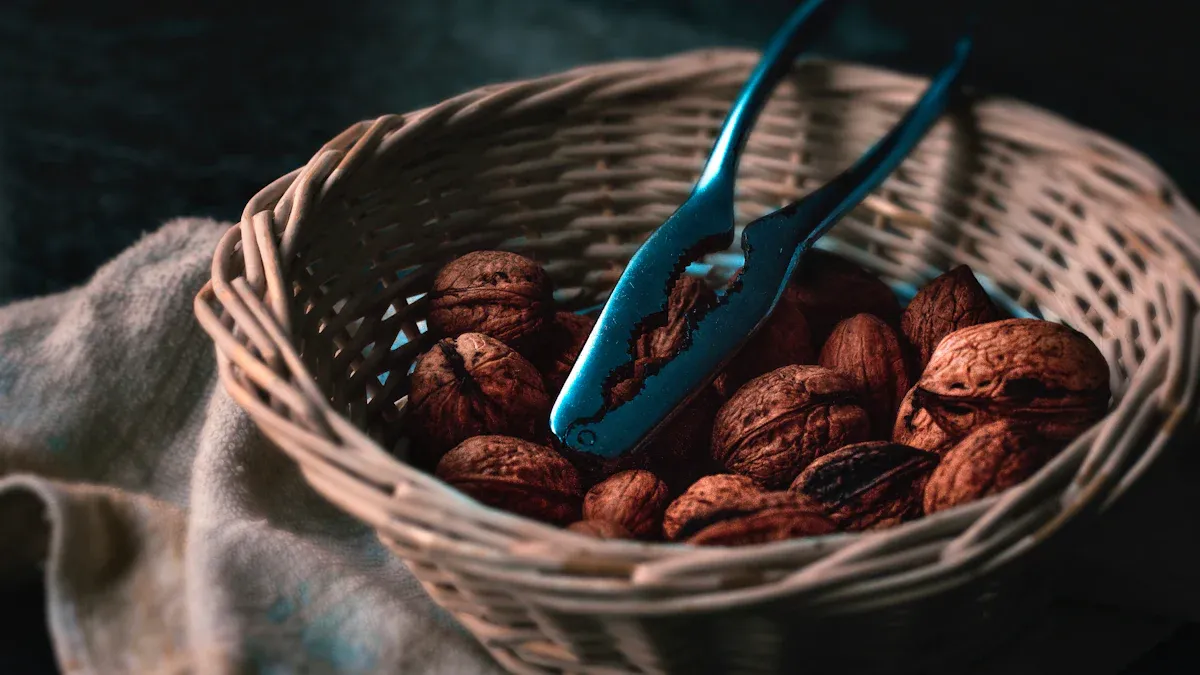
Place the walnut securely in the nutcracker’s jaws.
Hold the handles firmly and apply steady pressure until the shell cracks.
Rotate the walnut and repeat the process if the shell does not open completely.
Remove the shell fragments and extract the kernel carefully.
Tip: Cover the nutcracker with a cloth during cracking. This practice prevents shell pieces from flying, which enhances safety.
Standard handheld nutcracker
Small bowl for collecting shells
Clean cloth for safety
Pros:
The nutcracker applies pressure efficiently, making walnut shell removal quick.
This method preserves the integrity of the edible kernel.
It works especially well for hard-shelled walnuts.
Cons:
Some nutcrackers may not fit larger or irregularly shaped walnuts.
Hand fatigue can occur after cracking many nuts.
Shell fragments may scatter if not covered properly.
Select a sturdy nutcracker designed for hard nuts.
Use a cloth to cover the nutcracker and minimize mess.
Crack walnuts over a bowl to collect both shells and kernels.
Inspect the nut after cracking to ensure all shell pieces are removed.
Nutcracker walnut shell removal offers a reliable and efficient approach for beginners. This method balances speed, safety, and kernel preservation, making it a preferred choice for many home cooks.
Place a clean kitchen towel on a sturdy surface, such as a countertop or cutting board.
Arrange several walnuts in a single layer on the towel.
Fold the towel over the walnuts to cover them completely.
Use a hammer to tap each walnut gently. Apply enough force to crack the shell but avoid crushing the kernel.
Unfold the towel and remove the cracked shells. Extract the walnut kernels carefully.
Tip: Always check the towel for sharp shell fragments before handling the nuts.
Standard hammer
Clean kitchen towel
Flat, sturdy surface
Bowl for collecting shells and kernels
Pros:
This method requires only basic household tools.
The towel contains shell fragments, reducing mess and risk of injury.
It works well for cracking multiple walnuts at once.
Cons:
Excessive force can damage the walnut kernels.
The process may require practice to achieve consistent results.
Noise from hammering may disturb others nearby.
Select a thick towel to cushion the impact and protect the kernels.
Tap the hammer lightly at first, increasing force only if necessary.
Work in small batches to maintain control and prevent accidents.
Inspect each walnut after cracking to ensure complete shell removal.
Hammer and towel walnut shell removal offers a practical solution for beginners. This technique simplifies walnut shell removal using common household items and provides a safe, effective approach for accessing fresh kernels.
Place whole walnuts in a sealable plastic bag.
Store the bag in the freezer for at least 12 hours. The cold temperature makes the shells more brittle.
Remove the walnuts from the freezer and let them sit at room temperature for 5 minutes.
Use a nutcracker or a small hammer to crack the shells. The shells should break more easily after freezing.
Extract the walnut kernels and discard the shell fragments.
Tip: Allowing the walnuts to rest briefly after freezing helps prevent the kernels from becoming too hard and difficult to remove.
Sealable plastic bag
Freezer
Nutcracker or small hammer
Bowl for collecting shells and kernels
Pros:
Freezing weakens the shell, making walnut shell removal less labor-intensive.
This method reduces the risk of crushing the kernels.
It works well for both small and large batches.
Cons:
The process requires advance planning due to freezing time.
Some freezers may not reach a low enough temperature for optimal results.
Handling very cold walnuts can be uncomfortable without gloves.
Use fresh, whole walnuts for the best outcome.
Avoid over-freezing, as extremely cold shells may shatter into small, hard-to-clean pieces.
Wear gloves when handling frozen walnuts to protect your hands.
Test one walnut first to determine the ideal freezing time for your equipment.
Freezing and cracking offers a practical approach for beginners seeking an alternative walnut shell removal technique. This method combines preparation and simple tools to deliver consistent results.
Fill a large pot with water and bring it to a boil.
Add whole walnuts to the boiling water. Let them simmer for 10–15 minutes.
Remove the walnuts using a slotted spoon and place them on a clean towel.
Allow the walnuts to cool until they are safe to handle.
Use a nutcracker or a small hammer to crack the softened shells.
Extract the kernels and discard the shell fragments.
Note: Boiling softens the shells, which makes cracking easier and reduces the risk of damaging the kernels.
Large pot
Slotted spoon
Clean towel
Nutcracker or small hammer
Bowl for collecting shells and kernels
| Pros | Cons |
|---|---|
| Softens shells | Requires extra preparation |
| Reduces kernel damage | Wet shells may be slippery |
| Suitable for large batches | Longer cooling time |
Choose fresh walnuts for optimal results.
Avoid overboiling, as extended exposure to water can affect flavor.
Dry the walnuts thoroughly before cracking to prevent slipping.
Work in small batches to maintain control and consistency.
Boiling and cracking offers a gentle approach to walnut shell removal. This method suits individuals who want to minimize kernel breakage and prefer working with softened shells.
Select a pair of pliers or an adjustable wrench with a comfortable grip.
Hold the walnut firmly between the jaws, positioning it along the seam of the shell.
Squeeze the handles gently until the shell cracks. Avoid applying excessive force to prevent crushing the kernel.
Rotate the walnut and repeat the process if the shell does not open fully.
Remove the shell fragments and extract the kernel with care.
Tip: Use a towel or cloth to stabilize the walnut and protect your hands during the process.
Pliers or adjustable wrench (preferably with smooth jaws)
Clean towel or cloth
Bowl for collecting shells and kernels
| Pros | Cons |
|---|---|
| Readily available tools | Serrated jaws may damage delicate surfaces |
| Good control over pressure | Risk of crushing the walnut kernel |
| Suitable for hard shells | May damage corners of nuts or bolt heads |
Many users appreciate the control offered by pliers or an adjustable wrench during walnut shell removal. However, serrated jaws can present challenges. These serrations may damage the walnut shell or even the kernel, especially if the tool slips. For best results, select tools with smooth jaws or use a protective cloth.
Choose pliers or a wrench with smooth jaws to minimize shell and kernel damage.
Apply steady, gentle pressure rather than sudden force.
Work over a bowl to catch shell fragments and kernels.
Inspect each walnut after cracking to ensure no shell pieces remain.
This method offers a practical approach for those who prefer using common household tools for walnut shell removal. With careful technique, beginners can achieve clean results and minimize waste.
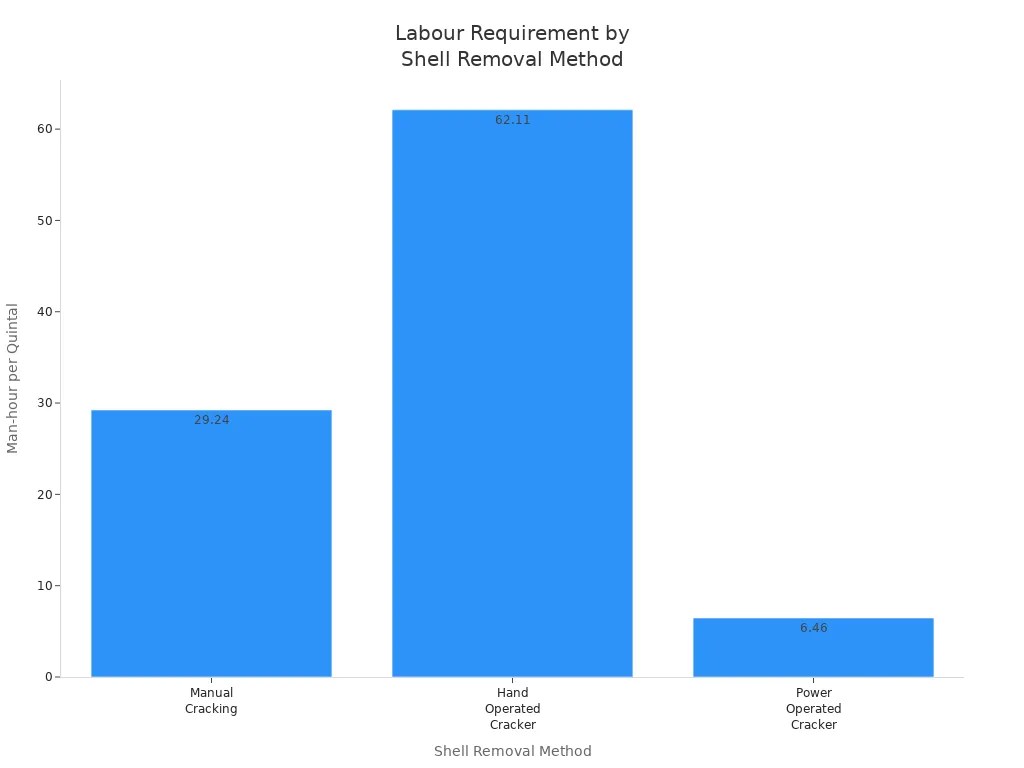
Selecting the right walnut shell removal technique depends on several factors, including efficiency, labor, and cost. The following table presents a clear comparison of common methods based on throughput capacity and labor requirements. These metrics help users understand which approach best fits their needs, whether they process small batches at home or larger quantities in a commercial setting.
| Method | Throughput Capacity (kg/hr/person) | Labor Requirement (man-hour/quintal) |
|---|---|---|
| Manual Cracking | 3.42 | 29.24 |
| Hand Operated Cracker | 1.61 | 62.11 |
| Power Operated Cracker | 15.46 | 6.46 |
Tool cost also plays a significant role in decision-making. Entry-level manual devices typically cost around $130, while industrial machines can exceed $20,000. The following table summarizes the price range for each tool type:
| Tool Type | Price Range |
|---|---|
| Entry-level manual device | $130 |
| Industrial machines | $20,000+ |
Professionals recommend that beginners start with manual or hand-operated tools. These options offer a balance between affordability and ease of use.
This side-by-side overview enables users to compare walnut shell removal methods quickly. By considering throughput, labor, and cost, individuals can select the most suitable technique for their requirements.
They can choose from five walnut shell removal techniques, each with unique benefits. Beginners often find the nutcracker method easiest. When selecting a method, they should consider juglone content, extraction process, purity, third-party testing, harvest timing, and label clarity. Trying different approaches helps identify the best fit.
The nutcracker method offers the safest approach. It minimizes risk of injury and preserves the walnut kernel.
Boiling walnuts for too long may alter their taste.
Short boiling times help maintain the original flavor.
Industrial machines suit commercial use. Home cooks achieve excellent results with manual or hand-operated tools.

We provide you with comprehensive foreign trade solutions to help enterprises achieve global development
Recommedation: Small particle, flat products such ...
Improve Product Purity While Reducing Raw Material...
.webp)
Glass-in-glass / Metal-in-metal inspection, small ...
RaymanTech Gravity Fall Metal Detector detects fer...
Select the most popular foreign trade service products to meet your diverse needs
Select the most popular foreign trade service products to meet your diverse needs







User Comments
Service Experience Sharing from Real Customers
Michael Chen
Production ManagerThis walnut shell removal machine has revolutionized our processing line. The efficiency is unmatched, and the nut integrity preservation is exceptional. A game-changer for high-volume operations.
Sarah Johnson
Quality Control SpecialistVery reliable and gentle on the kernels. Our waste rate has dropped significantly since installation. The adjustment settings allow for perfect calibration for different walnut sizes.
David Rodriguez
Plant EngineerOutstanding build quality and low maintenance. The automated shell removal system integrated seamlessly with our existing conveyor belt. Customer support was excellent during setup.
Emily Watson
Bakery OwnerAs a small artisanal bakery, we needed a compact solution. This desktop sheller is perfect. It's easy to use, cleans quickly, and provides us with fresh, perfectly shelled walnuts daily.