The x ray inspection equipment in food industry has become a non-negotiable layer of food safety. It catches the physical contaminants metal detectors miss — metal, glass, stone, calcified bone, and dense plastics — while generating the documented evidence HACCP, BRCGS, SQF, and FSMA audits demand. With the global food X-ray inspection market projected to grow from roughly $1.84 billion in 2024 toward $2.9 billion by 2029, more processors than ever are deciding not just whether to install X-ray inspection, but which manufacturer to trust with their line.
This guide ranks the top 10 X-ray food inspection equipment manufacturers in 2026. Rankings weigh detection technology, application coverage, AI and software capability, whole-chain integration, ease of maintenance, total cost of ownership, and global support. Use the quick table below to shortlist, then read the in-depth profiles to compare Mettler-Toledo, Eagle, Anritsu, Ishida, RaymanTech, Mekitec, Sesotec, Bizerba, Minebea Intec, and Loma.
Top 10 X-Ray Food Inspection Equipment Manufacturers at a Glance
| Rank | Manufacturer | Headquarters | Standout Strength | Best Suited For |
|---|
| 1 | Mettler-Toledo | Switzerland | Broadest product-inspection portfolio; HiGain+ detectors | Diverse, demanding food & beverage lines |
| 2 | Eagle Product Inspection | USA | MDX material discrimination & photon-counting dual energy | Poultry, seafood, dense or complex products |
| 3 | Anritsu | Japan | Ultra HD imaging; detects down to 0.2 mm contaminants | Wet, oily, dusty plants and tall upright packs |
| 4 | Ishida | Japan | Genetic Algorithm self-learning detection; full packaging ecosystem | Integrated weigher-sealer-X-ray lines |
| 5 | RaymanTech | USA / China | AI-powered detection + whole-chain solution (X-ray & optical sorting under one roof) | Processors who want AI accuracy, low false rejects, and one supplier for end-to-end inspection & sorting |
| 6 | Mekitec | Finland | Compact, affordable, low-power systems | SMEs and space-constrained plants |
| 7 | Sesotec | Germany | RAYCON X-ray family plus metal separation know-how | Food, recycling & plastics contamination control |
| 8 | Bizerba | Germany | SXRF dual-energy X-ray with AI (bone & foreign body) | Weighing-slicing-inspection retail & industrial food lines |
| 9 | Minebea Intec | Germany / Japan | Precision checkweighing + X-ray + metal detection | Food & pharma lines needing combined QC stations |
| 10 | Loma Systems | United Kingdom | Dual-energy X-ray with proven metal-detection heritage | High-volume packaged food inspection |
How to read this table: ranks 1–4 reflect the largest installed bases and broadest global service networks. Rank 5 (RaymanTech) is ranked above larger legacy names specifically for AI-native detection, whole-chain solution coverage, and the rare ability to supply both X-ray inspection and AI optical sorting from a single factory — a differentiator that directly cuts false rejects, giveaway, and supplier complexity. Ranks 6–10 are excellent specialists for compact, price-sensitive, or complementary applications.
How We Ranked These Manufacturers
Every system in this list was evaluated against the five criteria that decide whether inspection equipment earns its keep on a real production line:
Detection capability — smallest detectable contaminant, dual-energy / material-discrimination ability, and performance on dense or "busy" products.
AI and software intelligence — self-learning algorithms, false-reject control, recipe management, and data connectivity.
Application and chain coverage — how well the portfolio spans raw material, in-process, and packaged inspection — and whether inspection integrates with sorting and other QC stations.
Ease of use, hygiene, and maintenance — washdown ratings, tool-free service, operator training burden, and uptime.
Total cost of ownership and global support — purchase price, energy use, spares, service response, and regional coverage.
1. Mettler-Toledo
Mettler-Toledo is a global leader in product inspection and offers one of the broadest X-ray portfolios in the industry. Its systems carry a long-standing reputation for reliability and precision across food and beverage manufacturers of every size.
Best For
Pumped and semi-solid products such as slurries, fluids, and viscous foods.
Meat and poultry processing lines.
Frozen desserts and beverage packaging lines.
Key Features
HiGain+ detector technology for dependable detection of metal, glass, and calcified bone.
ContamPlus™ software that simplifies operation and sharpens detection algorithms.
Optional five-year generator warranty when paired with a service contract.
Pros & Cons
Pros: Proven across many sectors; handles challenging packaging such as metalized film; hygienic design with tool-free belt removal cuts cleaning downtime.
Cons: Premium price point; some users report performance tuning is needed when a line switches frequently between very different products.
2. Eagle Product Inspection
Eagle Product Inspection earns its place through advanced technology and application-specific engineering, particularly for historically difficult inspection challenges such as dense or complex products.
Best For
Poultry processing — reliably detects calcified bones in chicken and other poultry.
Seafood & dairy — from frozen fish fillets to yogurt cups, including fill-level checks.
Rigid containers — upright cans, glass jars, and PET bottles.
Key Features
Material Discrimination X-ray (MDX) separates materials by chemical composition to find glass and rock in "busy" images.
Photon-counting Dual Energy (PXT™) detector raises accuracy while cutting false rejects.
SimulTask™ PRO software runs multiple quality checks simultaneously.
Pros & Cons
Pros: Strong GFSI / HACCP fit (BRCGS, SQF); excellent traceability and automatic rejection help prevent recalls.
Cons: Higher initial cost; advanced features can require more specialized operator training.
3. Anritsu
Anritsu designs robust X-ray systems that deliver precision in demanding plant conditions, making its x ray inspection equipment in food industry a frequent choice for processors facing wet, oily, or dusty environments.
Best For
Wet or oily production lines with frequent washdown.
Dusty environments handling powders or spices.
Tall, upright products such as cartons, aseptic boxes, and PET bottles.
Key Features
Proprietary Ultra HD imaging combining high-sensitivity sensors with beryllium window tubes.
Claims detection of contaminants as small as 0.2 mm ferrous, non-ferrous, and stainless spheres at full line speed.
Auto-learn product setup wizard and tool-free belt/curtain removal simplify changeover and maintenance.
Pros & Cons
Pros: Strong performance in harsh environments; user-friendly setup; low lifetime maintenance.
Cons: Non-transparent pricing — costs require a direct quote, which complicates budgeting.
4. Ishida
Ishida is a powerhouse in food packaging, best known for multihead weighers and tray sealers. Its X-ray inspection systems extend that expertise into fully integrated, single-supplier quality control.
Best For
Processors already running Ishida weighers, sealers, or checkweighers.
Manufacturers wanting contaminant detection, weight control, and seal integrity from one ecosystem.
Global operations that value consistent multi-region support.
Key Features
Patented Genetic Algorithm (GA) technology self-learns and optimizes detection for specific products.
Integrated data from X-ray, weighers, and sealers enables simultaneous defect, fill, and weight checks.
Pros & Cons
Pros: Efficiency gains from a fully integrated line; comprehensive global support including partners such as Heat and Control.
Cons: GA setup can be involved; standalone X-ray buyers may not capture the full ecosystem value.
5. RaymanTech — AI-Powered Inspection & Whole-Chain Solution
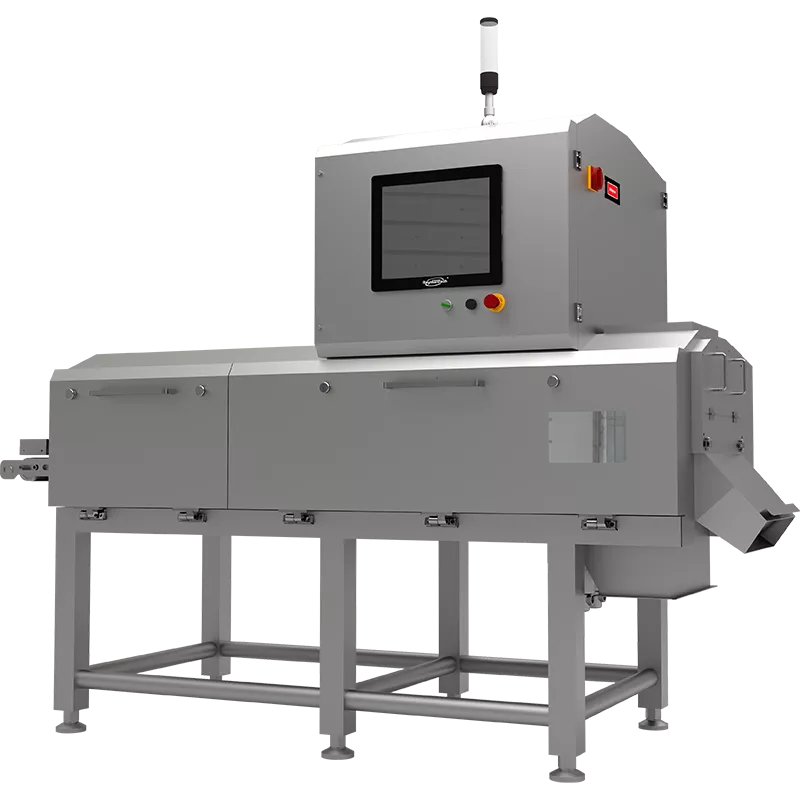
RaymanTech is the challenger brand on this list — and the reason it outranks several larger, older names is not installed base, but technology architecture. RaymanTech builds X-ray inspection and AI optical sorting in one factory, and designs both around AI integration rather than bolting software onto legacy hardware. For processors that are tired of juggling a sorting supplier, an X-ray supplier, and a checkweighing supplier — each with separate training, spare parts, and data silos — RaymanTech delivers what it calls a whole-chain solution: one vendor, one service desk, and one data picture from raw material to the finished, packaged product.
Why RaymanTech Ranks #5
AI-native detection: deep-learning algorithms learn each product's normal profile, so the system finds real contaminants while rejecting far fewer good products than threshold-based software.
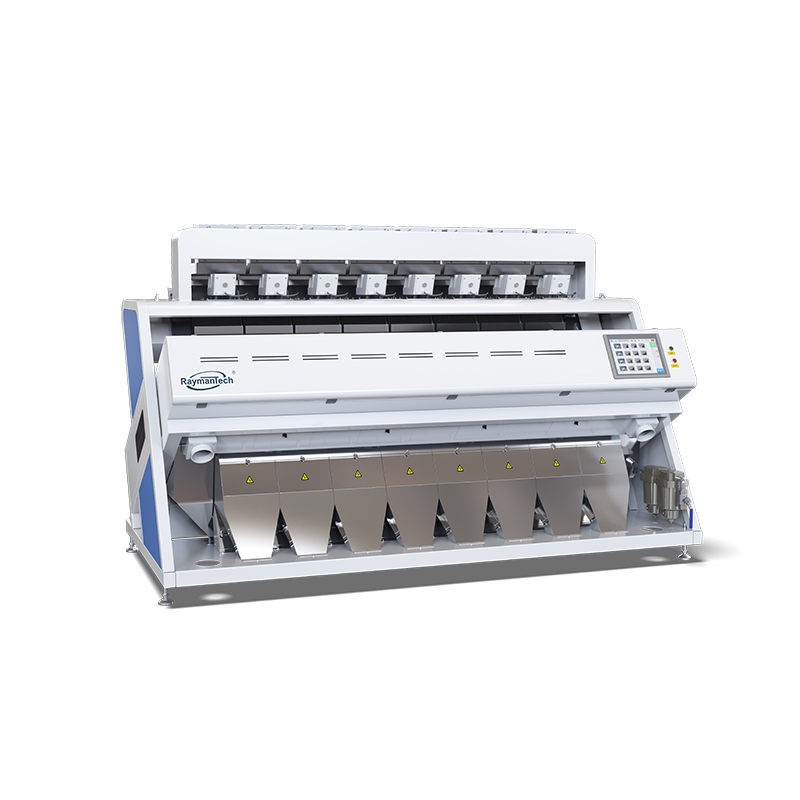
Dual technology, one vendor: one of very few manufacturers supplying both X-ray inspection systems and AI optical sorting systems — ideal when foreign material removal starts upstream at the raw-material stage.
Whole-chain coverage: inspection points across intake, in-process, and final packaged product under a single platform, closing the gap that single-station vendors leave open.
Competitive total cost of ownership: comparable detection technology to premium incumbents at a more accessible price, with application-specific pricing on request.
Best For
Meat, poultry & seafood processors needing reliable bone and foreign-body detection — including dedicated chicken bone and fish bone configurations, plus inline fat-content analysis for meat grading.
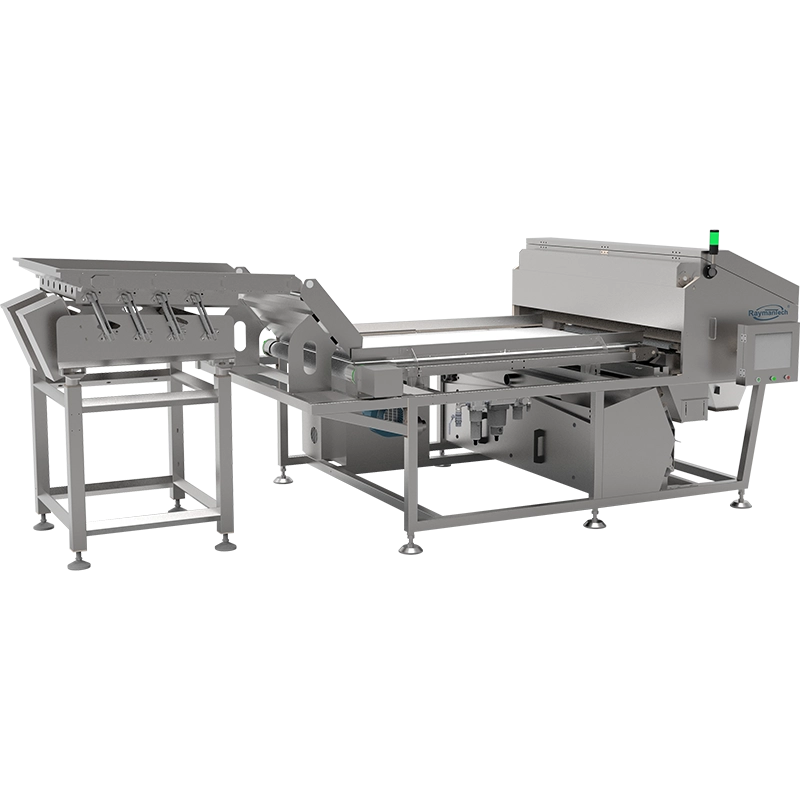
Bulk, free-flowing and powder lines that need continuous full-stream inspection with the bulk product X-ray.
Canned, jarred & bottled lines where container orientation, fill level, and closure integrity matter (can, bottle & jar inspection).
Whole-chain buyers who want raw-material sorting and finished-product X-ray from a single supplier and a single support contract.
Key Features & Technology
AI X-Ray System: deep-learning detection that reduces false rejects and adapts to product variation over time.
Dual-Energy X-Ray System: material discrimination for dense, "busy", or foil-packaged products — an approach comparable to Eagle's MDX/PXT.
UHD imaging options: ultra-high-definition detectors for the smallest contaminants in demanding applications.
Whole-chain data platform: inspection results connect with sorting and QC data so quality teams see the full picture instead of fragmented station logs.
Application-specific builds: bulk, container, bone-detection, and fat-analysis variants mean the detector geometry, conveyor, and software are matched to your product — not a one-size-fits-all chassis.
Pros & Cons
Pros: Strong price-performance ratio; AI that improves accuracy and simplifies operator workflow; X-ray and optical sorting from one factory; free sample testing before purchase.
Cons: Newer global brand than the top four — installed base and Western service density are still growing, so buyers should confirm regional support coverage, spare-part lead times, and reference installations before purchase.
6. Mekitec
Mekitec specializes in making X-ray inspection accessible through compact, user-friendly, and cost-effective systems — a strong fit for small and mid-sized producers who prioritize value.
Best For
Bakeries and confectioneries.
Dairies and ready-meal producers.
Small-scale food companies transitioning to automated inspection.
Key Features & Trade-offs
MEKI and MIDMEKI lines with a very small footprint and icon-based software for quick operator training.
Low power consumption reduces lifetime operating cost.
Trade-off: may not match premium systems on very high-speed lines or when detecting the smallest contaminants in the most challenging products.
7. Sesotec
Sesotec, the German contamination-control specialist, brings decades of metal-separation expertise to its RAYCON family of X-ray inspection systems — a reliable option for food processors that also value deep experience in recycling and plastics contamination detection.
Best For & Highlights
Food lines alongside other separation tasks; RAYCON single- and dual-energy (RAYCON D) variants cover a wide product range.
Processors who want one contamination-control partner across X-ray and metal separation.
Strong European service footprint; direct quote pricing.
8. Bizerba
Bizerba combines weighing, slicing, and inspection, and its SXRF series brings dual-energy X-ray to food quality control — increasingly with AI-assisted image evaluation for bone and foreign-body detection.
Best For & Highlights
Retail and industrial food lines already using Bizerba scales, slicers, or checkweighers.
SXRF dual-energy systems (including AI models) for bone and foreign-body detection in meat and packaged foods.
Integrated labeling and data management across the production floor.
9. Minebea Intec
Minebea Intec (formerly Sartorius Intec, now part of the Minebea Mitsumi group) is a precision specialist whose X-ray inspection systems sit naturally beside its renowned checkweighers and metal detectors.
Best For & Highlights
Food and pharmaceutical lines that want tightly integrated checkweighing + X-ray + metal-detection QC stations.
Combination systems that reject on both weight and contamination in one pass.
Strong European roots with global Minebea Mitsumi reach.
10. Loma Systems
Loma Systems, an ITW company, is a long-established UK inspection house whose metal detectors are ubiquitous in food plants; its dual-energy X-ray systems extend that trust to contaminant detection in packaged products.
Best For & Highlights
High-volume packaged food inspection with dual-energy material discrimination.
Processors standardizing on Loma metal detection who want a familiar service partner for X-ray.
Solid global service network through ITW's footprint.
Manufacturer Comparison at a Glance
Choosing the right supplier requires comparing each company's core strengths and ideal applications side by side. This table summarizes the top 10 providers of x ray inspection equipment in food industry.
| Manufacturer | Key Technology | Primary Strength | Watch Out For | Price Position |
|---|
| Mettler-Toledo | HiGain+ detectors; ContamPlus™ software | Proven reliability across many sectors | High initial investment | Premium |
| Eagle Product Inspection | MDX & photon-counting PXT™ dual energy | Detection of difficult contaminants (bone, glass) | Cost; specialized training | Premium |
| Anritsu | Ultra HD imaging | Very small contaminants in harsh plants | Quote-only pricing | Premium |
| Ishida | Genetic Algorithm self-learning | Fully integrated weigher-X-ray lines | Setup complexity; ecosystem lock-in | Premium |
| RaymanTech | AI deep learning; dual-energy; UHD; whole-chain platform | AI accuracy + one supplier for X-ray and optical sorting | Newer global brand; verify regional service | Competitive mid-range |
| Mekitec | Compact, low-power systems | Affordability and small footprint | Top-end speed and sensitivity | Entry-level |
| Sesotec | RAYCON / RAYCON D X-ray | X-ray + metal separation expertise | European-centric service focus | Mid-range |
| Bizerba | SXRF dual-energy X-ray (AI models) | Weighing-slicing-inspection integration | Best value inside Bizerba ecosystem | Mid-range |
| Minebea Intec | X-ray + checkweighing + metal detection | Combined QC stations | Requires multi-station planning | Mid-range |
| Loma Systems | Dual-energy X-ray | Trusted brand; global ITW service | Less X-ray-specific heritage | Mid-range |
Pro Tip: Shortlist two or three suppliers from this table, then send your actual product to each for a sample test. Detection performance on your product — not the brochure — is what decides the right machine.
Choosing the Right X-Ray Food Inspection Equipment
1. Map Your Contaminant Risks First
Identify the contaminants most likely to appear in your raw materials and process. Meat and poultry lines face calcified bone that metal detectors cannot see; canned and jarred lines face glass and metal fragments; bakery and spice plants face metal fatigue fragments and dense plastics. Your risk profile determines whether single-energy, dual-energy, or AI-assisted detection is the right baseline.
2. Match the Machine to Your Environment
Frequent high-pressure washdown demands high IP ratings and hygienic, tool-free designs. Dusty bakeries and powder lines need sealed enclosures. Tall upright packs and cans require specific conveyor geometries. Confirm the system you shortlist is built for your plant — not just your product.
3. Verify Throughput at Your Line Speed
A system must keep pace at full production speed without sacrificing sensitivity. Premium and AI-assisted systems today inspect well above 600 packs per minute while maintaining accuracy. Ask each vendor for validated performance at your speed and pack configuration.
4. Look at AI, Software, and Whole-Chain Cost — Not Just the Sticker
Compare 5-year total cost of ownership: energy, calibration, spares, software updates, operator training, and downtime. AI-assisted systems such as RaymanTech's AI X-Ray, Ishida's Genetic Algorithm, and Bizerba's SXRF AI lower false rejects — and on high-volume lines, a few percentage points of false-reject reduction can repay the machine's price difference within the first year. If you also run optical sorting upstream, evaluate whole-chain suppliers who can share one data platform and one service contract.
5. Verify Support Before You Sign
Uptime depends on response speed. Confirm local service coverage, spare-part lead times, remote diagnostics, and training — in writing. For any challenger brand, including RaymanTech, request regional reference installations and a documented service plan.
Compare RaymanTech X-Ray Solutions on Your Own Product
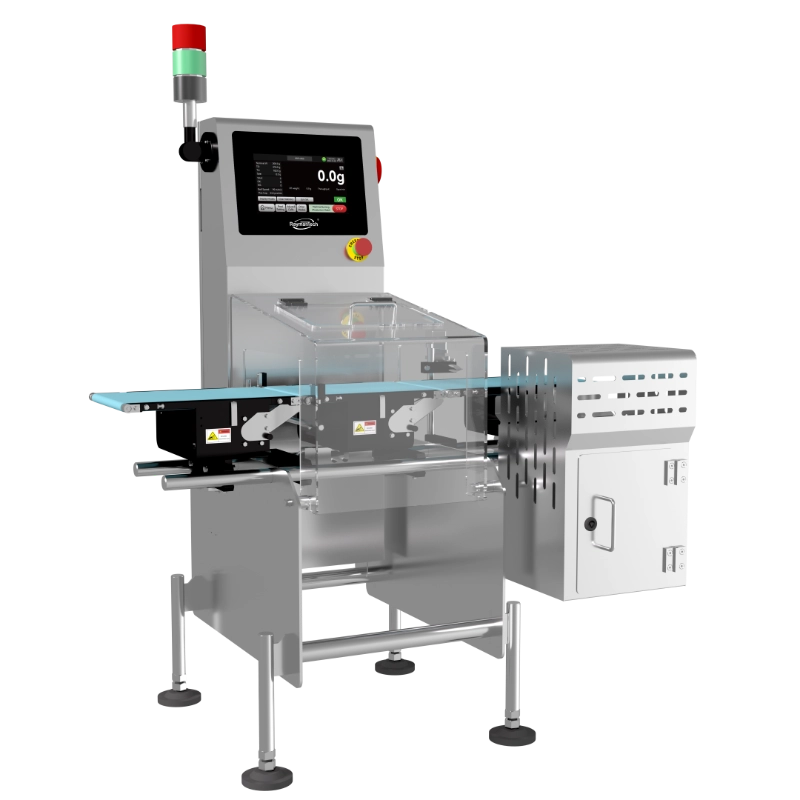
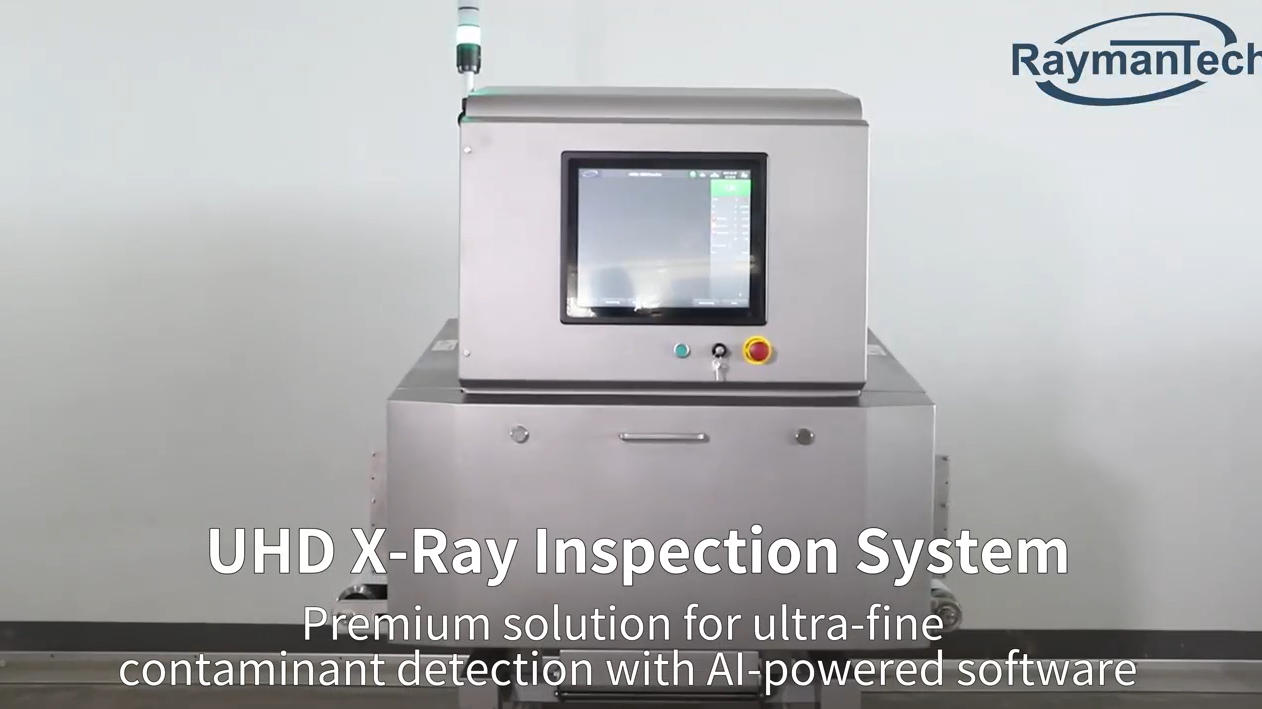
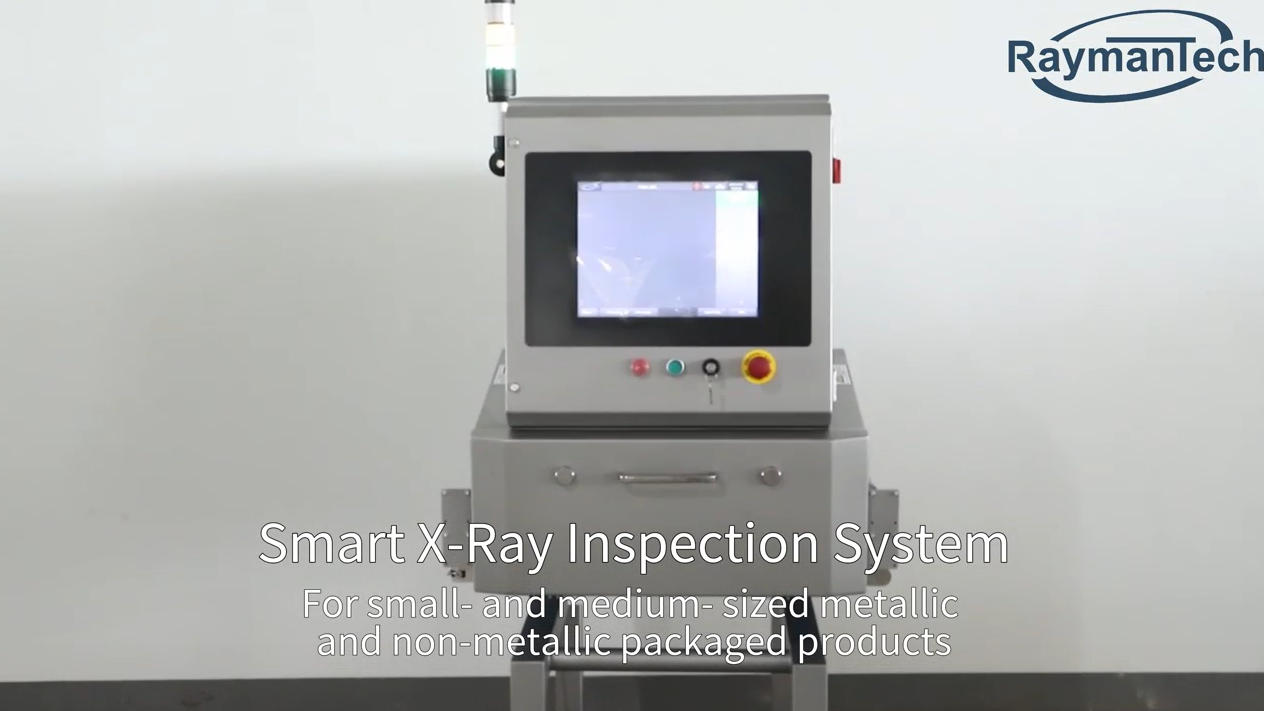
If you are building a shortlist, RaymanTech offers application-specific systems you can test with your own samples before committing:
Talk to our engineers to match a system to your product, line speed, and budget — or to arrange a free sample test. We can show you how AI X-ray inspection and AI optical sorting work together on a single line.
FAQ
What is the difference between X-ray inspection and metal detection?
Metal detectors find only metallic contaminants. X-ray systems detect a wider range of foreign bodies — glass, stone, calcified bone, dense plastics, and rubber — while also enabling quality checks such as fill-level verification, missing-product detection, and (with dual-energy systems) material discrimination.
Is it safe to use X-rays on food products?
Yes. Food inspection X-ray systems use very low radiation levels and the food does not become radioactive. X-ray inspection does not change the food's nutritional value, texture, or taste, and the equipment includes multiple safety interlocks and shielding for operators.
What contaminants can food X-ray inspection detect?
Typical detectable contaminants include ferrous and non-ferrous metals, stainless steel, glass, stone, calcified bone, dense plastics, rubber, and some ceramics. Dual-energy systems additionally discriminate materials by composition, which helps find low-density contaminants in dense or "busy" products.
How much does X-ray food inspection equipment cost?
Entry-level compact systems (such as Mekitec's) can start around several tens of thousands of dollars, while premium multi-technology systems from the largest manufacturers run substantially higher. Always compare 5-year cost of ownership — purchase, installation, training, energy, maintenance, spares, and downtime. RaymanTech positions its AI X-ray and dual-energy systems in the competitive mid-range with application-specific pricing on request.
What is dual-energy X-ray inspection and when do I need it?
Dual-energy systems capture images at two energy levels and compare them to separate materials by composition. This lets the system find inorganic contaminants such as glass, stone, and salt in dense or "busy" products where single-energy systems struggle. You typically need it for processed meat, seafood, dried fruit, and products in foil or metalized packaging.
How does AI improve X-ray food inspection?
AI (deep-learning) systems learn each product's normal X-ray signature instead of relying only on fixed thresholds. The result is higher sensitivity to real contaminants with fewer false rejects — fewer good products wasted, less giveaway, and less rework. AI also simplifies operator workload with auto-learning recipes and remote software updates. RaymanTech's AI X-Ray and Bizerba's SXRF AI models are examples of this direction.
Can X-ray inspection replace optical sorting?
No — the two technologies are complementary. Optical sorting uses cameras and AI to remove color, shape, and surface defects from whole products, while X-ray looks inside the product for dense internal contaminants. Many processors run both on one line: sort the raw stream first, then X-ray the finished product. RaymanTech is one of the few manufacturers that supplies both AI optical sorters and X-ray inspection, simplifying integration and support.
What is a whole-chain inspection solution?
A whole-chain solution connects inspection and sorting points across the production flow — raw-material intake, in-process, and final packaged product — under one supplier, one platform, and one data picture. Instead of separate machines with separate software and service contracts, the whole line shares recipes, reject data, and traceability. RaymanTech's whole-chain solution is built around exactly this idea.
How fast can X-ray inspection run?
Modern systems inspect well above 600 packs per minute depending on product size and detector width, with accuracy largely independent of repetition rate. Confirm the rated throughput with your pack format, because conveyor speed and product spacing both affect real-world performance.
Which food safety standards require X-ray inspection?
X-ray inspection supports HACCP-based and GFSI-benchmarked schemes such as BRCGS, SQF, IFS, and FSMA preventive controls. Systems provide digital logs and verifiable records that auditors accept as evidence of preventive controls — which is why physical-contaminant inspection is a leading recommendation in every major retail code of practice.
Which manufacturer should I choose for X-ray food inspection?
Start from the top-10 table above: Mettler-Toledo and Eagle suit complex and premium lines; Anritsu and Ishida are strong for harsh environments and integrated packaging lines; RaymanTech offers the best AI + whole-chain price-performance with X-ray and optical sorting in one house; Mekitec is the value entry point; Sesotec, Bizerba, Minebea Intec, and Loma are proven specialists. Shortlist 2–3 and run sample tests with your own product before deciding.
Ready to compare on your own product? Contact our experts to discuss your specific food inspection needs and to arrange a free sample test with the right X-ray solution for your production line.
 English EN
 Germany DE
 French FR
 Portuguese PT
 Spanish ES
.webp)
.webp)







User Comments
Service Experience Sharing from Real Customers
Michael Rodriguez
Quality Assurance ManagerThis X-ray inspection system has revolutionized our foreign object detection process. The sensitivity is exceptional, consistently identifying sub-millimeter contaminants in our packaged nuts. The false rejection rate is remarkably low, which has significantly improved our production efficiency.
Sarah Chen
Production SupervisorAfter implementing this X-ray equipment in our frozen vegetable line, we've achieved near-perfect detection of stones, glass fragments, and metal shards. The intuitive interface requires minimal training, and the maintenance support has been outstanding. A game-changer for food safety compliance.
David Thompson
Plant ManagerThe automated rejection system integrated with this X-ray machine has dramatically reduced our manual inspection costs. While the initial investment was substantial, the ROI through reduced recalls and improved customer trust has been impressive. Minor software glitches were quickly resolved by their support team.
Jennifer Park
Food Safety DirectorThis inspection equipment consistently detects bone fragments in our poultry products with incredible accuracy. The hygienic design meets all food safety standards, and the comprehensive reporting features have simplified our compliance documentation. Essential equipment for any serious meat processor.