
 English EN
 Germany DE
 French FR
 Portuguese PT
 Spanish ES
Coffee Bean Optical Sorting: Advanced Solutions for Defect Removal
Whether you are processing raw green beans or packaging the final roasted product, advanced coffee bean optical sorting technology ensures that purity and quality are never compromised.
At RaymanTech, we specialize in intelligent, end-to-end inspection solutions that empower processors to achieve the highest grades of coffee. In this guide, we'll explore how a Coffee Beans Color Sorting Machine works, the specific defects it removes at every stage, and how to choose the right system for your production line.
Why Optical Sorting is Non-Negotiable for Modern Coffee Processing
Manual sorting is labor-intensive, inconsistent, and increasingly expensive. In contrast, automated optical sorting systems offer high-speed precision that the human eye simply cannot match. By utilizing ultra-high-definition cameras and AI deep learning algorithms, these machines analyze every single bean for:
● Color: Detecting subtle discoloration (black, sour/foxy, or faded beans).
● Shape: Identifying broken, chipped, or deformed beans.
● Foreign Material: Removing stones, glass, plastic, and sticks that match the bean's color but differ in texture or density.
Implementing a robust coffee color sorter not only protects your brand reputation but also significantly increases your throughput and ROI by minimizing good product loss.
Comprehensive Defect Removal: From Green Bean to Instant Coffee
Different stages of coffee processing present unique challenges. Based on industry standards and RaymanTech's advanced capabilities, here is a breakdown of what a premium Coffee Beans Color Sorting Machine (often paired with Bulk X-ray technology) can detect and remove at each production phase.
1. Green Coffee Beans
The foundation of quality. Sorting here prevents defective beans from entering the roaster.
● Target Material: Arabica, Robusta, and Mixed Coffee Beans.
● Optical Sorting Detection:
○ Discoloration: Removes black beans, sour beans, and faded beans that affect flavor.
○ Physical Defects: Eliminates insect-damaged beans, broken beans, and shells.
○ Foreign Matter: Ejects stones, sticks, and other field debris.
● Bulk X-ray Detection: Crucial for spotting stones, metal, and glass hidden among the beans, as well as low-density contaminants like glue chunks.
2. Roasted Coffee Beans
Ensuring consistent roast levels and preventing grinder damage.
● Target Material: Whole Roasted Beans (Light, Medium, Dark Roasts).
● Optical Sorting Detection:
○ Roast Consistency: Separates beans that are under-roasted (quakers) or burnt, ensuring a uniform color profile.
○ Damage Control: Removes broken or chipped beans that ruin the visual appeal.
● Bulk X-ray Detection:
○ Quality Control: Detects "empty" coffee beans (shells) and burnt beans with internal voids.
○ Safety: Removes ceramic, glass, and metal fragments that could damage consumer grinders.
3. Ground Coffee
Purity is paramount before packaging.
● Target Material: Pre-ground Coffee and Single-Serve Pods.
● Optical Sorting Detection:
○ Foreign Objects: Removes gravel and discolored grounds that impact taste, aroma, and appearance.
○ Capsule Integrity: For Single-Serve Pods (like K-Cups), optical systems ensure the coffee inside is pure and the fill level is consistent.
● Bulk X-ray Detection: Essential for identifying minute metal or stone fragments and low-density contaminants like glue chunks hidden in the powder.
4. Instant Coffee
Maintaining hygiene and solubility.
● Target Material: Freeze-Dried and Spray-Dried Coffee.
● Optical Sorting Detection: Ensures cleanliness by removing defective particles that could impact rehydration and flavor.
● Bulk X-ray Detection: Detects conventional contaminants (metal, ceramics, glass) that may have entered during the drying process.
● Packaged X-ray Detection: Detects foreign contaminants and seal defects in instant coffee powder, from small sachets to large folding cartons.
5. Flavored Coffee
Consistency in specialty products.
● Target Material: Flavored Coffee Beans and Grounds.
● Optical Sorting Detection: Removes damaged beans to ensure uniformity in the finished premium product.
● Bulk X-ray Detection: Ensures no foreign particles (like flavoring agent clumps or additives) cause contamination.
● Packaged X-ray Detection: For packaged flavored coffee, the system detects foreign contaminants and checks seal integrity.
Choosing the Right Optical Sorting Machine: Chute vs. Belt Sorters
When selecting a coffee sorting machine, the method of transport is critical. RaymanTech offers two primary configurations to suit different coffee products.
Chute Color Sorter (Best for Green Beans)
The Multifunctional Chute Color Sorter is designed for high-capacity processing. It uses gravity to slide beans down a chute past the inspection cameras.
● Ideal For: Raw green beans (Arabica, Robusta) and cured beans.
● RaymanTech Advantage: Features high-resolution sensors to detect subtle color differences (like immature green beans) and shape deformities. It is optimized for "free-flowing" granular materials and can handle massive throughputs found in export mills.
Belt Optical Sorter (Best for Roasted & Fragile Beans)
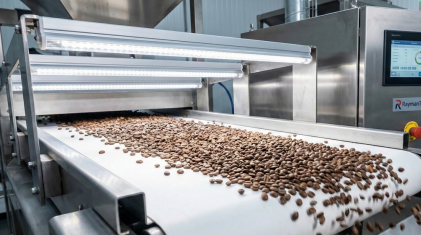
The AI Medium-Speed Belt Optical Sorter transports beans horizontally on a conveyor belt. This method is gentler and provides a more stable image for the cameras.
● Ideal For: Roasted coffee beans, brittle freeze-dried coffee, and fragile specialty beans.
● RaymanTech Advantage: The belt design minimizes breakage of fragile roasted beans. Its AI-powered system is excellent at detecting lightweight foreign materials (like hair or strings) and specific defects like "quakers" (pale beans) that are difficult to spot in free-fall.
The RaymanTech Advantage: AI Integration
What sets a modern coffee bean optical sorting system apart is Artificial Intelligence. RaymanTech's systems go beyond simple color recognition.
● Deep Learning: The machine "learns" what a perfect coffee bean looks like and identifies complex defects (like insect bites or slight shape variations) that traditional sorters miss.
● UHD Imaging: high-resolution cameras capture the finest details.
● Durability: With IP65/IP66 protection ratings, these machines perform reliably in the dusty environments of green coffee milling or the oily conditions of roasting plants.
Frequently Asked Questions (FAQs)
Q: Can a coffee color sorter remove "quakers" from roasted coffee?
A: Yes. Quakers are immature beans that do not caramelize during roasting, remaining pale. A Coffee Beans Color Sorting Machine effectively identifies these pale beans against the darker roasted background and ejects them to improve the cup score.
Q: What is the difference between Optical Sorting and X-ray inspection for coffee?
A: Optical sorting uses cameras to detect surface defects (color, shape) and visible foreign matter. X-ray inspection looks through the product to detect density differences, allowing it to find stones, glass, or metal hidden inside a batch of beans or even inside opaque packaging.
Q: Does the sorting process damage the coffee beans?
A: No. Modern machines utilize precise air ejectors (air jets) to blow defects out of the stream without physically striking the good beans. For particularly fragile products like dark roasts or freeze-dried coffee, a Belt Optical Sorter is recommended for gentler handling.
Q: Can one machine sort both green and roasted coffee?
A: While some versatile chute machines can handle both, it is often recommended to use dedicated settings or machines. Green beans require high capacity and defect detection based on raw characteristics, while roasted beans require gentle handling and specific color calibration for roast levels.
Q: How much coffee can these machines process?
A: Capacity varies by model. Chute sorters generally offer higher capacities (several tons per hour) suitable for raw material processing, while belt sorters offer medium speeds (e.g., 96m/min) ideal for the precise quality control of finished roasted products.
Ready to upgrade your coffee processing line?
Ensure every sip meets your high standards. Contact RaymanTechtoday to discover how our AI-powered coffee sorting machines and Whole Chain Inspection Solutions can transform your production quality.

Related Articles
-
 Dec-09-2025
Introduction to RaymanTech Optical Sorters for Farm Products and Food Processors
RaymanTech, as a leading provider of inspection and sorting solutions, has developed a comprehensive optical sorter portfolio that now serves both farm-product applications and food-processing environments. While farm-product sorters focus on capacity, adaptability, and raw-material variability, food-processor-grade sorters must also incorporate high IP protection, robust stainless-steel construction, sanitary design, and harsh washdown compatibility.learn more -
 Dec-09-2025
Revolutionizing Quality Control with Advanced Hazelnuts Sorting Machines
Advanced nut sorting machine technology combines Hazelnuts optical sorters with X-ray inspection systems to provide a "whole chain" solution. These systems don't just look at the product; they analyze its internal density, chemical composition, and surface texture to guarantee purity.learn more -
 Dec-09-2025
The Essential Role of Raisins Optical Sorting Machines
Raisins present a unique set of challenges: they are naturally sticky, vary significantly in moisture content, and often arrive from the vineyard mixed with difficult-to-detect debris. As a cornerstone of the modern production line, a high-quality dried fruit sorting machine does more than just separate good fruit from bad; it protects brand reputation and ensures strict food safety compliance. Whether you are processing sun-dried Thompson Seedless or delicate Golden raisins, implementing an intelligent sorting solution is essential for operational efficiency.learn more




Follow us:
