
 English EN
 French FR
 Portuguese PT
 Spanish ES
X-Ray Inspection of Cheese
Today, advanced X-ray inspection systems have become a critical plan for modern cheese processors. They move beyond simple metal detection to offer a complete quality assurance solution, protecting consumers and preserving brand integrity.
Contaminant Detection by Cheese Type
X-ray systems work by detecting differences in density. This allows them to identify a wide array of foreign bodies, regardless of their material, inside sealed or bulk products. The application
varies depending on the cheese's unique production process.
· Processed Cheese (Slices, Spreads, and Dips)
Processed cheese undergoes significant mixing, heating, and forming, which introduces multiple touchpoints for potential contamination. X-ray systems are essential for finding:
· Metal: Fragments from blenders, mixers, or packaging machinery.
· Dense Plastics and Rubber: Pieces from worn-out scrapers, gaskets, or utensils.
· Industrial Contaminants: Dense particles from the plant environment itself, such as flakes of high-density epoxy paint or even mineral-based materials like cement.
· Hard and Semi-Hard Cheeses (Cheddar, Parmesan, etc.)
This category faces risks during cutting, grating, and aging.
· Metal: X-ray is highly effective at finding tiny metal fragments, including difficult-to-detect stainless steel from cutting blades or broken sieve mesh wires.
· Glass & Stone: Can be introduced with raw milk or during processing.
·Soft Cheeses (Brie, Camembert, and Cream Cheese)
The delicate, often irregular nature of soft cheese makes inspection challenging. X-ray is a non-destructive technology that can scan the product without compromising its texture or quality.
· Metal: It easily identifies metal contaminants from mixers or fillers within tubs and foil-wrapped packages.
X-Ray as a Total Quality Assurance Tool
The true value of modern X-ray inspection lies in its ability to perform multiple quality checks simultaneously, moving far beyond simple contamination detection.
Case Study: The Cheese Stick
The common cheese stick is a perfect example of multi-point inspection. A single X-ray system can scan each individually wrapped product at high speed and check for:
· Contaminants: Detects any metal fragments.
· Packaging Integrity & Quality Defects:
·Missing rod or empty package (mass/weight check).
· Rod displacement or incorrect positioning.
· Packaging cut off-center, ensuring proper branding and sealing.
· Cheese holes or other "bubbles" that represent a product defect.
This same logic applies across the entire dairy spectrum. An advanced X-ray system can also perform:
· Fill Level Monitoring: Ensures tubs of cream cheese or dip are filled to the correct level.
· Seal Integrity: Detects compromised seals in foil or plastic packaging that could lead to spoilage.
· Mass Verification: Checks the weight of the final product.
· Component & Defect Checks: Identifies missing items, cracks, or product deformation.
AI-driven Algorithms and Multi-Sensor Technologies that Makes It Possible
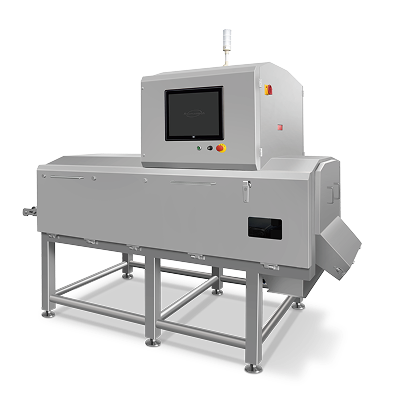
These advanced capabilities are powered by innovations in inspection technology. Companies like RaymanTech utilize AI-driven algorithms and multi-sensor technologies to enhance precision. By using multi-energy or multi-spectral imaging, these systems can analyze materials and shapes, not just density, allowing them to spot unconventional contaminants or quality defects that older systems would miss.
Furthermore, systems designed for the dairy industry must feature a hygienic design, often with an IP69K rating, to withstand the rigorous, high-pressure wash-down procedures common in cheese plants. They are built to handle any packaging format, from glass bottles and metal cans to aluminum foil packs and Tetra Paks.
Conclusion
For cheese producers, X-ray inspection is an investment in brand protection. It is a single, powerful solution that stands guard at a critical point in your production line, ensuring not only that your product is safe from physical contaminants but also that it meets the highest standards of quality and consistency that your customers demand.
FAQS
1. Is X-ray inspection safe for cheese? Will it affect the taste, texture, or nutritional value? Yes, it is completely safe. The radiation dose used in food inspection is extremely low. The FDA has stated there are no known adverse effects from eating food that has been X-rayed. Studies by the World Health Organization (WHO) also confirm that the low radiation levels used do not affect the food's safety, nutritional value, flavor, or texture.
2. When should I use an X-ray system instead of a traditional metal detector? While metal detectors are effective for finding many metal contaminants, an X-ray system is the superior choice in several key scenarios:
Packaging: X-ray is unaffected by foil or metallized film packaging, which can "blind" traditional metal detectors.
"Product Effect": Cheese, especially products with high salt or moisture, can trigger false rejects in a metal detector. X-ray systems are not affected by this "product effect".
Non-Metal Contaminants: If your risk includes glass, stone, bone, or high-density plastics, an X-ray system is necessary as metal detectors cannot find these.
Quality Checks: If you also want to check for fill level, mass, or missing items, an X-ray system can perform these checks simultaneously, which a metal detector cannot.
3. Can X-ray inspection really check the "quality" of the cheese itself? Yes. Beyond contaminants, advanced X-ray systems are used for a wide range of quality control tasks. For cheese, this can include verifying mass, ensuring correct fill levels in tubs of spread or dip, and even analyzing the distribution and development of holes in certain cheese types as a marker of quality and maturity.

Related Articles
-
 Nov-20-2025
The Critical Role of X-Ray Inspection for Shrimp
For seafood processors, protecting the consumer and the brand is paramount. A single, minuscule foreign object—a fragment of glass, a metal wire, a dense piece of plastic—can lead to consumer injury, a devastating product recall, and irreparable damage to a brand's reputation. Traditional inspection methods, while valuable, often fall short of this modern challenge.learn more -
_1.png) Nov-20-2025
Nov-20-2025Beyond the Basics: A Professional Guide to Almond Sorting Technology
In the almond industry, quality is non-negotiable. Processors face a complex challenge: removing not only obvious foreign matter but also subtle product defects, internal damage, and micro-impurities. A single sorting machine is no longer the answer. Today, success demands an integrated, full-process strategy.learn more -
 Nov-20-2025
RaymanTech Bulk X-ray Inspection:The First and Most Important Line of Defense in Food Safety
In food processing, the highest-risk moment isn’t at the final packing station—it’s the second a truck backs up to the silo and unloads tons of raw nuts, grains, seeds, spices, dried fruit, coffee, or frozen vegetables. At that point, everything is mixed together: the good product you paid for, plus stones from the field, metal from harvesting equipment, glass from a broken bulb in the dryer, twigs, leaves, shells, insect-damaged kernels, moldy berries, and pieces of plastic baling twine.learn more




Follow us:


