
 English EN
 Germany DE
 French FR
 Portuguese PT
 Spanish ES
Macadamia Kernel Sorting: AI Optical Sorting for Defect Detection and Quality Consistency
Shelled macadamia kernels are premium-value nuts used in snack foods, confectionery, bakery products, and food ingredients. Because appearance directly affects commercial grade and customer acceptance, processors need consistent separation of defective kernels while protecting valuable product yield.
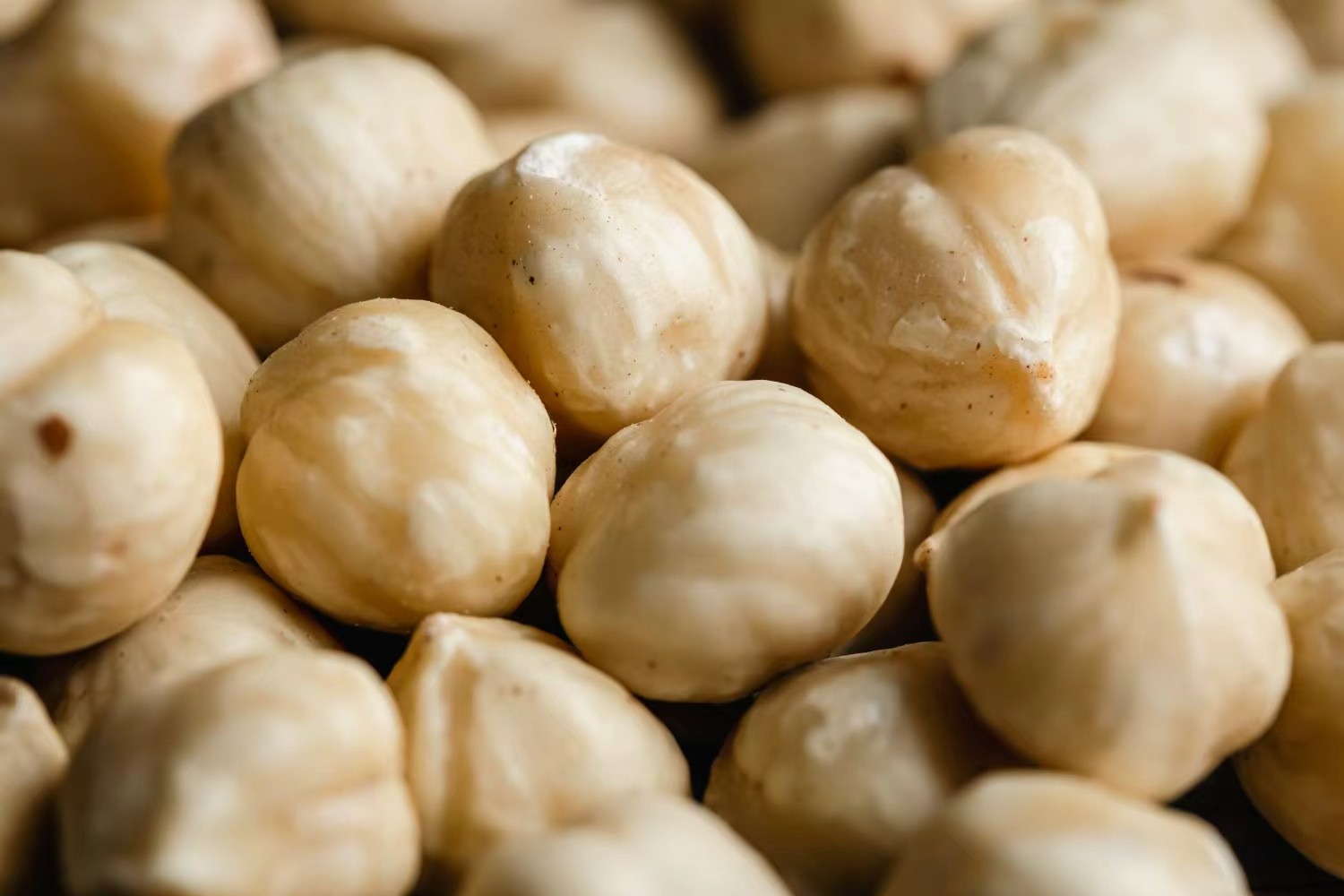
Macadamia kernels naturally vary in color, shape, size, and surface appearance due to variety, growing conditions, harvesting, drying, shelling, and storage processes. At industrial production speeds, manual inspection can be difficult to maintain at the same level of consistency across every batch.
Traditional color sorting can remove obvious discoloration, but macadamia quality control often requires more than simple color thresholds. Defects such as mold-affected kernels, insect damage, shriveled kernels, shell fragments, and irregular kernel shapes require multi-dimensional visual inspection.
RaymanTech AI optical sorting solutions combine full-color imaging, AI-based classification, shape analysis, and multi-view imaging to identify visible defects and unwanted materials while maintaining high production efficiency. When dense or concealed foreign materials present an additional food safety concern, X-Ray inspection can provide a complementary inspection layer.
Macadamia Sorting at a Glance
Key Takeaway: Macadamia optical sorting focuses on visible quality defects and unwanted materials. RaymanTech combines AI classification, multi-view imaging, and application-specific testing to help processors achieve consistent grading while controlling unnecessary product loss.
Why Macadamia Kernels Need Advanced Optical Sorting
Macadamias are high-value kernels where relatively small appearance differences can influence selling price, grade classification, and customer acceptance.
Natural kernels vary in appearance, while some defects have subtle visual characteristics. A fixed color threshold may therefore reject acceptable kernels or fail to separate certain off-spec kernels.
A practical sorting system needs to distinguish between:
Natural product variation that should be accepted
Defects that affect commercial quality
Foreign materials that create quality or food safety concerns
This makes multi-dimensional optical inspection more useful than color-only separation for applications with complex defect profiles.
The objective is not maximum rejection. It is targeted defect removal while protecting saleable yield and maintaining repeatable quality.
Macadamia Quality Standards and Industry References
Commercial macadamia kernel quality is evaluated against international and regional industry references.
UNECE DDP-23 — Macadamia Kernels provides an international reference for the commercial classification and quality control of shelled macadamia kernels. It addresses kernel condition, defects, foreign matter, moisture, classification, and commercial presentation. The standard specifies a maximum moisture content of 2.0% for macadamia kernels.
The World Macadamia Organisation (WMO) Macadamia Kernel Product Standard provides additional commercial specifications. Its current specifications for premium raw kernels include moisture not exceeding 1.8% and a target of nil foreign matter, together with limits for shell and other kernel conditions.
Regional references, including the Australian Macadamia Society — Kernel Assessment Manual and Hawaii grading requirements, provide additional guidance for commercial kernel evaluation.
For optical sorting, the most directly actionable characteristics are visible:
Surface discoloration
Mold-affected areas
Insect damage
Kernel shape abnormalities
Shriveled or poorly developed kernels
Shell fragments and visible foreign materials
These sorting criteria can then be adjusted according to the processor's grade specifications and customer requirements.
What Can RaymanTech Optical Sorters Separate?
RaymanTech systems are configured according to the actual product characteristics, quality standards, and defect priorities of each macadamia processor.
Typical sorting targets include:
Application Note
Some defect types are strongly influenced by product presentation and visual contrast. Surface mold or discoloration can be evaluated through optical imaging when visible. Insect damage can be identified when holes or surface marks create sufficient image differences. Conditions that are completely internal and not visible on the kernel surface may require other inspection methods.
Application testing with actual macadamia samples is recommended to confirm achievable sorting performance before equipment selection.
RaymanTech AI Optical Sorting Technology
AI-Based Classification
Traditional color sorters mainly rely on predefined color and brightness thresholds. While effective for straightforward defects, this approach can become less effective when acceptable macadamia kernels naturally overlap with defect color ranges.
RaymanTech AI classification evaluates multiple visual characteristics, including:
Color
Brightness
Shape
Size
Surface appearance
Defect patterns
Rather than relying on a single parameter, AI classification helps separate acceptable natural variation from targeted reject conditions.
The practical benefits include:
More consistent grading
Reduced unnecessary rejection
Better protection of saleable yield
Flexible sorting criteria for different customer specifications
Multi-View Imaging for Macadamia Kernel Inspection
Macadamia kernels have curved, three-dimensional surfaces and can move in different orientations during conveying. A single inspection angle may leave part of a kernel outside the camera view.
RaymanTech multi-view imaging captures kernel surfaces from multiple directions, increasing the amount of visual information available to the inspection system.
This is particularly useful for:
Surface discoloration
Mold-affected areas
Insect damage marks
Shape abnormalities
Small foreign materials with sufficient visual contrast
Combined with AI classification and ultra-high-resolution imaging, multi-view inspection helps improve inspection consistency across different kernel shapes, sizes, and orientations.
Machine Configuration for Macadamia Sorting
RaymanTech belt optical sorters are designed for applications requiring controlled product presentation, detailed surface inspection, and flexible sorting criteria.
Belt Optical Sorter Configuration
Actual throughput varies with kernel size, variety, loading density, defect criteria, required sorting accuracy, and line configuration.
Hygienic Food Processing Design
RaymanTech optical sorters are designed for food processing environments with:
SUS304 stainless steel construction
IP66-rated protection
Easy-to-clean surface design
Stable operation in demanding production environments
These features support cleaning efficiency, equipment durability, and reliable operation in commercial nut-processing facilities.
Optical Sorting vs. X-Ray Inspection for Macadamia Processing
Optical sorting and X-Ray inspection address different quality-control requirements and should be viewed as complementary technologies.
AI Optical Sorting
Optical sorting focuses on visible characteristics such as:
Color variation
Surface defects
Shape abnormalities
Kernel damage
Shell fragments
Plant materials
Visible foreign materials
For macadamia processors, its primary role is kernel grading and appearance quality control.
X-Ray Inspection
X-Ray inspection identifies materials based on differences in X-Ray absorption. It can provide an additional inspection layer for dense foreign materials such as:
Metal fragments
Glass
Stones
Mineral contaminants
X-Ray is most relevant when dense contaminants are concealed, difficult to distinguish visually, or subject to specific food safety control requirements.
A clearly visible shell fragment or plant material can often be separated through optical sorting based on appearance differences. X-Ray provides an additional control point for dense foreign materials that may not be visually identifiable.
In an integrated quality-control workflow:
Optical sorting → kernel quality and appearance grading
X-Ray inspection → additional dense foreign-body control
Why Choose RaymanTech for Macadamia Sorting?
Selecting a macadamia sorting system is not only about maximum machine specifications. The key is matching the inspection technology with the actual defect profile, product presentation, grade requirements, and production conditions.
Application-Specific Testing
Macadamia operations differ in:
Kernel variety
Product size
Quality grade
Defect profile
Customer specifications
RaymanTech recommends testing with actual customer samples to evaluate:
Defect separation
Product recovery
Sorting criteria
Machine configuration
Practical throughput
Configurable AI Sorting
RaymanTech systems can be configured around specific quality targets rather than relying solely on fixed sorting rules.
This allows processors to balance:
Defect removal
Yield protection
Production efficiency
Commercial-Scale, Hygienic Design
RaymanTech solutions combine:
AI classification
Multi-view imaging
Ultra-high-resolution imaging
IP66 protection
High-speed belt configurations
The result is a configurable optical sorting platform for commercial macadamia processing applications.
FAQ
What defects can a macadamia sorting machine detect?
A RaymanTech AI optical sorting system can be configured to separate visible defects including discolored kernels, mold-affected kernels, insect-damaged kernels, shriveled kernels, broken or damaged kernels, abnormal kernel shapes, shell fragments, and visible foreign materials.
Detection performance is influenced by defect size, visual contrast, product presentation, and sorting criteria.
Why does macadamia sorting require AI optical sorting?
Macadamia kernels naturally vary in appearance. Traditional color-only sorting may struggle when acceptable kernels and defective kernels have similar colors.
AI optical sorting evaluates color, shape, size, surface appearance, and defect patterns, enabling more flexible classification of complex visual defects.
Why is multi-view imaging important for macadamia kernels?
Macadamia kernels have curved surfaces and can travel in different orientations during conveying. A single camera angle may leave blind spots. Multi-view imaging captures more complete surface information, improving inspection coverage and consistency.
Can optical sorting detect moldy macadamia kernels?
Optical sorting can identify mold-affected kernels when mold growth creates visible differences such as surface discoloration, visible mold marks, or abnormal appearance. Detection capability is influenced by the visibility and contrast of the defect.
Can optical sorting replace manual inspection for macadamias?
AI optical sorting can significantly reduce reliance on manual inspection by applying consistent sorting criteria at production speed. However, final sorting results vary with product condition, defect profile, presentation, and quality requirements. Application testing is recommended for equipment selection.
What is the difference between optical sorting and X-Ray inspection for nuts?
Optical sorting detects visible quality defects and appearance differences, while X-Ray inspection detects dense contaminants such as metal, glass, and stones that may not be visible. The two technologies address different inspection risks and can be used together within a broader quality-control program.
Test Your Macadamia Sorting Application
Macadamia kernels vary by origin, variety, processing method, product grade, and customer requirements. Machine specifications alone cannot determine final sorting performance.
RaymanTech provides application-specific testing with representative customer samples to evaluate:
Defect separation
Foreign material removal
Product recovery
Sorting criteria
Suitable machine configuration
Testing can also help determine whether AI classification, multi-view imaging, and complementary X-Ray inspection are appropriate for the application.
The objective is straightforward: meet the required quality specification while controlling product loss and maintaining repeatable sorting performance.
Contact RaymanTech to submit your macadamia samples and evaluate a tailored AI optical sorting solution.
Industry References
UNECE DDP-23 — Macadamia Kernels
International reference standard for commercial classification and quality control of shelled macadamia kernels, including requirements related to kernel condition, defects, foreign matter, moisture, and commercial presentation.
World Macadamia Organisation — Macadamia Kernel Product Standard
Industry reference covering commercial kernel specifications, including moisture, foreign matter, shell, and kernel quality classifications.
Australian Macadamia Society — Kernel Assessment Manual
Industry reference for visual and sensory assessment of premium, commercial, and reject macadamia kernels.
Hawaii Administrative Rules — Standards for Shelled Macadamia Nuts
Regional grading requirements for Hawaii-grown shelled macadamia products.

Related Articles
-
 Aug-27-2026
Green Coffee Bean Optical Sorting: AI Defect Detection and Foreign Material Removal
Learn how AI optical sorting helps green coffee processors detect visible defects, remove foreign materials, compare chute and belt sorters, and improve sorting accuracy.learn more -
Aug-27-2026
Best Carrot Sorting Machine: Top Picks for Efficient Farming
A practical guide to choosing the best carrot sorting machine for your farming operation. We compare top optical sorting systems for fresh, frozen, and processed carrots, covering key factors like throughput, defect detection, and product handling. Learn which machine fits your farm's specific needs.learn more -
 Aug-27-2026
IQF Frozen Carrot Sorting Solution for Color Defect Detection, Specification Control, and Foreign Material Removal
AI optical sorting for IQF frozen carrots: color defect detection, size and shape control, foreign material removal, and reduced false rejects before final packaging.learn more




Follow us:


