
 English EN
 Germany DE
 French FR
 Portuguese PT
 Spanish ES
Glass Detection in Food with X-Ray Inspection
Glass detection in food is difficult when fragments are transparent, small, irregularly shaped or hidden inside a product. Industrial X-ray inspection gives manufacturers a way to examine internal product characteristics and remove packs that meet configured rejection criteria.
An X-ray system does not detect glass by color. It identifies differences in X-ray absorption. Glass can produce visible contrast against many foods and packaging materials, but the result is application-specific. RaymanTech food X-ray inspection systems should therefore be evaluated with the actual product, package and target fragments.
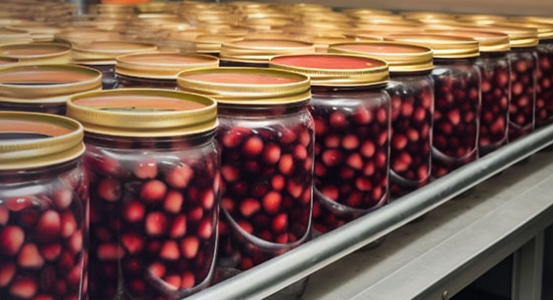
Important: No single minimum glass size applies to every food line. Product density, thickness, fragment orientation, container geometry and inspection settings can all change the practical detection limit.
How X-Ray Inspection Finds Glass in Food
The X-ray generator sends energy through the product. A detector measures the energy that reaches the opposite side and produces a grayscale image. Dense or thick materials absorb more energy than surrounding areas and appear with different image values.
Image capture: The system scans the product and package while they move through the inspection chamber.
Image analysis: Software evaluates contrast, shape and location against the product program.
Decision and rejection: A pack that meets the reject criteria is removed by the integrated reject device.
Production record: The system can log the inspection event for verification and review.
Which Food and Package Formats Can Be Inspected?
For rigid containers, compare the options on the X-ray system for cans, bottles and jars page.
Why Glass-in-Glass Inspection Is More Difficult
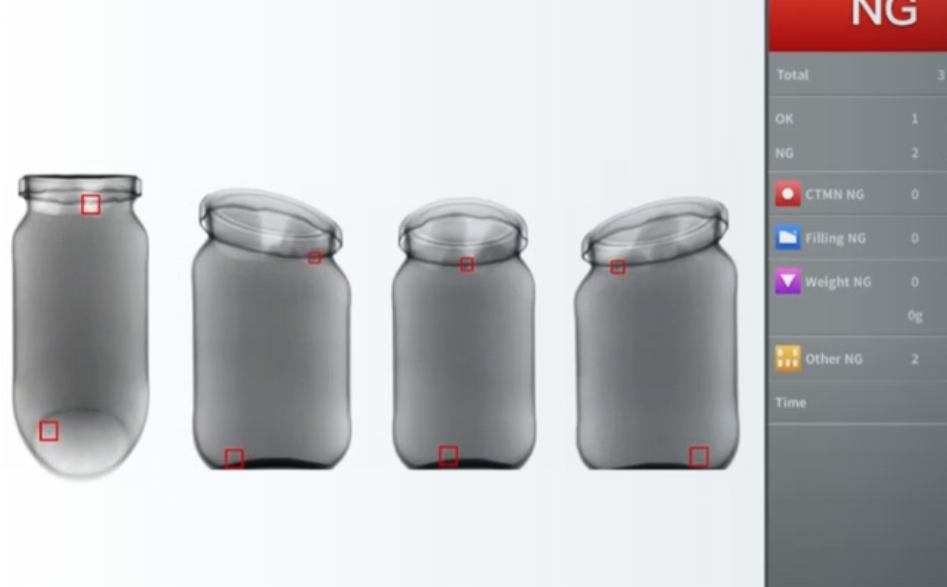
A loose fragment inside a glass container may overlap the thick base, sidewall, shoulder or closure area in the X-ray image. Because the package and fragment are made from similar material, the image can contain dense structural regions that mask small contaminants.
Application-specific imaging angles can help reveal areas hidden in a single view. The correct arrangement depends on bottle or jar geometry, product level, fragment orientation and line layout. See RaymanTech solutions for the canned, jarred and bottled food industry for this type of inspection environment.
X-Ray vs. Visual Inspection and Metal Detection
Factors That Affect Glass Detection Performance
Fragment size and shape: Smaller or thinner fragments may create less visible image features.
Orientation and location: A fragment can appear differently depending on its angle and position in the pack.
Food composition and thickness: Dense or variable products can reduce contrast.
Packaging structure: Thick seams, jar bases and overlapping materials can create difficult inspection zones.
Imaging and software setup: Inspection angle, resolution, product program and reject threshold affect results.
Product presentation: Movement, inconsistent fill or changing orientation can alter the image.
How to Verify a Glass Detection Application
A meaningful test uses representative products, normal package variation and controlled glass samples. Place samples in easy and difficult positions, repeat the test at production speed and verify that the reject device consistently isolates the correct pack.
Verification checklist: Record the product, package, fragment material, nominal size, shape, orientation, location, line speed, detection result and reject result. This creates an application-specific basis for operating limits instead of relying on a generic sensitivity claim.
Glass Detection in Food FAQ
Can X-ray inspection find glass in food?
Yes, when a fragment creates sufficient contrast against the food and packaging. The result depends on the fragment, product, package and system configuration.
Can an X-ray machine detect glass inside a glass jar?
Some fragments can be detected, but glass-in-glass is challenging because the container and contaminant have similar properties. Application testing is essential.
Can a metal detector find glass in food?
A conventional metal detector is designed for metal and generally cannot detect glass. X-ray may be more suitable when dense non-metal contaminants are a concern.
How should performance be verified?
Test representative products and packages with controlled samples in relevant sizes, shapes, orientations and locations, then confirm detection and rejection at normal line conditions.
Evaluate Glass Detection with Your Product
Share your food, packaging format, line conditions and target glass samples with RaymanTech.

Related Articles
-
 Apr-27-2026
How Safe is X-ray Inspection of Food?
Consumers and manufacturers alike worry about contamination in food – broken glass, metal fragments, plastic or stone – entering a product and harming someone or prompting a recall. X-ray inspection systems have become a key solution: conveyors carrying packaged or unpackaged food pass through a shielded X-ray machine that “sees” inside each item. This technology complements traditional metal detectors and manual checks to catch a wider range of hazards. Importantly, extensive research and industry experience show that food X-ray inspection is extremely safe. Nearly everything we eat – from spices to snacks – is X-rayed at some point during production, and regulatory bodies (like the FDA) report “no known adverse effects” from the low-dose X-ray scans used in food plants.learn more -
 Apr-27-2026
How X-Ray Sorting Machines Integrate AI for Unmatched Precision
X ray sorting machine with AI delivers unmatched precision, real-time contaminant detection, and adaptive sorting for diverse industry needs.learn more -
 Apr-27-2026
RaymanTech X-ray Inspection Systems: The Complete Guide to a Smarter, Safer Production Line
When a single shard of glass, a fragment of bone, or an unnoticed plastic tie can trigger a multimillion-dollar recall and shatter consumer trust, food manufacturers can no longer rely on yesterday’s detection technology. RaymanTech has built an entire ecosystem of X-ray inspection solutions that go far beyond traditional metal detectors, delivering density-based, shape-aware, AI-enhanced inspection across every product format imaginable.learn more




Follow us:
