
 English EN
 Germany DE
 French FR
 Portuguese PT
 Spanish ES
How Does a Sesame Optical Sorter Work? The Perfect Blend of AI and Optical Technology
.jpg)
A sesame optical sorter stands at the forefront of agriculture, combining AI and optical technology to deliver unmatched seed quality. These machines use HDR cameras and LED light sources to detect surface and internal defects. Deep learning algorithms drive precise defect recognition, boosting sorting accuracy. RaymanTech’s innovation leads the agricultural field, ensuring superior sesame seeds for market.
Feature | Impact |
|---|---|
Purity Above 99.9% | Improved germination and uniform growth |
Efficiency Boost | Processes tons per hour, reducing labor in agriculture |
Cost Reduction | Continuous operation increases profitability |
Traceability & Data Mgmt | Enables smart analytics for agriculture |
Key Takeaways
Sesame optical sorters use advanced AI and optical technology to ensure seed quality, achieving over 99.9% purity for better germination and growth.
Investing in AI-driven sorting technology enhances efficiency, reduces waste, and increases profitability for sesame processors.
Real-time decision-making and self-learning capabilities allow optical sorters to adapt to varying seed characteristics, ensuring consistent quality.
Sesame Optical Sorter Components
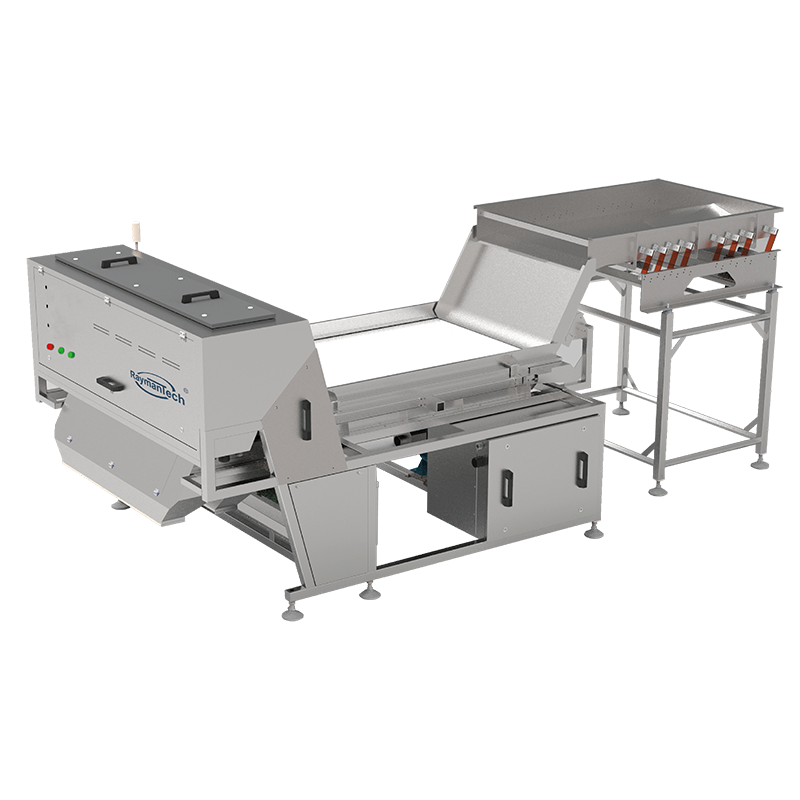
Cameras and Sensors
Optical sorters rely on a combination of cameras and sensors to deliver precise results. The core of every sorter is its advanced sensing system, which captures high-resolution images and detects even the smallest defects. These advanced sensing technologies allow the sorter to distinguish between acceptable and defective sesame seeds with remarkable accuracy. The table below outlines the main types of cameras and sensors used in modern optical sorters and their impact on performance:
Type of Camera/Sensor | Specifications | Impact on Sorting Accuracy |
|---|---|---|
High-Resolution Cameras | Capture detailed images of seeds for precise color detection. | Enhances accuracy by providing clear images for analysis. |
Advanced Optical Sensors | Detect subtle color differences, size, shape, and defects in seeds. | Improves sorting by identifying unwanted items effectively. |
Real-Time Image Processing | Analyzes images swiftly for rapid decision-making based on predefined criteria. | Increases sorting speed and accuracy, minimizing false positives. |
Conveyor and Feed System
The conveyor and feed system forms the backbone of the sorter’s throughput and efficiency. A well-designed system ensures a steady, controlled flow of sesame seeds through the sorter. Advanced sensing begins as seeds move along the conveyor, where vibrating pre-cleaners and air classifiers remove impurities before the main sorting process. Adjustable controls and modular designs allow the sorter to handle different sesame varieties, maximizing operational efficiency and maintaining high product quality.
Tip: Consistent feed rates and precise control over seed movement are essential for optimal performance in optical sorters.
Ejectors and Removal Mechanism
Optical sorters use specialized technologies to separate defective seeds from the main product stream. These mechanisms include:
Electric Separator: Uses differences in electrical properties to separate seeds. The sorter charges seeds and sorts them based on their ability to lose charge, ensuring precise removal of defective seeds.
Colour Sorter: Employs photoelectric sensors for advanced sensing of color differences. Air jets eject discolored or off-type seeds from the main flow, maintaining the purity of the final product.
Optical sorters integrate these components to deliver unmatched accuracy, speed, and reliability in sesame seed processing.
Sorting Workflow Explained
Seed Entry and Screening
The sorting process begins when sesame seeds enter the machine through the collecting hopper. The feeding device uses vibration to distribute seeds evenly along the chute. This step ensures that each seed receives equal exposure to the screening system. The seeds accelerate down the chute, entering the sorting box for further inspection. Consistent feed rates and uniform distribution are critical for precise sorting and optimal performance.
Note: Proper seed entry and screening lay the foundation for high sorting accuracy and efficiency.
Image Capture and Analysis
Once inside the sorting box, high-resolution cameras and advanced defect detection technology capture detailed images of each seed. The system analyzes size, shape, and color variations, identifying imperfections as small as 0.04 mm. Intelligent sorting decisions rely on monochromatic and trichromatic technology, which distinguishes between acceptable and defective seeds. The table below highlights key features of the image capture and analysis system:
Feature | Description |
|---|---|
Technology | High-resolution cameras and advanced defect detection technology |
Analysis Parameters | Size, shape, and color variations |
Detection Capability | Detects imperfections as small as 0.04 mm |
Monochromatic and trichromatic technology for intelligent sorting decisions |
Defect and Contaminant Removal
After analysis, the control system activates injection solenoid valves to remove defective seeds and contaminants. The sorting mechanism targets biological, physical, and chemical defects, as well as foreign matter. The table below outlines the types of defects and contaminants detected during precise sorting:
Type of Defect/Contaminant | Examples/Details |
|---|---|
Biological Defects | Mould, mildew, insect holes, germination, deterioration |
Physical Defects | Crushing, cracks, morphological deformities |
Chemical Defects | Oxidative discolouration, pesticide residues |
Foreign Matter | Metal debris (Φ≥0.3mm), glass fragments, plastic residues |
Detection Accuracy | ≥ 99.98% for sorting accuracy, ≥ 99.9% for different nut varieties |
The finished product chamber collects sorted seeds, ensuring only premium quality reaches the market. This workflow delivers consistent, precise sorting results and maximizes yield.
AI in Sesame Optical Sorters

Artificial intelligence has transformed the way sesame seeds are sorted. Modern technology now allows machines to make decisions, learn from experience, and adapt to new challenges. RaymanTech leads the industry with advanced AI-driven systems that deliver unmatched accuracy and efficiency.
Real-Time Decision Making
AI-powered technology processes thousands of images every second. Cameras and sensors capture detailed information about each seed. The system uses deep learning algorithms to analyze color, shape, and texture. This analysis happens instantly, allowing the sorter to make real-time decisions about which seeds to keep and which to remove.
RaymanTech’s double-layer sorting system takes this process further. The first layer removes obvious defects. The second layer performs a more detailed inspection, catching subtle imperfections that might otherwise go unnoticed. This high-speed analysis ensures that only the best sesame seeds reach the final product chamber.
Note: Real-time decision making reduces human error and increases the consistency of sorting results.
Self-Learning Capabilities
Modern intelligent sorting machines do more than follow preset rules. They learn and improve over time. The sorter continuously gathers data about the seeds it processes. It uses this information to adjust its sorting parameters, improving performance with each batch.
Key self-learning features include:
Continuous learning of seed characteristics during sorting.
Automatic optimization of sorting parameters to match changing seed qualities.
Integration of SOC intelligent chips for faster processing and smarter decisions.
Use of AI deep learning algorithms to enhance sorting capabilities.
These features allow the technology to handle a wide range of seed types and conditions. The system becomes more accurate and reliable as it learns from each sorting cycle.
Adapting to Seed Variations
Sesame seeds can vary in size, color, and texture due to growing conditions or processing methods. Traditional sorting methods struggle to keep up with these changes. AI-driven intelligent sorting equipment adapts quickly to new seed characteristics.
The adaptability of these systems comes from:
Advanced technology that recognizes even minor differences in seeds.
AI algorithms that adjust sorting criteria in real time.
The ability to process both dry and wet materials, even in dusty environments.
RaymanTech’s technology ensures that every batch of sesame seeds meets strict quality standards, no matter how much the raw material varies. This adaptability protects product quality and supports higher yields for processors.
Tip: Investing in adaptable AI technology helps future-proof your seed processing operation.
By combining real-time decision making, self-learning, and adaptability, AI-driven technology sets a new standard for sesame seed sorting. RaymanTech continues to push the boundaries of what intelligent sorting equipment can achieve, ensuring processors stay ahead in a competitive market.
Benefits for Sesame Processing
Quality and Consistency
Sesame optical sorters set a new standard for quality control in the agriculture and food industry. These machines use advanced precision technology to inspect every seed, ensuring only the highest quality reaches the market. Consistent sorting removes defective seeds and contaminants, which improves food safety and boosts consumer confidence. Automated quality control also reduces human error, making the process more reliable for food producers. In the agriculture and food industry, maintaining quality is essential for brand reputation and regulatory compliance.
Efficiency and Output
Modern sesame optical sorters transform the efficiency of food processing operations. Fully automated systems handle cleaning, peeling, and drying, which streamlines production and increases output. The following table highlights key features that drive efficiency and output in commercial food processing:
Feature | Description |
|---|---|
Capacity | Ranges from 4000 to 42000 lbs per hour |
Seed Purity | Achieves 99.99% seed purity through advanced processing techniques |
Processing Automation | Fully automated system for cleaning, peeling, and drying |
Cleaning Methods | Utilizes air screening, gravity separation, and chemical-free peeling |
Waste Reduction | Removes dust, shells, stones, leaves, and defective seeds |
These improvements allow food processors to meet growing demand while maintaining strict quality control.
Waste Reduction
Precision sorting technology reduces waste at every stage of food production. By removing dust, shells, stones, and off-type seeds, optical sorters help processors recover more usable product. This not only supports sustainability in the agriculture and food industry but also increases profitability. Compared to traditional methods, AI-powered sorters deliver higher economic efficiency, lower energy consumption, and a better return on investment. The table below compares key factors:
Feature | AI-Powered Sorters | Traditional Methods |
|---|---|---|
Total Price | Low | Higher |
Economic Efficiency | High | Moderate |
Return on Investment | High | Lower |
Sorting Accuracy | Superior | Limited |
Ability to Sort Small Defects | Yes | No |
Energy Consumption | Low | Higher |
Tip: Reducing waste and improving efficiency helps food processors stay competitive in the agriculture and food industry.
Trends in Optical Sorters
Market Growth and Innovations
The trends in the optical sorter market show rapid development and strong momentum. The industry has seen significant advances in technology trends, especially in the sesame sector. Companies now focus on integrating advanced systems that improve efficiency and product quality. The following table highlights recent innovations shaping the industry and setting new standards for development:
Innovation Type | Description |
|---|---|
Advanced Moisture Control | Technologies like microwave and infrared drying systems ensure precise moisture regulation, enhancing seed quality and shelf life. |
Integrated Quality Control Systems | IoT-enabled devices monitor parameters in real-time, allowing for immediate corrective actions to maintain product quality. |
Automation through Robotics | Robotic systems improve handling accuracy and reduce human error, leading to increased operational efficiency. |
Benefits of Technological Advances | Increased yield, enhanced quality, operational efficiency, sustainability, and improved traceability in sesame processing. |
RaymanTech leads the industry by adopting these technology trends and driving the development of new solutions. The company’s commitment to innovation ensures that processors can meet the demands of evolving markets and environmental standards.
Adoption in the Color Sorter Market
The color sorter market continues to expand as more industries recognize the value of advanced sorting solutions. The market is projected to grow at a CAGR of 11.02% over the next five years. The color sorter market will likely increase from USD 4.21 billion in 2026 to USD 7.93 billion by 2032. These trends reflect the growing demand for high-quality sorting in global markets.
Key trends in the color sorter market include:
Increased adoption of automation and AI-driven systems across industry sectors.
Greater focus on environmental sustainability and efficient resource use.
Expansion into new markets as technology becomes more accessible.
Ongoing development of solutions tailored to specific industry needs.
RaymanTech continues to set the pace for industry development, ensuring that clients benefit from the latest advancements in the color sorter market. The company’s leadership helps shape the future of the industry and supports sustainable growth in diverse markets.
Future of Sesame Optical Sorters

Technology Advancements
The future of sesame optical sorters will be shaped by rapid advancements in AI and optical technology. Next-generation machines will use advanced algorithms and digital cameras to capture high-resolution images of each seed. These systems will analyze color, size, and shape with greater precision. Bionic-hawkeye color recognition technology will improve sorting accuracy, especially for light yellow impurities. Optical sensors and artificial intelligence will work together to detect material differences more effectively.
Note: The integration of hyperspectral imaging and terahertz technology will enable ultra-high-definition recognition, setting new standards for seed sorting.
The table below highlights key advancements expected to influence the future outlook of sesame optical sorters:
Advancement Type | Description |
|---|---|
Continuous Upgrade of Precision | Hyperspectral imaging and terahertz technology for ultra-high-definition recognition. |
Multi-Modal Detection Integration | Combines detection technologies with AI to reduce misjudgment rates. |
Self-Learning and Adaptability | Equipment learns new material characteristics independently. |
Intelligent Operation & Maintenance | Cloud platforms for remote management and predictive maintenance. |
Large-Scale Equipment Development | Upgraded processing capacity for large-scale sorting needs. |
Modularization and Integration | Flexible modular design reduces costs and facilitates upgrades. |
RaymanTech remains committed to ongoing innovation, ensuring that clients benefit from the latest advancements in seed sorting technology.
Industry Outlook
The future outlook for sesame optical sorters shows strong growth and increasing adoption. Market size is projected to expand from USD 3.81 billion in 2025 to USD 4.21 billion in 2026. The expected compound annual growth rate (CAGR) stands at 11.02%, with the market reaching USD 7.93 billion by 2032.
Year | Market Size (USD Billion) | CAGR (%) | Expected Market Size by 2032 (USD Billion) |
|---|---|---|---|
2025 | 3.81 | N/A | N/A |
2026 | 4.21 | 11.02 | 7.93 |
RaymanTech’s leadership will drive innovation and set new benchmarks for quality and efficiency. The future outlook includes greater automation, improved sustainability, and expanded market share. Facilities will rely on advanced optical sorters to meet global standards and future demands.
Tip: Investing in cutting-edge technology ensures processors stay competitive and ready for the future.
AI and optical technology are transforming sesame seed sorting. Processors gain higher seed quality, improved yields, and better market positioning.
Enhanced quality control meets global standards
Increased profitability through waste reduction
Stronger competitiveness in a growing market
Recommendation | Description |
|---|---|
Strategic Alignment | Align sensor selection and platform design with operational goals. |
Technology Investments | Focus on upgradability and compliance for long-term value. |
FAQ
How does an optical sorter improve sesame seed quality?
Optical sorters use advanced cameras and AI to detect and remove defective seeds. This process ensures only premium-quality sesame seeds reach the market.
Can RaymanTech sorters handle different types of seeds?
Yes. RaymanTech machines process sesame, chia, flax, pumpkin, sunflower, mustard, camellia, and wheat germ seeds with high accuracy and efficiency.
What maintenance do optical sorters require?
Task | Frequency |
|---|---|
Lens cleaning | Weekly |
Software updates | As released |
System inspection | Monthly |
Regular maintenance keeps the sorter running at peak performance.

Related Articles
-
 Apr-09-2026
Why choose RaymanTech scallop optical sorter
RaymanTech scallop optical sorter boosts seafood quality, removes contaminants, cuts labor costs, and delivers fast ROI for processors seeking reliable automation.learn more -
 Apr-09-2026
How RaymanTech Soybean Optical Sorter Work
RaymanTech soybean optical sorter offers unmatched accuracy, speed, and adaptability, outperforming competitors in quality and efficiency.learn more -
 Apr-09-2026
How Optical Sorting Technology Detects Defects in Rotini Pasta
A rotini optical sorter uses cameras and lasers to detect defects, remove contaminants, and ensure only high-quality rotini pasta reaches consumers.learn more




Follow us:
