
 English EN
 中国 CN
中国 CN
Detecting Hair Contamination in Food with RaymanTech AI Optical Sorter
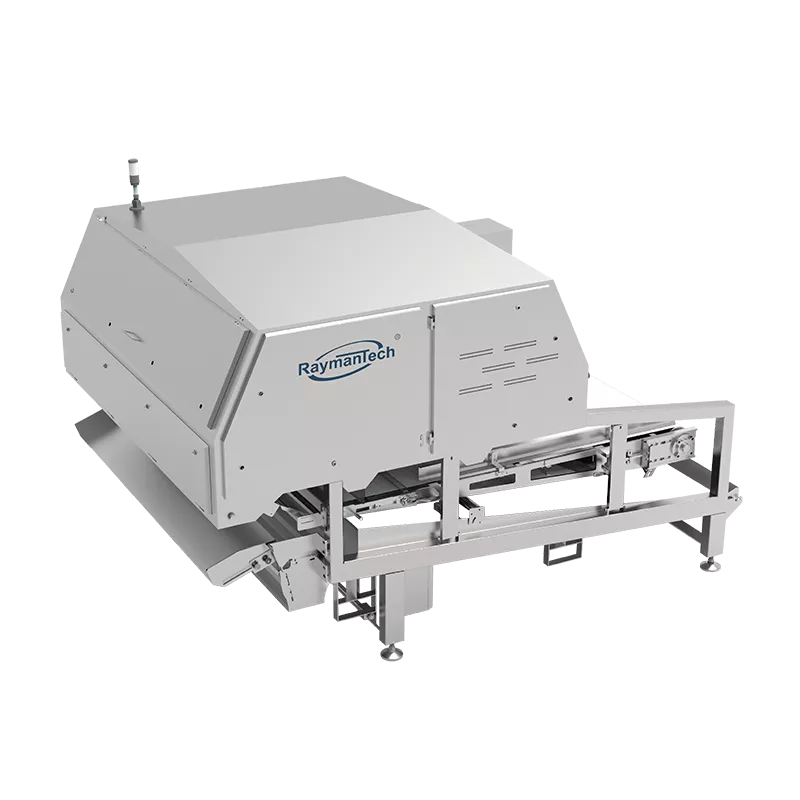
RaymanTech’s hair detector for food uses ultra-high-definition imaging and advanced AI to spot and remove hair contamination from food products. Hair in food is a major safety risk. Manual inspection often misses tiny hairs.
RaymanTech’s system serves food-processing environments and replaces manual inspection with higher accuracy.
Key Takeaways
RaymanTech’s AI optical sorter uses advanced imaging to detect and remove hair contamination, improving food safety and hygiene.
The system enhances detection accuracy, helping food producers meet strict safety regulations and avoid costly recalls.
Investing in AI-driven technologies boosts consumer confidence by ensuring cleaner products and reducing the risk of contamination.
Hair Contamination Challenges in Food
Risks of Hair in Food Products
Hair contamination is a common problem in the food industry. When hair gets into food, it can cause several issues for both consumers and manufacturers. Some of the main risks include:
Choking or inflammation if someone swallows a hair.
Hair can sometimes carry bacteria, which may lead to the growth of unwanted germs in food.
The presence of hair makes food unappetizing and can cause people to feel disgusted.
In rare cases, eating too much hair can lead to health problems, but this is very uncommon.
Hair in food can also trigger vomiting or discomfort, especially in children.
Food handlers must wear hair restraints, such as hairnets, to prevent contamination. If these rules are not followed, companies can face health code violations.

Industry Standards and Safety Concerns
Regulatory agencies like the FDA classify food as adulterated if it contains foreign materials, including hair. Section 402(a)(3) of the Food, Drug and Cosmetic Act prohibits the sale of food with visible filth, such as hair, because it can cause consumer disgust. The FDA has set specific criteria for what counts as unacceptable contamination.
Here is a table showing some industry standards for foreign matter in processed foods:
Food Product | Defect Type | Acceptable Level |
|---|---|---|
Wheat Flour | Rodent filth | Average of one or more rodent hairs per 50 grams |
Ground Paprika | Rodent filth | Average of more than 11 rodent hairs per 25 grams |
Finding hair in food can damage a brand’s reputation. News about hair contamination spreads quickly on social media and can lead to complaints or recalls. Maintaining hygiene standards is essential for consumer trust and safety.
Hair Detector for Food: RaymanTech’s Solution
AI Imaging and Detection Process
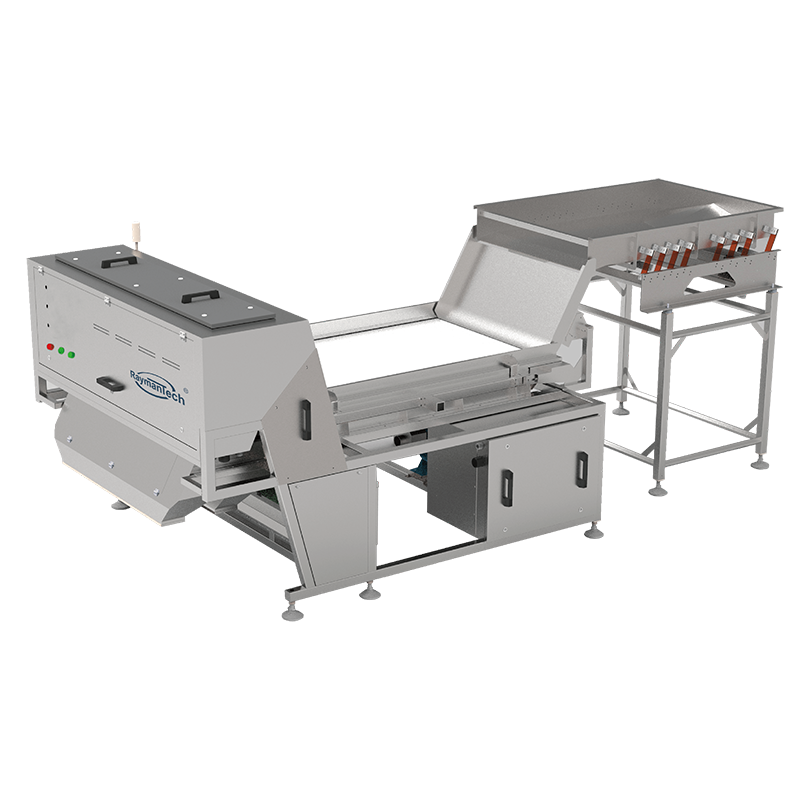
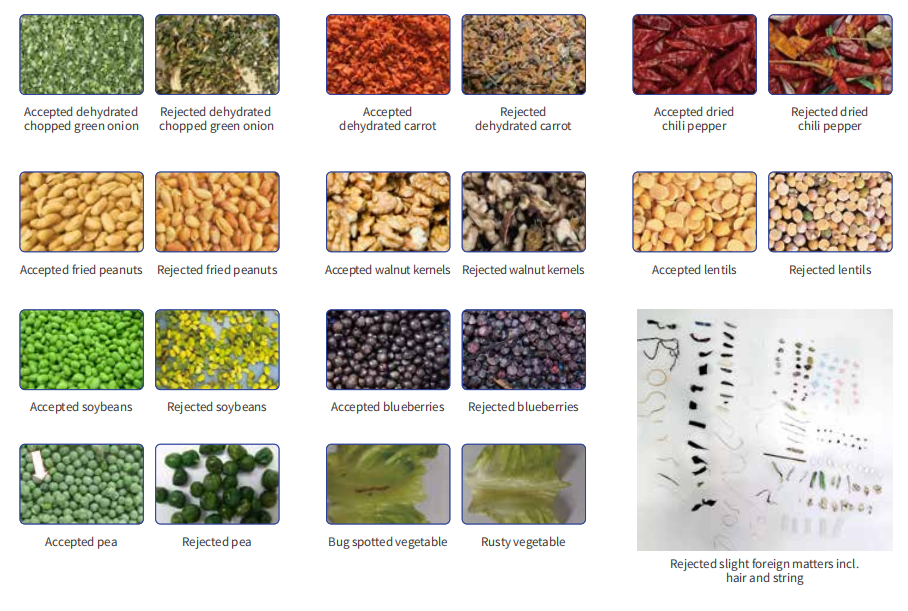
RaymanTech’s hair detector for food uses ultra-high-definition imaging and advanced AI algorithms to achieve precise detection of hair contamination. The system scans each product with a camera that captures high-resolution images. This technology allows the detection of hair and other foreign materials that are often missed by manual inspection. The AI analyzes each image, focusing on characteristics such as color, shape, width, and length. Deep learning models process this data in real time, making the detection of hair highly accurate.
Note: RaymanTech’s AI optical sorter can differentiate between hair and other contaminants by using multispectral imaging. The system evaluates texture and spectral data, ensuring only unwanted foreign materials are removed.
The following table highlights the advantages of RaymanTech’s ultra-high-definition imaging system:
Feature/Advantage | Description |
|---|---|
Provides precise detection of impurities. | |
Tiny Impurity Removal | Effectively detects and removes hair and fine threads. |
Recent advancements in AI have made the detection of hair more reliable. The system can scan and capture images of many hairs at once. It uses deep learning to analyze each strand, improving hygiene and product quality.
Key technological advancements include:
AI applications that quantify hair by scanning multiple strands simultaneously.
Integration of advanced imaging and sensor technologies for better detection accuracy.
Real-time detection and classification using machine learning models.
Sorting Accuracy and Efficiency
RaymanTech’s hair detector for food surpasses traditional methods and eliminates the need for manual inspection. Manual detection is often inconsistent and prone to errors. Workers may miss tiny hairs, especially in high-speed production environments. RaymanTech’s solution uses advanced optical sorting systems to enhance detection accuracy and maintain hygiene standards.
Limitations of Manual Hair Detection in Food Processing | RaymanTech's Solution |
|---|---|
Inconsistent and prone to errors due to human inspection | Advanced optical sorting systems enhance detection accuracy |
Ineffective in high-speed production environments | AI-driven technologies improve efficiency and integration |
Limited to visible contaminants only | Multiple inspection technologies integrated throughout the production line |
RaymanTech’s hair detector for food integrates smoothly into existing production lines. The system is usually placed between the cooling and packaging phases. Its compact design fits within most layouts. Pre-configured sorting profiles allow rapid product changeovers, reducing downtime and improving efficiency.
Tip: Operators receive hands-on training and troubleshooting workshops. 24/7 technical support is available to resolve issues quickly. Manufacturers offer warranties for critical components, ensuring long-term reliability.
The sorter uses a combination of lighting, conveying, and control systems. This technology sorts items by color, which helps detect foreign materials in various food products. The integration of advanced contaminant detection technology ensures that hygiene and quality standards are met throughout the production process.
RaymanTech’s hair detector for food sets a new benchmark in the detection of hair and other foreign materials. The system improves hygiene, boosts detection accuracy, and supports the industry’s commitment to product quality.
Impact on Food Quality and Compliance
Improved Product Purity
RaymanTech’s AI optical sorter raises the standard for product purity in the food industry. The system uses advanced imaging and deep learning to find even the smallest traces of hair contamination. This technology removes unwanted particles before packaging. As a result, food products reach consumers with higher levels of cleanliness and safety. The sorter works quickly and accurately, which helps companies avoid costly recalls and complaints. By removing hair and other impurities, the system supports a cleaner production process and better end products.
Consumer Confidence and Regulatory Standards
Meeting strict safety rules is important for every food producer. RaymanTech’s solution helps companies follow both local and international regulations. The AI-based hair detection system improves compliance in several ways:
It increases detection accuracy, which is essential for meeting global food safety standards.
It lowers the risk of contamination, making it easier to pass safety checks.
The system learns from many images of contaminants, so its detection skills get better over time.
When companies use this technology, they show a strong commitment to quality and safety. Consumers notice when products are free from hair contamination. This builds trust and encourages repeat purchases. Regulatory agencies also recognize the value of advanced detection systems. They see that these tools help companies meet or exceed industry requirements.
RaymanTech’s hair detector for food leads the industry in removing contaminants and reducing hazards caused by foreign materials. The table below shows its advantages over previous technologies:
Feature | RaymanTech's Hair Detector | Previous Technologies |
|---|---|---|
Detection Rate | Over 95% | Below 90% |
Detection Speed | Under 2 minutes | Varies significantly |
User Interface | Multilingual, touchscreen | Limited accessibility |
Adaptability | Modular design | Fixed configurations |
Food processors who invest in AI-based systems help ensure consumer safety and provide safe and reliable foods. These solutions lower the risk of foreign objects in foods and support the industry’s move toward advanced contamination control.
AI-driven sorters minimize waste and labor costs.
Robots improve hygiene and work in hazardous areas.
The market for AI in food safety is growing quickly. Companies that adopt these technologies will be ready for future challenges.
FAQ
How does RaymanTech’s sorter help with hygiene control in food manufacturing?
RaymanTech’s sorter removes hair and other contaminants. This improves hygiene control and supports safe food manufacturing practices.
Why is foreign material contamination a critical concern in the food processing industry?
Foreign material contamination can harm consumers and damage brands. It is a critical concern foreign material contamination for the food processing industry.
Can the system reduce manual labor in food manufacturing?
Yes. The system automates detection and sorting. This reduces manual labor and strengthens hygiene control in food manufacturing.

Related Articles
-
 Feb-05-2026
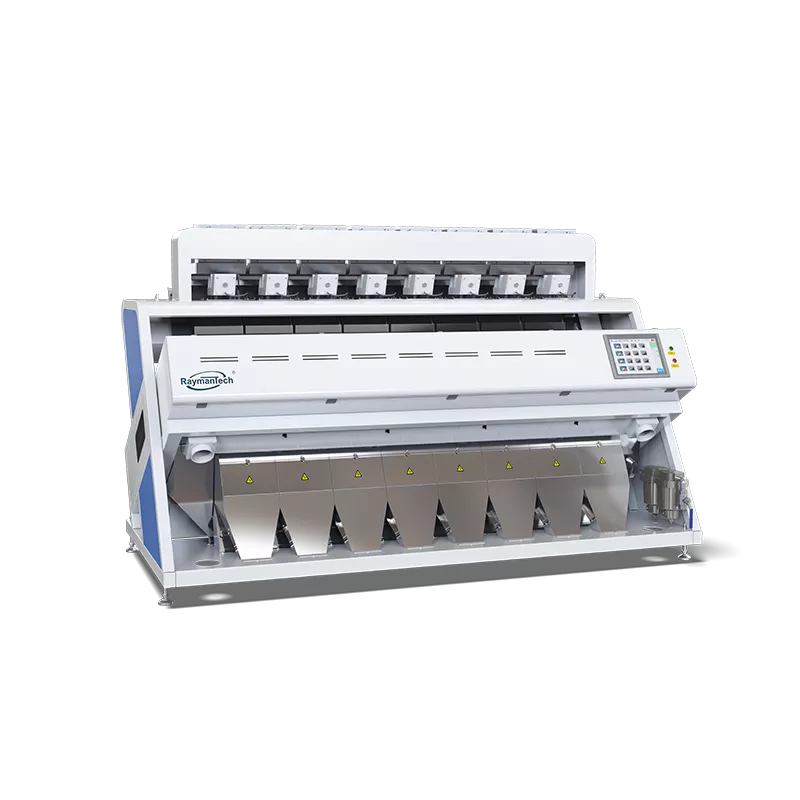
Comparing Chute Type and Belt Color Sorters for Food Processing
Compare chute color sorter and belt color sorter for food processing. Find out which system suits your product type, volume, and quality requirements.learn more -
 Feb-05-2026
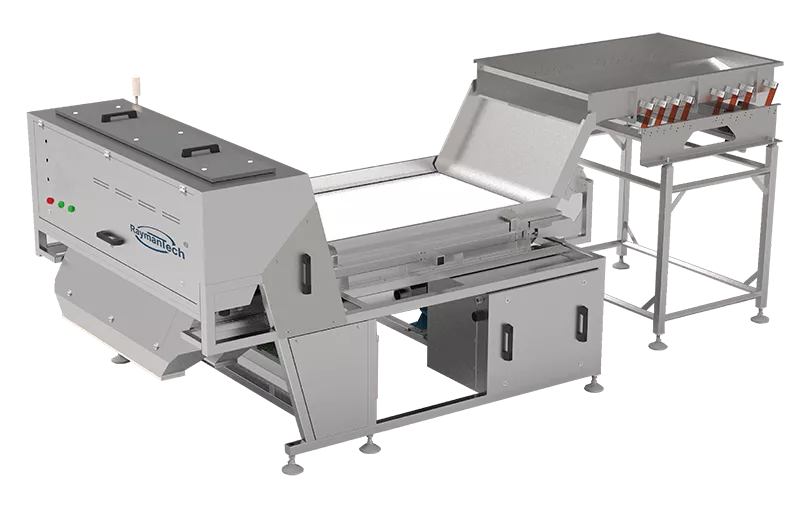
Comparing Standard Optical Sorters and Traditional Sorting Machines for Modern Food Processing
Standard optical sorter vs traditional: Compare accuracy, efficiency, and quality in food processing to choose the best sorting solution for your operation.learn more -
 Feb-05-2026
Discover the Unique Power of AI Optical Sorter Multi-Beam Imaging
AI Optical Sorter multi-beam imaging offers near 360° inspection, advanced defect detection, and unmatched sorting accuracy for food and material processing.learn more




Follow us:


