 English EN
 Germany DE
 French FR
 Portuguese PT
 Spanish ES
How to Improve Shellfish Quality with X-Ray Inspection

Shellfish x-ray inspection provides a powerful method for finding and removing hidden contaminants in seafood. Advanced inspection technologies help processors meet strict safety standards by improving accurate labeling and reducing fraud. These systems also support better monitoring and enforcement, which leads to safer products for consumers.
Key Takeaways
X-ray inspection effectively detects hidden contaminants in shellfish, ensuring safer products for consumers.
Adopting advanced x-ray systems helps seafood processors meet strict safety standards and reduce recall costs.
Implementing best practices, like regular training and real-time monitoring, enhances the accuracy and reliability of x-ray inspections.
Shellfish X-Ray Inspection Challenges

Common Shellfish Contaminants
Shellfish processing faces many risks from physical contamination. These risks can affect both product quality and consumer safety. The most common contaminants in seafood include:
Bone fragments
Glass fragments
Stones
Processing equipment parts
Crab shells
Physical contamination is not the only concern. Chemical contaminants, such as heavy metals, polychlorinated biphenyls (PCBs), and marine toxins, can also be present. Biological contaminants like bacteria, viruses, and parasites may enter the supply chain during handling or storage. Each type of contaminant poses unique challenges for seafood processors.
Issues with Traditional Inspection Methods
Traditional inspection methods, such as visual checks and metal detectors, often struggle to find all contaminants in seafood. These methods may miss small or hidden objects, especially when products are packed in complex materials. For example, metal contaminant detection can be less effective if the shellfish is inside a metal-capped container. Human inspection relies on sight and touch, which can lead to missed bones or shell fragments.
X-ray food inspections offer a more reliable solution. Shellfish x-ray inspection systems can detect a wide range of foreign bodies, including metal, glass, and stones. Unlike manual checks, x-ray inspection does not depend on physical contact or human judgment. This technology improves the accuracy of physical contamination detection and helps processors meet safety standards. The need for advanced solutions like shellfish x-ray inspection continues to grow as consumers demand safer products.
X-Ray Inspection Solutions for Seafood Safety
How X-Ray Inspection Works
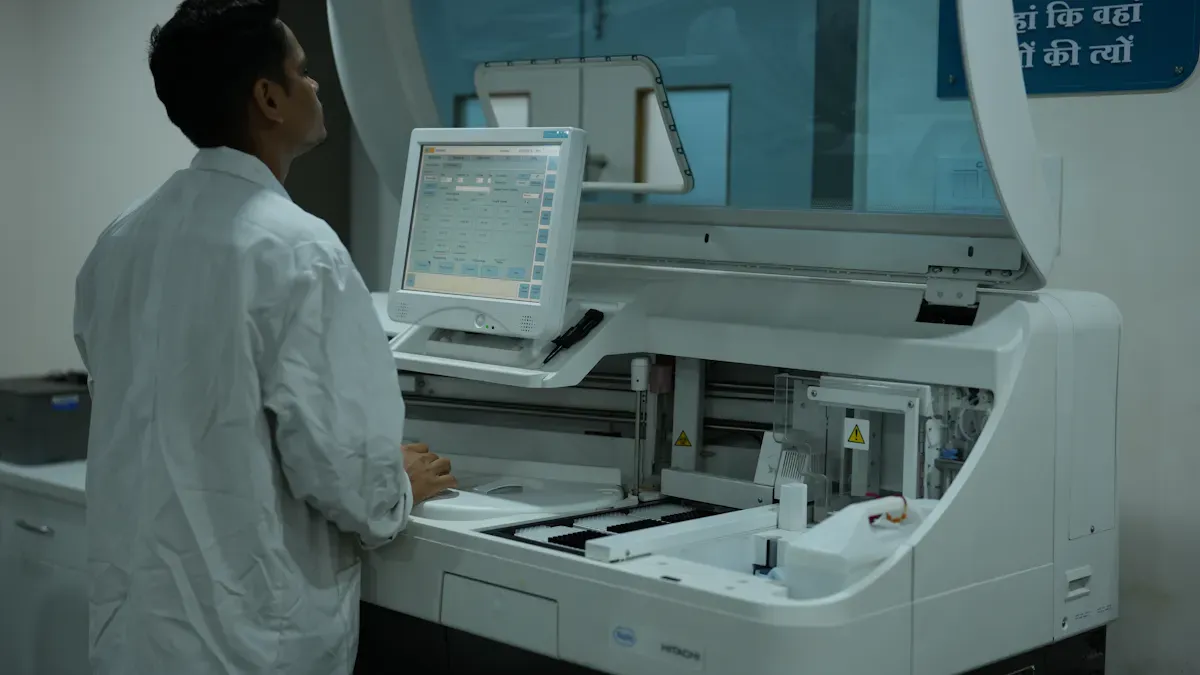
Shellfish x-ray inspection uses advanced technology to scan seafood products for hidden contaminants. The system sends low-level x-rays through the shellfish. These rays create images that show differences in density. Contaminants like metal, glass, stones, and bone fragments appear clearly in these images. Operators can spot foreign objects that traditional methods often miss.
Automated inspections evaluate every product on the assembly line. This process improves accuracy and reliability. X-ray food inspections operate at low radiation levels, making them safe for both food and workers. The technology does not rely on random sampling or manual checks. Instead, it provides a comprehensive review of all products.
Inspection Method | Advantages | Detection Capabilities |
|---|---|---|
X-ray Inspection | Operates at low radiation levels, ensuring safety for food and workers. | More reliable and accurate than traditional methods. |
Traditional Methods | Often rely on manual sampling and residue monitoring. | Limited to random sampling, less comprehensive. |
Artificial intelligence enhances the performance of x-ray inspection systems. Deep learning models analyze images and detect objects with high precision. AI can classify images, segment regions, and identify shell pieces after shrimp peeling. This technology helps processors produce fish without bones and maintain consistent quality.
Key Benefits for Producers and Consumers
X-ray inspection offers many advantages for seafood processors and consumers. The technology detects contaminants that traditional methods may miss. It ensures seafood safety and helps producers meet international regulatory requirements. The system can identify metal, glass, bone, and shell fragments, which maintains product quality and hygiene standards.
Contaminants Detected | Impact on Compliance |
|---|---|
Metal | Ensures safety standards are met |
Glass | Prevents potential hazards to consumers |
Bone | Maintains product quality |
Shell Fragments | Adheres to hygiene standards |
RaymanTech’s advanced seafood inspection solutions use AI UHD detectors for precise imaging. Automatic rejection systems quickly remove unsafe products. The hygienic design allows for full washdown, reducing bacterial contamination. Remote diagnostics enable predictive maintenance and optimize the inspection process.
Feature | Description |
|---|---|
Advanced Detection Technology | Utilizes AI UHD detector for precise imaging and accurate detection of contaminants. |
Automatic Rejection Systems | Quickly removes unsafe products, protecting consumers and preventing costly recalls. |
Hygienic Design | IP69K rated design allows for full washdown, reducing bacterial contamination and aiding sanitation. |
Remote Diagnostics | Enables predictive maintenance and optimizes the inspection process through real-time data analytics. |
Real-time monitoring gives operators immediate feedback. They can make quick adjustments to improve food quality control and reduce waste. Consistent monitoring helps meet food safety standards and ensures traceability. X-ray inspection systems provide documentation for audits and support transparency in the seafood supply chain.
Benefit | Description |
|---|---|
Immediate Feedback | Provides operators with real-time insights into product quality, enabling quick adjustments. |
Contaminant Detection | Enhances the ability to detect contaminants effectively, ensuring safer products. |
Waste Reduction | Minimizes waste by allowing for timely interventions during processing. |
Compliance | Helps meet food safety standards through consistent monitoring and quality assurance. |
Consumers trust products that undergo shellfish x-ray inspection. They know the seafood is safer and free from hidden contaminants. Producers who invest in these systems reduce recall costs, avoid litigation, and increase market share. The adoption of x-ray inspection improves brand reputation and helps win new business.
Best Practices for Implementation
Integrating x-ray inspection into shellfish processing requires careful planning. The following steps help ensure successful adoption:
Install x-ray inspection systems early in the production process to maximize seafood safety.
Use automatic inspection software to evaluate every fillet and package at production line speeds.
Train staff to interpret x-ray images and respond to alerts. User-friendly software accommodates operators with different technical backgrounds.
Regularly calibrate equipment to maintain detection accuracy and compliance with safety standards.
Document calibration activities and train operators on proper procedures.
Maintain hygienic conditions by using equipment with washdown capabilities.
Monitor real-time data to optimize the inspection process and reduce waste.
Address environmental challenges, such as low temperatures and humidity, to prevent image distortion.
These best practices help processors produce fish without bones and minimize contamination risks. X-ray inspection systems can detect minute fish bones and low-density organic materials that deboning machines and metal detectors may miss. Consistent detection accuracy ensures high-quality seafood, even in challenging environments.
Long-term benefits include enhanced durability, reduced maintenance costs, and minimal downtime. Advanced seafood inspection solutions like RaymanTech’s systems support traceability and transparency. They help processors meet international standards and maintain consumer trust. The market for x-ray inspection technology continues to grow as automation and Industry 4.0 drive demand for faster, more accurate results.
Tip: Regular training and calibration are essential for maintaining optimal performance and compliance in shellfish x-ray inspection systems.
Shellfish x-ray inspection systems help processors deliver fish without bones by detecting hidden contaminants and ensuring safer products. These systems use deep learning to find shells, glass, and metals, making fish without bones more reliable. Producers who adopt this technology can offer fish without bones, meet strict standards, and build consumer trust.
X-ray inspection reduces recalls and shows commitment to quality.
Advanced systems support compliance with global regulations.
Aspect | Details |
|---|---|
Market Value (2024) | $600 million |
Projected Value (2034) | $1.1 billion |
Key Drivers | Food safety, consumer awareness |
FAQ
How does x-ray inspection improve shellfish safety?
X-ray inspection finds hidden contaminants like bones, glass, and stones. This process helps seafood processors deliver safer products to consumers.
Can x-ray systems detect all types of contaminants?
Most x-ray systems detect dense materials, such as metal, glass, and shell fragments. Some advanced systems, like RaymanTech’s, also find small fish bones and other hidden defects.
Is x-ray inspection safe for seafood products?
Yes! X-ray inspection uses low radiation levels. It does not change the taste, texture, or safety of shellfish.

Related Articles
-
.webp) Apr-13-2026
Apr-13-2026How Does a Sesame Optical Sorter Work? The Perfect Blend of AI and Optical Technology
A sesame optical sorter uses AI and advanced cameras to detect and remove defects, ensuring high-quality sesame seeds, greater efficiency, and reduced waste.learn more -
 Apr-13-2026
Top 5 Fish fillet inspection machine manufacturers in 2026
Compare the top 5 fish fillet inspection machine manufacturers in 2026 for advanced technology, reliability, and seafood processing support.learn more -
 Apr-13-2026
RaymanTech X-ray Inspection Systems: The Complete Guide to a Smarter, Safer Production Line
When a single shard of glass, a fragment of bone, or an unnoticed plastic tie can trigger a multimillion-dollar recall and shatter consumer trust, food manufacturers can no longer rely on yesterday’s detection technology. RaymanTech has built an entire ecosystem of X-ray inspection solutions that go far beyond traditional metal detectors, delivering density-based, shape-aware, AI-enhanced inspection across every product format imaginable.learn more




Follow us:
