
 English EN
 Germany DE
 French FR
 Portuguese PT
 Spanish ES
What Makes Belt Optical Sorter Stand Out in Food Sorting
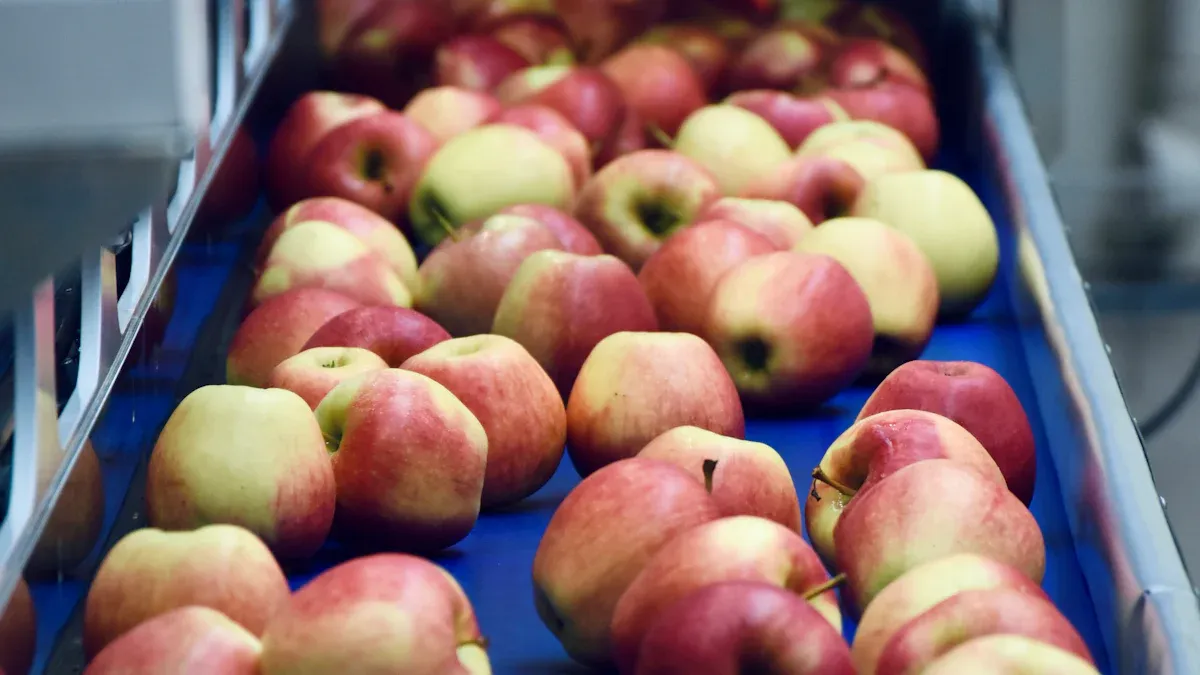
Belt optical sorter technology stands at the forefront of food sorting. Many food processors rely on these advanced machines for their speed, accuracy, and gentle handling. The belt segment leads the global optical sorting market, showing its importance in modern production lines.
Feature | Description |
|---|---|
Belt Feeder System | Gentle handling of products to minimize breakage. |
AI-Powered Sorting | Shape-based sorting and real-time image analysis for quality control. |
2048-Pixel CCD Cameras | High-resolution cameras for ultra-fine sorting. |
Key Takeaways
Belt optical sorters enhance food processing by using advanced AI and high-definition cameras for precise sorting, ensuring only high-quality products are selected.
These machines reduce breakage and improve efficiency by maintaining a stable conveyor belt system, making them ideal for delicate items like nuts and vegetables.
Investing in a belt optical sorter can optimize operations, increase throughput, and support compliance with food safety standards, ultimately improving product quality.
Belt Optical Sorter vs. Other Systems
Design and Operation Differences
Belt color sorters stand out because of their unique design and operation. These machines use a conveyor belt to move products in a stable, horizontal path. This design keeps items steady, which is important for fragile or irregularly shaped foods. The belt color sorters use advanced sensors and optical sensors to inspect products from above or while in the air. This method allows for precise detection of defects and contaminants.
Feature | Belt Optical Sorters | Chute and Free-Fall Optical Sorters |
|---|---|---|
Design | Stabilizes products on a conveyor belt | Stabilizes products on a chute or inspects in-air |
Inspection Method | Can inspect from above or in-air | Inspects in-air during freefall or stabilizes on a chute |
Capacity | Preferred for higher capacity applications | More suitable for mid-volume throughputs |
Maintenance and Cost | Generally higher maintenance and cost | Lower price point and maintenance |
Ideal Applications | Vegetable and potato products before processing | Nuts, berries, frozen/dried fruits, and recycling |
Belt color sorters also use a combination of lighting systems, conveying systems, and control systems. This setup helps them sort items by color, which is useful for many food products.
Advantages Over Traditional Sorters
Belt color sorters offer several advantages over traditional sorting systems:
They maintain a constant speed and stable running track, which improves sorting accuracy.
The horizontal movement reduces breakage, making them ideal for delicate foods like nuts.
Belt color sorters can handle a wide range of materials, including mixed or irregularly shaped items.
Their continuous operation increases efficiency and throughput, helping processors save on labor costs.
The use of advanced sensors and technologies ensures high quality and reliable results.
Belt color sorters play a key role in modern optical sorting, delivering the precision and efficiency needed for today’s food industry.
Technologies & Features of Belt Optical Sorter
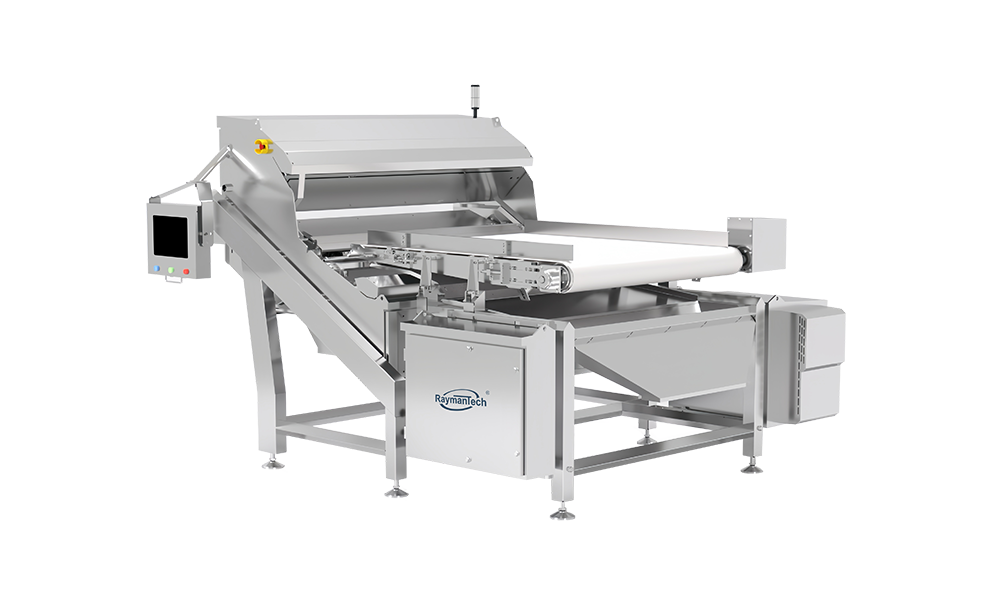
AI Sorting and HD Cameras
Belt optical sorter machines use advanced technologies to deliver high performance in food processing. AI-powered sorting is one of the key components that sets these systems apart. The AI system analyzes images in real time, using deep learning to recognize defects, shapes, and foreign materials. This process improves material separation and ensures only high-quality products move forward.
High-definition cameras work with optical sensors to capture detailed images of each item. These cameras use rgb color sorting and multispectral analysis to detect even the smallest imperfections. The combination of NIR, visible color, chlorophyll, translucency, and shape analysis allows for precise sorting. The table below shows how these technologies help improve defect detection rates:
Technology | Function |
|---|---|
NIR (Near InfraRed) | Detects the presence of rot and foreign bodies. |
Visible Color analysis | Identifies color defects such as green products and yellowing. |
Chlorophyll analysis | Accurately detects foreign bodies in high chlorophyll content products (e.g., lettuce). |
Translucency analysis | Enables detection of stones in dehydrated fruit and contaminants on the conveyor belt side. |
Shape analysis | Detects small pieces of fruit and green beans, allowing for the removal of waste. |
These sorting technologies make belted optical sorters highly effective in maintaining product quality and safety.
Quick-Release Belt and IP66 Protection
Modern belt optical sorter machines feature practical designs that support efficiency and hygiene. The quick-release belt is a key component that allows operators to remove and clean the belt easily. This feature reduces downtime and helps maintain high standards of cleanliness in food processing environments.
The IP66 protection rating is another important advancement. Machines with this rating can withstand high-pressure cleaning and resist corrosion. This is especially valuable in seafood and poultry sectors, where harsh conditions are common. The IP66 rating ensures that belted optical sorters continue to operate reliably, even in wet or dusty environments. This durability extends the life of the machines and supports consistent sorting performance.
Precision and Versatility
Belt optical sorter systems are engineered for precision. Advanced sensors and optical sensors work together to detect and remove a wide range of foreign materials. These systems can identify dirt clods, rocks, sticks, insects, and animal parts with up to eight channels of multispectral sensor data. This capability improves material separation and sorting accuracy.
The COMPASS sorter is designed for high-precision foreign material detection.
It accurately removes contaminants, supporting food safety and quality.
Advanced detection technologies enhance the identification of hard-to-detect materials.
Versatility is another strength of belted optical sorters. These machines handle many types of food products, including nuts, seafood, and vegetables. Technologies such as AI Deep Learning, Eagle-Eye recognition, and Intelligent Shape Sorting allow the system to sort items ranging from 2 to 15 cm. This adaptability makes belt optical sorter solutions suitable for multi-purpose use in various food sectors.
Belt optical sorter machines also integrate with other automation systems, such as auto sorting machines, weight graders, and conveyor sorting lines. This integration creates a seamless workflow, moving products smoothly from inspection to packaging. The result is improved efficiency and reduced labor costs.
Recent advancements in sorting technologies include user-friendly controls, data analytics for operational insights, and quick changeover capabilities. The NEXT sort engine improves sorting accuracy by detecting a wider range of defects and foreign materials compared to older systems. These key components help food processors achieve up to 99.9% precision in sorting, supporting high standards of quality and safety.
Tip: Choosing a belt optical sorter with advanced technologies and robust features can help food processors optimize their operations and maintain product integrity.
Benefits & Applications in Food Sorting
Quality Control and Efficiency
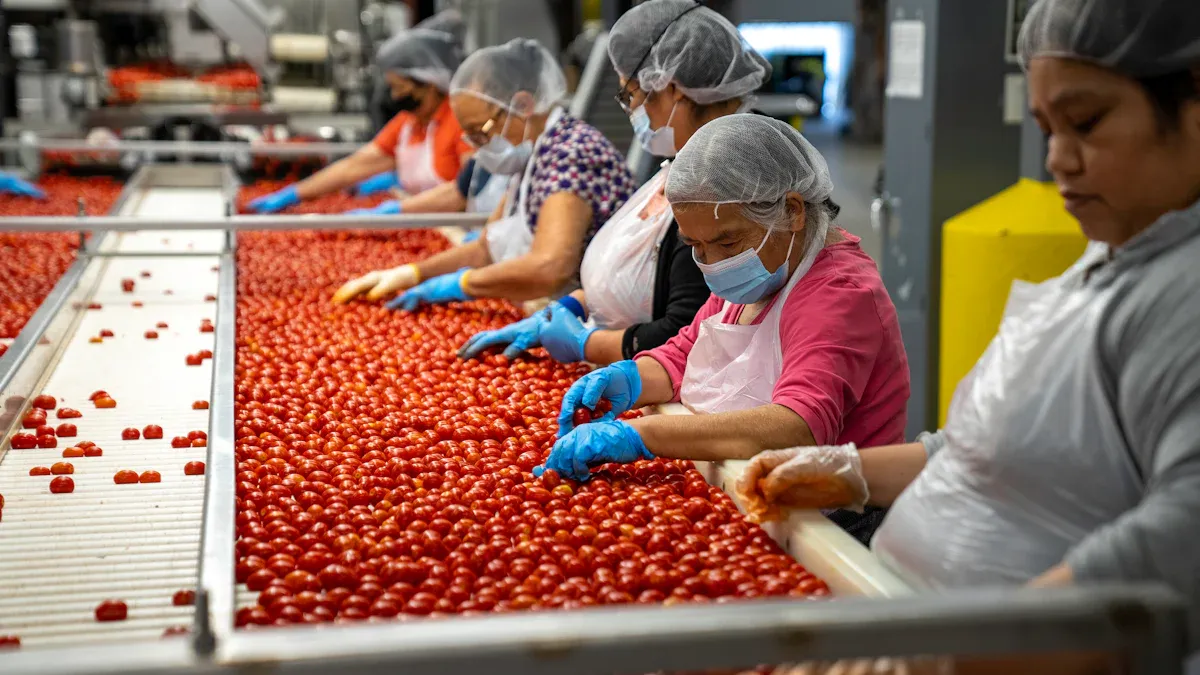
Belt optical sorter machines offer food processors a powerful way to achieve enhanced quality control and increased efficiency. These machines use advanced technologies, such as rgb cameras and AI, to inspect every item on the belt. The key components of these systems include dual cameras, customizable lighting, and a precision ejection system. These features help maintain consistent product quality and reduce errors in sorting.
Feature/Advantage | Description |
|---|---|
Greater Accuracy | Belt-fed systems keep a steady speed, which lowers mistakes in material detection. |
Dual Cameras | Capture both sides of objects, improving detection for irregular shapes. |
Precision Ejection | Fast air nozzles separate materials quickly and accurately. |
Recipe-Based Programming | Operators can save settings for different products, making quick changes easy. |
Increased Efficiency | Optical sorters work faster than manual sorting, boosting throughput. |
Consistent Product Quality | Reduces rejection rates, ensuring higher quality output. |
The ejection system is one of the key components that ensures only the best products move forward. Automation reduces manual labor and helps maintain safety standards. These machines also support compliance with international food safety programs by removing foreign materials and nonconforming items.
Real-World Use Cases
Belt optical sorters play a vital role in many food sectors. In nut processing, these machines use advanced sensing technologies to detect and remove contaminants like stones or metal particles. This lowers the risk of foodborne illnesses and improves consumer safety. In seafood and meat processing, the ejection system and rgb cameras help sort products by size, shape, and color, ensuring only high-quality items reach the market. Dairy processors use these sorters to remove foreign objects and maintain strict hygiene standards. The key components of belt optical sorters make them adaptable for sorting dried fruits, candy, and pet food as well.
Note: The combination of precision ejection, advanced cameras, and recipe-based programming allows belt optical sorters to deliver reliable results across a wide range of applications.
Belt optical sorter machines lead the food industry with their advanced rgb technology and high-speed sorting.
The global market for these sorters is growing fast, driven by demand for quality and safety.
Advanced sensors and algorithms help remove defects, making sorting more accurate and efficient.
FAQ
How do belt optical sorters improve recycling efficiency?
Belt optical sorters use sensors and optical sensors to identify materials. Hyperspectral imaging helps separate plastics, metals, and paper. This technology increases recycling rates and reduces contamination.
What role does hyperspectral imaging play in sorting food products?
Hyperspectral imaging uses sensors to analyze color and composition. Hyperspectral data helps optical sensors detect defects. This improves sorting accuracy for recycling and food processing applications.
Can belt optical sorters handle mixed recycling streams?
Yes, belt optical sorters use sensors and hyperspectral imaging to sort mixed recycling streams. Optical sensors identify materials quickly. This makes sorting more efficient for recycling facilities.
Tip: Hyperspectral imaging and advanced sensors help belt optical sorters achieve high sorting precision in recycling and food industries.

Related Articles
-
 Jan-29-2026
Introduction to RaymanTech Optical Sorters for Farm Products and Food Processors
RaymanTech, as a leading provider of inspection and sorting solutions, has developed a comprehensive optical sorter portfolio that now serves both farm-product applications and food-processing environments. While farm-product sorters focus on capacity, adaptability, and raw-material variability, food-processor-grade sorters must also incorporate high IP protection, robust stainless-steel construction, sanitary design, and harsh washdown compatibility.learn more -
 Jan-29-2026
How Safe is X-ray Inspection of Food?
Consumers and manufacturers alike worry about contamination in food – broken glass, metal fragments, plastic or stone – entering a product and harming someone or prompting a recall. X-ray inspection systems have become a key solution: conveyors carrying packaged or unpackaged food pass through a shielded X-ray machine that “sees” inside each item. This technology complements traditional metal detectors and manual checks to catch a wider range of hazards. Importantly, extensive research and industry experience show that food X-ray inspection is extremely safe. Nearly everything we eat – from spices to snacks – is X-rayed at some point during production, and regulatory bodies (like the FDA) report “no known adverse effects” from the low-dose X-ray scans used in food plants.learn more -
 Jan-29-2026
Why Advanced Fish Bone X-Ray Inspection Systems Matter for Seafood Safety
Fish Bone X-Ray Inspection Systems detect bones and contaminants in seafood, ensuring consumer safety and helping producers meet strict food safety standards.learn more




Follow us:
