
 English EN
 Germany DE
 French FR
 Portuguese PT
 Spanish ES
How X-Ray Sorting Machines Integrate AI for Unmatched Precision
AI integration transforms the x ray sorting machine into a tool of unmatched precision. Advanced algorithms analyze x-ray data in real time, allowing highly accurate sorting. Manufacturers benefit from faster processing, improved safety, and adaptability. Raymantech’s UHD X-Ray Inspection System stands out with its UHD detector and AI-powered features.
Benefit | Description |
|---|---|
Enhanced Safety | Reduces human intervention in hazardous zones, minimizing personnel risk. |
Increased Efficiency | Automated systems operate faster and longer than manual methods, improving processing timelines. |
Improved Accuracy & Compliance | AI-driven sorting minimizes errors, ensuring waste meets acceptance criteria for regulations. |
Significant Cost Savings | Lower labor needs and optimized waste packing lead to overall cost reductions. |
Operational Flexibility | Modular systems adapt to changing site needs and diverse waste streams. |
De-risking Operations | Proven technology minimizes implementation risks and ensures reliable performance. |
The optical sorter held the largest revenue share of 57.4% in 2024, showing strong market presence.
Automation demands in food processing and recycling drive growth in sorting technologies.
Imaging advancements and AI improve sorting accuracy and speed, making these solutions more attractive.
Key Takeaways
AI integration in x-ray sorting machines enhances accuracy, allowing detection of contaminants as small as 0.1mm.
Automated systems improve efficiency, reducing processing times and operational costs compared to manual methods.
Real-time analysis enables immediate decision-making, ensuring product quality and compliance with safety standards.
Modular designs allow x-ray sorting machines to adapt to various production needs, making them versatile across industries.
Digital traceability features support quality management by archiving images and logging rejected products for compliance.
What Is an X Ray Sorting Machine
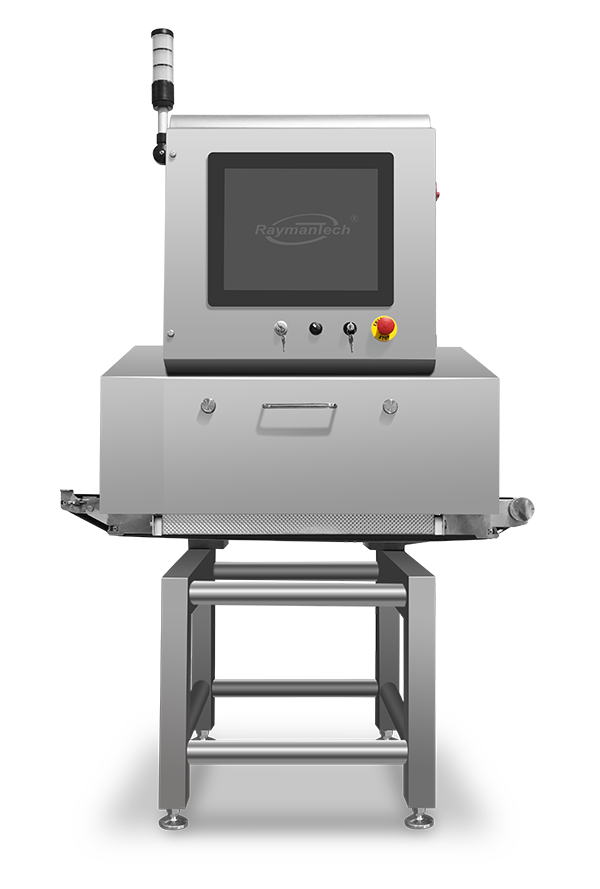
Basic Function and Operation
An x ray sorting machine is a specialized device used to inspect and sort materials based on their internal properties. These machines play a critical role in industries such as food processing, recycling, and mining. The primary function is to analyze products or materials using x-ray imaging, which reveals hidden defects, contaminants, or valuable components that are not visible to the naked eye.
In food processing, the x ray sorting machine detects foreign objects like metal, glass, or plastic inside packaged goods.
In recycling, it separates valuable materials from waste, improving recovery rates and reducing landfill impact.
In mining, it distinguishes between valuable ore and waste rock, optimizing resource extraction.
The machine operates by passing items through an x-ray beam. Sensors capture the transmitted images, and advanced software analyzes the data. This process is non-destructive, preserving the integrity of the inspected material. High throughput allows the system to process large quantities quickly, making it suitable for demanding production environments.
X ray sorting machines offer environmental benefits by reducing energy-intensive processes and minimizing waste.
Key Technologies Used
Modern x ray sorting machines rely on several advanced technologies to achieve high detection accuracy and sorting efficiency.
X-ray transmission technology identifies materials based on atomic density and composition.
Artificial intelligence enhances detection accuracy, enabling real-time analysis and sorting decisions.
Machine learning algorithms process x-ray images, identifying contaminants, defects, and valuable components.
Raymantech’s UHD X-Ray Inspection System exemplifies these advancements. Its UHD detector provides ultra-high-definition imaging, allowing detection of contaminants as small as 0.1mm. AI-powered features enable virtual weighing, counting, and integrity checks, making the system adaptable to various applications. The hygienic design and remote troubleshooting capabilities ensure seamless integration into production lines.
The combination of UHD imaging and AI-driven analysis sets Raymantech’s solution apart, delivering unmatched precision and reliability.
AI Integration in X Ray Sorting Machines
AI Technologies and Methods
Artificial intelligence has become the backbone of modern x ray sorting machine design. Several advanced AI technologies work together to deliver precise and reliable results:
Machine Learning: This technology allows the system to learn from large datasets of x-ray images. The machine improves its ability to identify contaminants and defects over time, adapting to new challenges in production environments.
Computer Vision: Computer vision enables the machine to interpret and analyze x-ray images. It recognizes patterns, shapes, and anomalies that may indicate foreign objects or product inconsistencies.
Neural Networks: Convolutional Neural Networks (CNNs) play a key role in image processing. These networks excel at classifying and distinguishing between different types of materials, even when differences are subtle.
These AI methods work in harmony to ensure that each x ray sorting machine can handle complex sorting tasks with high accuracy. The integration of these technologies addresses common industry challenges, such as data quality issues and the need to detect difficult materials. Enhanced sensor capabilities and adaptable AI algorithms help the system keep pace with evolving industry standards and market demands.
Note: Raymantech’s UHD X-Ray Inspection System leverages these AI technologies to deliver unmatched detection performance, even for ultra-fine contaminants and low-density materials.
AI Data Processing for Sorting
The core strength of an AI-powered x ray sorting machine lies in its ability to process and analyze x-ray data in real time. The process begins when products pass through the x-ray beam. The system captures detailed images, which are then processed by AI algorithms.
Deep learning models enhance the accuracy of detection, identifying even the smallest contaminants or subtle defects.
Image processing techniques convert raw x-ray data into actionable information, allowing the system to spot issues that traditional inspection methods might miss.
Real-time analysis enables immediate decision-making. The system can remove defective products from the line or trigger alerts if it detects process deviations.
Raymantech’s UHD X-Ray Inspection System stands out with advanced features such as adaptable resolution, virtual weighing, and counting. Adaptable resolution allows the system to adjust image clarity based on the specific product or packaging type. Virtual weighing and counting functions streamline operations by providing precise measurements and inventory control without manual intervention.
Tip: Automated integrity checks, such as monitoring for missing components or verifying fill levels, help manufacturers maintain product quality and compliance with safety standards.
AI integration also supports digital traceability and remote troubleshooting. These features ensure that the x ray sorting machine can be seamlessly integrated into existing production lines, reducing downtime and supporting continuous improvement.
AI Precision Advantages
AI vs. Traditional Sorting
AI-powered sorting systems have transformed the way industries approach quality control. Traditional sorting methods often rely on manual inspection or fixed-threshold detection. These approaches can miss subtle defects and struggle with low-density contaminants. Human inspectors may overlook ultra-fine particles, especially when processing large volumes at high speeds.
AI integration in x-ray sorting machines introduces dual-energy technology. This method captures two images at different energy levels. The system can then distinguish between contaminants and the product with greater precision. Traditional single-energy machines create flat images based only on density. As a result, they often fail to detect low-density or organic contaminants. The dual-energy approach mathematically isolates foreign materials, leading to higher detection rates and fewer false rejects.
AI deep learning software adapts over time. It learns from thousands of images, reducing the number of false rejects and improving overall accuracy. Unlike traditional systems that use fixed thresholds, AI-powered machines flag only those objects that deviate from learned patterns. This dynamic approach ensures that the system remains effective even as product types or contaminant profiles change.
AI-driven systems offer a significant leap in adaptability, allowing manufacturers to respond quickly to new safety challenges and regulatory requirements.
Real-World Accuracy and Efficiency
The impact of AI-powered x-ray sorting extends beyond detection accuracy. These systems deliver measurable improvements in operational efficiency and cost savings. For example, Raymantech’s UHD X-Ray Inspection System uses ultra-high-definition detectors and advanced AI algorithms. This combination enables the detection of contaminants as small as 0.1mm, including metals, glass, plastics, and even organic materials. The system also performs integrity checks, such as monitoring for missing components or verifying fill levels, which are essential for compliance and quality assurance.
AI-powered x-ray sorting technology can reduce the size of processing plants. Smaller facilities mean lower construction and operating costs. By concentrating valuable materials at the source, these systems improve the grade of ore or product delivered to processing facilities. This efficiency reduces energy consumption and operating expenses. In mining, for instance, the potential reduction in the main mine shaft diameter can lower both construction time and costs.
The environmental benefits are also significant. Advanced optical sorting technologies, including AI-powered systems, enhance recycling efficiency. Improved sorting leads to better resource conservation and energy savings. By recycling metals and other materials more effectively, these systems help reduce carbon emissions and support a sustainable circular economy.
AI-powered x-ray sorting machines:
Detect ultra-fine and low-density contaminants with high accuracy.
Adapt to new products and contaminants through continuous learning.
Lower operational costs by optimizing plant size and resource use.
Contribute to environmental sustainability through improved recycling.
Raymantech’s UHD X-Ray Inspection System exemplifies these advantages. Its adaptable resolution, virtual weighing, and remote troubleshooting features streamline production and minimize downtime. Industry leaders recognize the value of integrating AI with x-ray technology to achieve unmatched precision, efficiency, and adaptability.
The adoption of AI in x-ray sorting machines marks a new era in quality control, where safety, efficiency, and sustainability go hand in hand.
AI-Enabled Features and Implementation
Automated Defect Detection
AI-powered x-ray sorting machines deliver advanced defect detection capabilities. These systems identify low-density and organic contaminants, such as bone fragments, plastic, or even subtle internal defects that traditional methods often miss. Machine learning algorithms analyze x-ray images in real time, flagging anomalies and ensuring product integrity. Raymantech’s UHD X-Ray Inspection System excels at detecting ultra-fine contaminants as small as 0.1mm. The system also performs integrity checks, monitoring for missing components, fill levels, and fat content. This level of precision supports compliance and enhances brand reputation.
Digital traceability features provide comprehensive documentation for every inspected product. Image archiving, rejection logging, and statistical reporting enable manufacturers to track quality trends and maintain regulatory compliance.
Feature | Benefit |
|---|---|
Perfect Data Traceability | Ensures regulatory compliance and quality management |
Image Archiving | Stores X-ray images of all inspected products |
Rejection Logging | Maintains records of rejected products with timestamps |
Statistical Reporting | Provides production summaries and trend analysis |
Network Connectivity | Integrates with factory MES and ERP systems |
Audit Trail | Offers traceability for regulatory inspections |
Remote Access | Enables cloud-based monitoring and reporting |
Adaptive Learning and Customization
AI integration allows x-ray sorting machines to adapt to changing production requirements. Deep learning models refine sorting parameters based on extensive datasets, improving detection accuracy over time. Raymantech’s system supports customizable resolution and virtual weighing, enabling precise measurement and counting for various product types. The machine handles bulk, irregular, and multi-faced items, making it suitable for meat, dairy, bakery, and pharmaceutical applications. Adaptive learning ensures the system remains effective as new contaminants or product designs emerge.
The adoption of generative AI and predictive analytics enhances operational documentation and decision support, optimizing production performance.
System Integration and Maintenance
Successful deployment of AI-powered x-ray sorting machines requires careful consideration of integration and maintenance. These systems align with Industry 4.0 initiatives, facilitating autonomous operation and reducing manual intervention. Integration with existing production lines is seamless, supported by network connectivity and remote troubleshooting features.
Implementation Consideration | Description |
|---|---|
Data Requirements | Extensive datasets train AI models for real-time analysis |
Integration with Production Lines | Autonomous operation reduces manual labor and supports smart factories |
Operational Efficiency | Real-time analytics and predictive maintenance minimize downtime |
Hygiene standards such as IP67 and IP69K ensure machines resist dust and water, essential for food processing environments. These standards allow for high-pressure and high-temperature cleaning, preventing bacterial growth and enhancing reliability.
Machines withstand rigorous washdown procedures.
Materials resist corrosion and maintain performance.
Maintenance needs are reduced, supporting continuous operation.
Raymantech’s UHD X-Ray Inspection System accommodates a wide range of product sizes and packaging types. Modular design and telemetry systems enable remote monitoring, predictive maintenance, and easy repair, minimizing downtime and maximizing productivity.
AI integration has transformed x-ray sorting machines, delivering unmatched precision in detection and sorting. Key benefits include:
Enhanced accuracy and efficiency, even during high-volume operations.
Consistent performance without operator fatigue.
Rapid adaptation to new challenges and evolving threats.
Trend Description | Details |
|---|---|
Integration of AI | Growing use of AI in advanced sorting across industries. |
Demand for Insights | Need for deeper material analysis drives technology expansion. |
Market Evolution | New specialized solutions continue to shape the future of sorting tech. |
Raymantech’s UHD X-Ray Inspection System stands at the forefront, offering superior performance for diverse industry needs.
FAQ
How does AI improve contaminant detection in x-ray sorting machines?
AI analyzes x-ray images using advanced algorithms. It identifies ultra-fine contaminants, such as metal, glass, and plastic, with high accuracy. Machine learning models adapt to new threats, ensuring consistent performance and enhanced food safety.
Can Raymantech’s UHD X-Ray Inspection System handle different product sizes?
Yes. The system supports inspection widths from 240mm to 800mm. It accommodates bulk, irregular, and multi-faced items. This flexibility makes it suitable for various industries, including meat, dairy, bakery, and pharmaceuticals.
What maintenance features does the UHD X-Ray Inspection System offer?
Remote troubleshooting and predictive maintenance minimize downtime.
Hygienic design with IP67/IP69K ratings allows rigorous washdown procedures.
Modular components enable easy repair and replacement.
Is digital traceability available with Raymantech’s system?
Digital traceability is a core feature. The system archives x-ray images, logs rejected products, and provides statistical reports. Network connectivity enables integration with MES and ERP systems for comprehensive quality management.
What industries benefit most from AI-powered x-ray sorting machines?
Food processing, recycling, mining, and pharmaceuticals gain significant advantages. Enhanced detection, operational efficiency, and compliance support make these systems ideal for environments requiring strict quality control and safety standards.

Related Articles
-
 Apr-22-2026
RaymanTech X-ray Inspection Systems: The Complete Guide to a Smarter, Safer Production Line
When a single shard of glass, a fragment of bone, or an unnoticed plastic tie can trigger a multimillion-dollar recall and shatter consumer trust, food manufacturers can no longer rely on yesterday’s detection technology. RaymanTech has built an entire ecosystem of X-ray inspection solutions that go far beyond traditional metal detectors, delivering density-based, shape-aware, AI-enhanced inspection across every product format imaginable.learn more -
 Apr-22-2026
Introduction to RaymanTech Optical Sorters for Farm Products and Food Processors
RaymanTech, as a leading provider of inspection and sorting solutions, has developed a comprehensive optical sorter portfolio that now serves both farm-product applications and food-processing environments. While farm-product sorters focus on capacity, adaptability, and raw-material variability, food-processor-grade sorters must also incorporate high IP protection, robust stainless-steel construction, sanitary design, and harsh washdown compatibility.learn more -
 Apr-22-2026
How Safe is X-ray Inspection of Food?
Consumers and manufacturers alike worry about contamination in food – broken glass, metal fragments, plastic or stone – entering a product and harming someone or prompting a recall. X-ray inspection systems have become a key solution: conveyors carrying packaged or unpackaged food pass through a shielded X-ray machine that “sees” inside each item. This technology complements traditional metal detectors and manual checks to catch a wider range of hazards. Importantly, extensive research and industry experience show that food X-ray inspection is extremely safe. Nearly everything we eat – from spices to snacks – is X-rayed at some point during production, and regulatory bodies (like the FDA) report “no known adverse effects” from the low-dose X-ray scans used in food plants.learn more




Follow us:


