 English EN
 Germany DE
 French FR
 Portuguese PT
 Spanish ES
.webp)
RaymanTech Whole-Chain Solution: A Deep Dive
Food safety and quality control demands have evolv...
More

Almond optical sorter machines play a critical role in quality control for nut processors. These systems use advanced cameras and sensors to identify and remove shells, rocks, and damaged kernels.
| Feature | Description |
|---|---|
| Defect Removal | Removes shells, fragments, rocks, and wood sticks from almond batches. |
| Sorting Accuracy | Reduces defective almonds to 1%–3% in final output. |
| Product Quality | Meets strict industry grading standards, including color and appearance. |
Consistent quality ensures food safety and builds customer trust.
Almond processors face a range of defects and contaminants that threaten product quality. Environmental conditions play a significant role in the development of these issues. Preharvest contamination often originates from orchard soil. Soil type, moisture, and temperature influence the survival of pathogens such as Salmonella. Wet hulls, caused by rainfall or irrigation, create favorable conditions for contamination. Climate and drought stress also impact almond quality. Warm, humid environments encourage the growth of Aspergillus fungi, which produce aflatoxins. Drought weakens almond trees, making them more vulnerable to fungal infections. Insect damage, especially from the Navel Orangeworm, opens pathways for fungi and increases contamination risks.
Processors frequently detect the following contaminants:
Aflatoxins, produced by molds like Aspergillus flavus and A. parasiticus, pose serious health risks.
Salmonella, a pathogen that requires pasteurization to prevent outbreaks.
Fungal spores, transmitted by air, insects, and soil.
Mold invasion, often linked to insect or bird damage.
Almond optical sorter technology helps identify and remove these defects, supporting safer and higher-quality products.
Consistency in almond quality remains essential for meeting industry standards and ensuring consumer safety. Processors must achieve a minimum 4-log reduction of Salmonella bacteria, validated by the FDA or scientific review panels. Compliance verification occurs through on-site inspections or periodic audits. The following table outlines key aspects of industry standards:
| Aspect | Description |
|---|---|
| Treatment Process | Minimum 4-log reduction of Salmonella, validated by FDA or scientific review panel. |
| Compliance Verification | On-site or audit-based verification to ensure treatment effectiveness. |
| On-site Verification | Inspection agency verifies treatment plans and submits reports to the Board. |
| Audit-based Verification | Periodic audits with reports; non-compliance may require reverting to on-site verification. |
Consistent sorting and removal of defects by almond optical sorter systems enable processors to maintain compliance and deliver safe, high-quality almonds to the market.
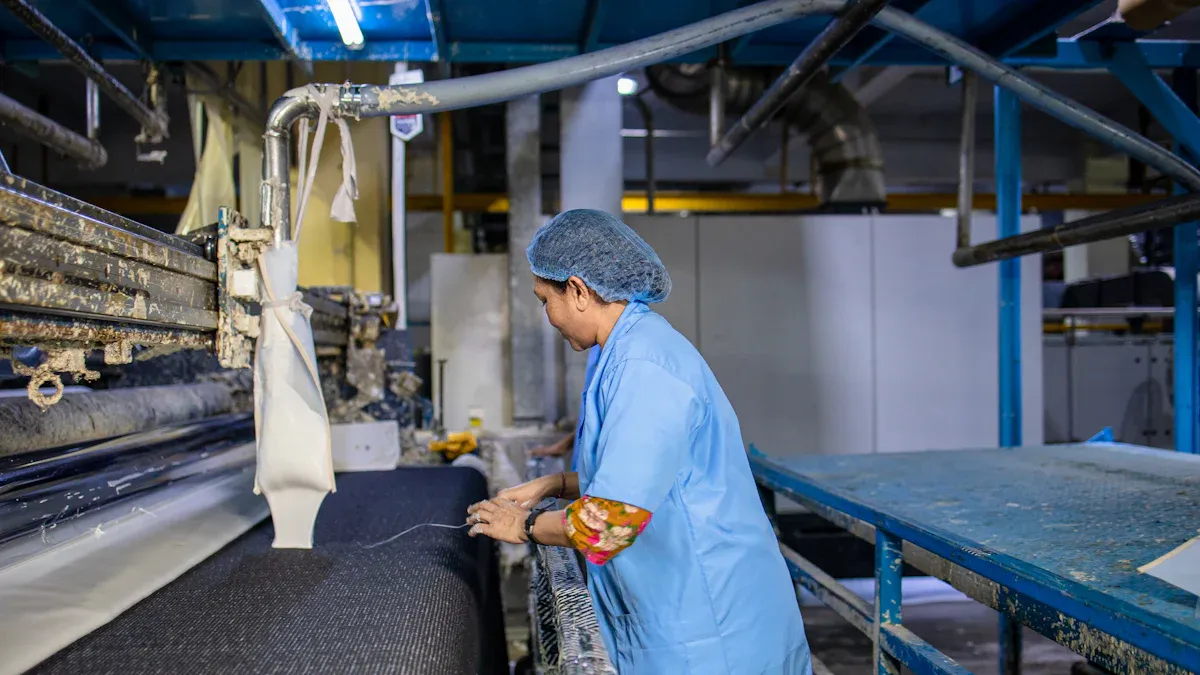
Modern almond optical sorter systems rely on a combination of advanced hardware and intelligent software. These machines use high-resolution cameras, specialized lighting, and sophisticated algorithms to inspect every almond at high speed. The following table highlights the main components and technologies found in these systems:
| Component/Technology | Description |
|---|---|
| High-resolution cameras | CCD or CMOS sensors capture detailed images of individual almonds. |
| Light sources | Specialized LED lighting enhances image clarity and defect visibility. |
| Software algorithms | Real-time analysis of images against quality parameters. |
| Sensor technologies | Various sensors improve sorting efficiency and accuracy. |
| Ejection systems | Precise air valves remove defective almonds from the product stream. |
Recent advancements have introduced hyperspectral imaging and deep learning. Hyperspectral imaging captures detailed spectral data, allowing the system to distinguish between normal and defective almonds, even in subtle cases such as insect damage. Deep learning algorithms analyze this data, improving the accuracy and reliability of defect detection. Some systems, like the COMPASS optical sorter, use shortwave infrared sensors and proprietary Pixel Fusion technology to enhance contrast and detect difficult defects. Others, such as the SORTEX F BioVision, employ multi-camera technology to remove shells and foreign materials without reducing yield.
Note: Operators receive on-site training, factory visits, or remote instruction to ensure proper use and maintenance of these advanced machines.
The almond optical sorter follows a precise process to identify and remove defective nuts. The process flow includes several automated steps, as shown in the table below:
| Step | Description |
|---|---|
| 1 | Almonds enter the sorter through a vibrating feeder or free-fall chute. |
| 2 | Optical sensors, such as CCD or CMOS cameras, capture high-resolution images of each almond. |
| 3 | Software algorithms compare images to pre-set quality standards to identify defects. |
| 4 | Precision-controlled air jets eject defective almonds, such as those with mold or discoloration. |
| 5 | The system inspects thousands of almonds per minute, ensuring high-speed, continuous sorting. |
These machines use color recognition to detect variations in almond appearance. Size sorting measures each almond’s dimensions, ensuring compliance with size specifications. Advanced sorting technologies enhance differentiation based on size, color, and defects. This precision can increase the marketable yield by up to 30%. Optical sorters operate continuously without fatigue, providing consistent performance and automatic quality grading. Integration with other processing equipment allows for seamless automation, real-time data sharing, and continuous quality monitoring across the production line.
Almond optical sorter systems identify a wide range of defects and contaminants. The table below lists the most frequently detected types:
| Defect Type | Description |
|---|---|
| Discoloration | Variations in color that indicate quality issues. |
| Mold | Fungal growth that can affect safety and quality. |
| Foreign Materials | Non-almond items that contaminate the product. |
| Shell Fragments | Pieces of almond shells remaining after processing. |
| Insect Damage | Damage caused by pests during growth or storage. |
Optical sorters achieve detection rates above 95%, outperforming manual inspection, which typically detects about 80% of defects. These machines can identify subtle color and texture variations, including aflatoxin contamination, which manual methods often miss. Continuous operation ensures consistent quality grading based on size, color, and appearance, while also reducing labor requirements.
Tip: Automated grading and sampling tasks improve reliability and reduce subjectivity in quality control, supporting processors in meeting strict industry standards.

Almond processors rely on advanced sorting systems to deliver safe, high-quality products. These machines remove contaminants and defective nuts, which helps reduce the risk of product recalls. In the United States, 58% of recalls result from undeclared allergens, so effective sorting protects both consumers and company reputations. The following table highlights how almond optical sorter technology supports compliance and safety:
| Aspect | Description |
|---|---|
| Regulatory Standards | Compliance with FDA, USDA, and other agencies emphasizing food safety, quality, and traceability. |
| Sorting Capabilities | Optical sorters ensure products are defect-free and contaminant-free, essential for compliance. |
| Organic and Non-GMO | Precise sorting is necessary for meeting organic standards and non-GMO certifications. |
| Equipment Safety Standards | Manufacturers must ensure equipment meets safety standards and aligns with environmental regulations. |
| Adaptation to Protocols | Ongoing updates in food safety protocols require continual adaptation of sorting systems. |
Almond optical sorter systems increase throughput and reduce manual labor. Processors report a 32% reduction in product loss after adopting laser sorting technology and an 18% improvement in grading consistency. These machines also help reduce waste and speed up processing lines. Users find the technology easy to operate and requiring little maintenance, which further boosts efficiency.
32% reduction in product loss
18% improvement in grading consistency
Enhanced throughput and reduced waste
Low maintenance and user-friendly operation
Investing in almond optical sorter technology leads to significant long-term savings. Most processors see a return on investment within one to three years. Savings come from reduced labor costs, less product waste, and improved product quality. Smart sorting systems use AI and machine learning for high-precision sorting, which minimizes downtime and operational costs. Real-time monitoring and predictive maintenance also support long-term profitability.
Tip: Integration of smart sorting technology allows processors to maintain high standards while controlling costs.
Almond optical sorter technology elevates nut processing by removing subtle defects and maintaining strict grading standards. The table below highlights its impact:
| Feature | Benefit |
|---|---|
| Dual-sided inspection | Comprehensive quality assessment |
| AI-driven improvement | Enhanced sorting accuracy over time |
| Precise grading | Consistent product quality |
Operators achieve higher throughput and objective grading.
Brands build trust by delivering safe, high-quality almonds.
Almond optical sorters achieve detection rates above 95%. Operators rely on advanced cameras and sensors for consistent, high-quality sorting.
Processors use optical sorters for various almond types. The machines adjust settings to match size, color, and defect profiles for each variety.
Operators perform routine cleaning and software updates. Manufacturers recommend scheduled inspections to maintain peak performance and extend machine lifespan.

We provide you with comprehensive foreign trade solutions to help enterprises achieve global development
.webp)
Recommedation: Aquatic products, pet food, candy, ...
.webp)
Automatic recognition and rejection, fish bone ins...
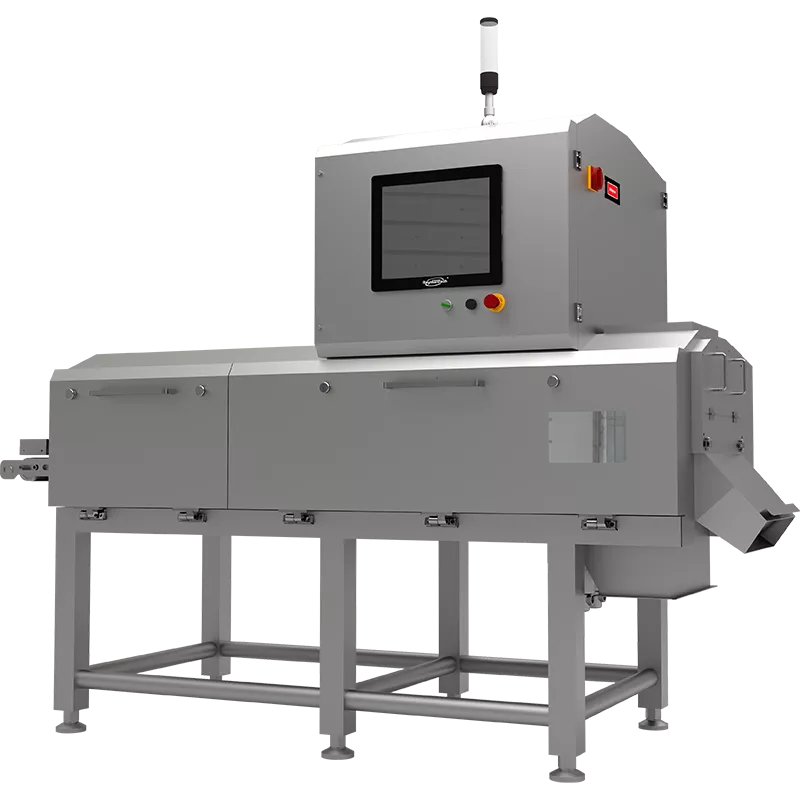
Conventional and unconventional contaminant detect...

RaymanTech’s AI Multi-View Belt Optical Sorter com...
Select the most popular foreign trade service products to meet your diverse needs
Select the most popular foreign trade service products to meet your diverse needs








User Comments
Service Experience Sharing from Real Customers
Michael Rodriguez
Production ManagerThe Almond optical sorter has revolutionized our processing line. Its accuracy in detecting defects and foreign materials is exceptional, significantly reducing waste and improving our final product quality. A game-changer for our operation.
Sarah Chen
Quality Assurance SupervisorHighly reliable and efficient machine. The color and shape sorting capabilities are precise, ensuring only top-grade almonds move forward. The user interface is intuitive, and maintenance is straightforward. Minor initial calibration took time, but overall, an excellent investment.
David Wilson
Plant OwnerAfter installing this optical sorter, our throughput increased by 30% while manual sorting labor costs dropped dramatically. The machine's durability and consistent performance in a high-dust environment are impressive. Customer complaints about foreign objects have virtually disappeared.
Jessica Park
Operations DirectorOutstanding performance and fantastic technical support. The sorter's advanced algorithms perfectly distinguish between good almonds and various defects (scorched, insect-damaged, broken). It has been instrumental in helping us meet stringent food safety standards and scale our business.