Never Settle for Bad Wheat Again A New Sorting Solution
Optical sorters provide the superior technology for achieving the highest wheat purity. While mechanical graders handle basic sorting, optical sorters use advanced sensors to remove defects. This precision wheat sorting solution unlocks premium quality and maximizes profitability. The growing market for this technology highlights its increasing importance.
The Role of Mechanical Graders in Wheat Processing
Mechanical graders serve as the foundational step in wheat processing. Their primary job is to sort raw grain based on physical characteristics. These machines provide a crucial pre-cleaning function before more advanced sorting takes place.
Core Function: Sorting by Physical Size
Mechanical graders use a system of screens and cylinders to separate kernels. The process is straightforward and effective for basic size differentiation.
First, grains enter the machine through a hopper or conveyor.
Next, a series of vibrating screens with different mesh sizes separates kernels by width and thickness.
Finally, rotating indented cylinders sort the grain by length, effectively removing broken pieces from whole kernels.
Machines like Flat Screen Graders and Indented Cylinder Separators perform these tasks efficiently, creating uniform batches based purely on dimensions. This initial sorting removes oversized and undersized material, preparing the wheat for further refinement.
The Inherent Limitations
This reliance on physical dimensions reveals the technology's primary weakness. Mechanical graders cannot distinguish between a healthy kernel and a defective one if they share the same size.
Key Limitation: A mechanical grader is blind. It cannot identify critical defects like discoloration from fungus, signs of disease, or foreign materials like small stones or weed seeds that mimic the size and shape of a healthy wheat kernel.
While screen sizes are highly customizable, often ranging from 0.3 mm to 25 mm, this does not solve the core issue. A small stone or a diseased kernel of the same size as a prime wheat kernel will pass through the same screen. The result is an impure final product. This limitation prevents processors from achieving premium-grade purity and maximizing their product's value.
The Optical Sorter Advantage: Precision and Purity
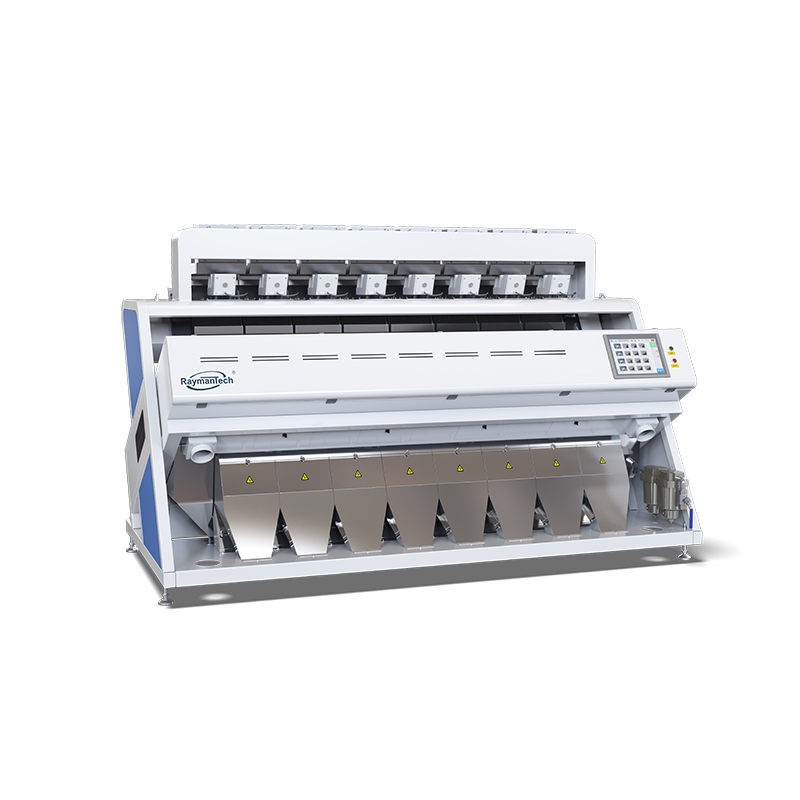
Optical sorters move beyond the physical limitations of mechanical graders. They use advanced imaging technology to analyze each kernel individually, achieving a level of purity that was previously unattainable. This technology provides a comprehensive wheat sorting solution for modern processors.
Core Function: Sorting with Digital Eyes
Optical sorters function like a set of digital eyes, inspecting grain at incredible speeds. High-resolution cameras and specialized sensors scan the product stream for imperfections.
Full-Color RGB Cameras detect the slightest variations in color or shade, identifying issues like fungus and discoloration.
Infrared (NIR & InGaAs) Cameras see what the human eye cannot. This technology identifies density differences, exposing hidden defects like mold, ergot contamination, or foreign materials like stones and plastic that share a similar color with good grain.
Once the system identifies a defect, it triggers a precise ejection process.
A high-speed solenoid valve activates a pinpoint air jet.
The jet of compressed air fires with extreme accuracy.
This force blows the single defective kernel or foreign body from the product stream.
The rejected material falls into a separate chute, preserving the integrity of the main batch.
Unlocking Premium Quality and Profit
This precision directly translates to higher profitability. By removing defective grains, processors can elevate their entire batch to a premium grade. A key benefit is the removal of grains containing mycotoxins like DON (deoxynivalenol). Eliminating these contaminated kernels makes the final product safer and significantly increases its market value.
This advanced sorting capability allows processors to meet strict food safety standards. The result is a higher quality product that commands a better price, turning a potential loss into a profitable opportunity.
Upgrading to an optical sorter is an investment in quality assurance. It ensures that only the best wheat reaches the market, protecting both consumers and the producer's bottom line.
A Superior Wheat Sorting Solution: Optical vs. Mechanical
Choosing the right sorting equipment directly impacts product quality, operational efficiency, and profitability. A direct comparison between mechanical and optical systems reveals a clear technological advantage for processors aiming for premium markets.
Defect Removal Capabilities
The fundamental difference between the two technologies lies in what they can "see." Mechanical graders operate on physical principles, while optical sorters use digital imaging. This distinction defines their defect removal capabilities.
Non-optical sorters (mechanical equipment) use screens and cylinders. They separate products based on physical dimensions like length, diameter, or weight.
Optical sorters (digital sorters) employ advanced computerized devices. They utilize cameras, lasers, and hyperspectral imaging to analyze color, size, shape, and even chemical composition.
This technological gap means a mechanical grader cannot solve many critical quality issues. It will successfully remove broken kernels but will allow a stone of the same size as a good kernel to pass through. Optical sorters, however, contribute crucially to food safety. They remove product-related contamination and foreign substances with extremely high efficiency.
An optical sorter identifies and ejects foreign materials like stones, glass, and plastic, even if they mimic the size and shape of a wheat kernel. This precision is impossible for a mechanical grader to achieve.
Defect Type
Mechanical Grader
Optical Sorter
Broken Kernels
✅
✅
Discolored Kernels (Fungus)
❌
✅
Ergot Contamination
❌
✅
Foreign Seeds (Similar Size)
❌
✅
Stones, Glass, Plastic
❌
✅
Insect-Damaged Kernels
❌
✅
Throughput and Product Loss
Processors often worry that advanced sorting will create a bottleneck. However, modern optical sorters offer impressive processing capacities. Low-capacity models handle under 2 metric tons per hour, while high-capacity systems can process over 35 metric tons per hour. Some facilities that upgrade to optical sorters successfully increase their processing capacity to 30 tons per hour, demonstrating the technology's power in demanding environments.
The more significant financial factor is product loss. Mechanical graders are a blunt instrument. They often discard good, usable grain along with the bad. For example, a slightly smaller but perfectly healthy kernel might be screened out with undesirable material.
Precision Ejection Minimizes Waste: Optical sorters target individual defects. A high-speed air jet removes only the single contaminated kernel or piece of foreign material. This process dramatically reduces the amount of good product lost in the reject stream, maximizing the final saleable yield.
This accuracy ensures that processors keep more of their valuable product, directly boosting the bottom line.
Cost vs. Return on Investment
Mechanical graders have a lower initial purchase price. This can make them seem like the more economical choice. However, a true cost analysis must consider the long-term Return on Investment (ROI). The ROI from an optical sorter quickly surpasses the initial savings of a mechanical system.
The investment in an optical sorter pays for itself in several key ways:
Premium Product Value: By removing nearly all defects, processors can sell their wheat at a higher premium price.
Increased Yield: Minimizing the rejection of good grain means there is more product to sell from the same initial harvest.
Reduced Labor: Automation significantly decreases the need for costly and inconsistent manual inspection.
Expanded Market Access: Meeting the strictest global food safety standards opens doors to more lucrative export and specialty markets that are inaccessible with mechanically sorted grain.
Ultimately, an optical sorter is not just an expense; it is a strategic investment. It is a superior wheat sorting solution that generates higher revenue, protects brand reputation, and ensures long-term profitability.
Key Benefits of Upgrading to Optical Sorting
Upgrading to an optical sorter provides processors with a decisive competitive edge. The benefits extend beyond simple cleaning, impacting food safety, profitability, and long-term brand stability. This advanced technology is a strategic investment in operational excellence.
Meeting Global Food Safety Standards
International markets have stringent regulations for food imports. Optical sorters are essential for meeting these demanding standards. The technology identifies and removes harmful contaminants like mycotoxins, ergot, and insect-damaged kernels with exceptional accuracy. This advanced wheat sorting solution ensures the final product is safe for consumption, granting processors access to lucrative global markets that are inaccessible with mechanically graded grain.
Maximizing Yield and Value
Optical sorters directly increase profitability by improving both product yield and value. The system's precision ejection targets only individual defects, dramatically reducing the amount of good grain lost in the reject stream.
Case studies in related industries demonstrate how this accuracy boosts efficiency. For example, implementing optical sorting technology led to a 25% increase in final product yield by minimizing waste and optimizing the grading process.
This maximized yield of premium-quality wheat translates directly to higher revenue.
Protecting Brand Reputation
A single product recall can have devastating financial consequences. A brand's reputation, built over years, can be ruined instantly. One German company, for instance, suffered total losses of 90 million EUR after a contamination incident, a figure that included recall expenses and lost gross profit. The costs of a recall are immense:
Loss of current and future sales
Expenses for product retrieval and disposal
Marketing costs to restore market position
Investing in optical sorting is a proactive measure to prevent such a catastrophe. It acts as an insurance policy, protecting a company’s financial health and its hard-won reputation as a quality producer.
Mechanical graders serve a purpose in basic pre-cleaning. To compete in the premium market, however, an optical sorter is a necessity. Investing in optical sorting technology is a direct investment in product quality, brand reputation, and long-term financial success. It is time to adopt a wheat sorting solution that guarantees the quality customers demand.
FAQ
What defects can optical sorters remove that mechanical graders cannot?
Optical sorters identify and remove color defects, disease, and foreign materials. Mechanical graders cannot detect these issues, as they only sort by physical size and shape.
Are optical sorters more expensive than mechanical graders?
Optical sorters have a higher initial cost. They provide a superior return on investment through increased yield, premium product value, and access to new markets.
AliceMarketing Specialist, RaymanTech
As a Marketing Specialist, I am dedicated to promoting advanced inspection and sorting solutions for food, pharmaceutical, and industrial applications. With a focus on X-ray inspection systems, metal detectors, checkweighers, and intelligent color sorters, I work closely with our global clients to ensure product safety, efficiency, and quality control.
Related Products
We provide you with comprehensive foreign trade solutions to help enterprises achieve global development
Learn more about the dynamics and professional knowledge of the foreign trade industry
2026-07-10Read 0
IQF Optical Sorting for Frozen Fruits and Vegetables: Improving Quality, Defect Detection, and Foreign Material Control Delivering Consistent, Safe, and High-Quality IQF Products with Intelligent Optical Sorting
This wheat sorting solution has revolutionized our quality control process. The accuracy and speed are exceptional, reducing waste by 30% in the first month alone.
Sarah Chen
Agricultural Operations Director
4.0
Highly efficient system that integrates seamlessly with our existing workflow. The color sorting capability particularly impressed us, though the initial setup required some technical support.
David Rodriguez
Production Supervisor
5.0
Outstanding investment for our facility. The automated sorting has significantly improved our output quality while reducing labor costs. The user interface is intuitive and easy to operate.
Jennifer Wallace
Supply Chain Coordinator
4.0
Reliable performance and excellent customer support. The system has helped us maintain consistent quality standards across all our wheat batches. Minor maintenance issues were promptly resolved by their technical team.
Related Videos
Select the most popular foreign trade service products to meet your diverse needs
Cookies give you a personalized experience,Сookie files help us to enhance your experience using our website, simplify navigation, keep our website safe and assist in our marketing efforts. By clicking "Accept", you agree to the storing of cookies on your device for these purposes. Click "Adjust" to adjust your cookie preferences.For more information, review our Cookies Policy.

 English EN
 Germany DE
 French FR
 Portuguese PT
 Spanish ES



.webp)
.webp)







User Comments
Service Experience Sharing from Real Customers
Michael Thompson
Quality Control ManagerThis wheat sorting solution has revolutionized our quality control process. The accuracy and speed are exceptional, reducing waste by 30% in the first month alone.
Sarah Chen
Agricultural Operations DirectorHighly efficient system that integrates seamlessly with our existing workflow. The color sorting capability particularly impressed us, though the initial setup required some technical support.
David Rodriguez
Production SupervisorOutstanding investment for our facility. The automated sorting has significantly improved our output quality while reducing labor costs. The user interface is intuitive and easy to operate.
Jennifer Wallace
Supply Chain CoordinatorReliable performance and excellent customer support. The system has helped us maintain consistent quality standards across all our wheat batches. Minor maintenance issues were promptly resolved by their technical team.