
 English EN
 French FR
 Portuguese PT
 Spanish ES
Beyond Metal Detection: How X-Ray Inspection Finds Glass, Stone, Bone, and Other Hidden Contaminants
When food manufacturers evaluate inspection technologies, the discussion often begins with one question: “Can it detect metal?” While metal contamination remains a major food safety concern, it is far from the only foreign material that can enter the food production process. Glass fragments, stones, bone particles, ceramics, dense plastics, and rubber pieces can all pose serious risks to consumers and brands alike.
For decades, metal detectors have been the standard inspection solution in food processing facilities. They are effective at detecting metallic contaminants and remain a valuable part of many food safety programs. However, today’s food manufacturers face increasingly complex contamination risks, stricter retailer requirements, and higher consumer expectations. As a result, many processors are turning to X-ray inspection technology to achieve broader contaminant detection capabilities.
Understanding the differences between metal detection and X-ray inspection can help manufacturers select the most appropriate solution for their products and risk profiles.
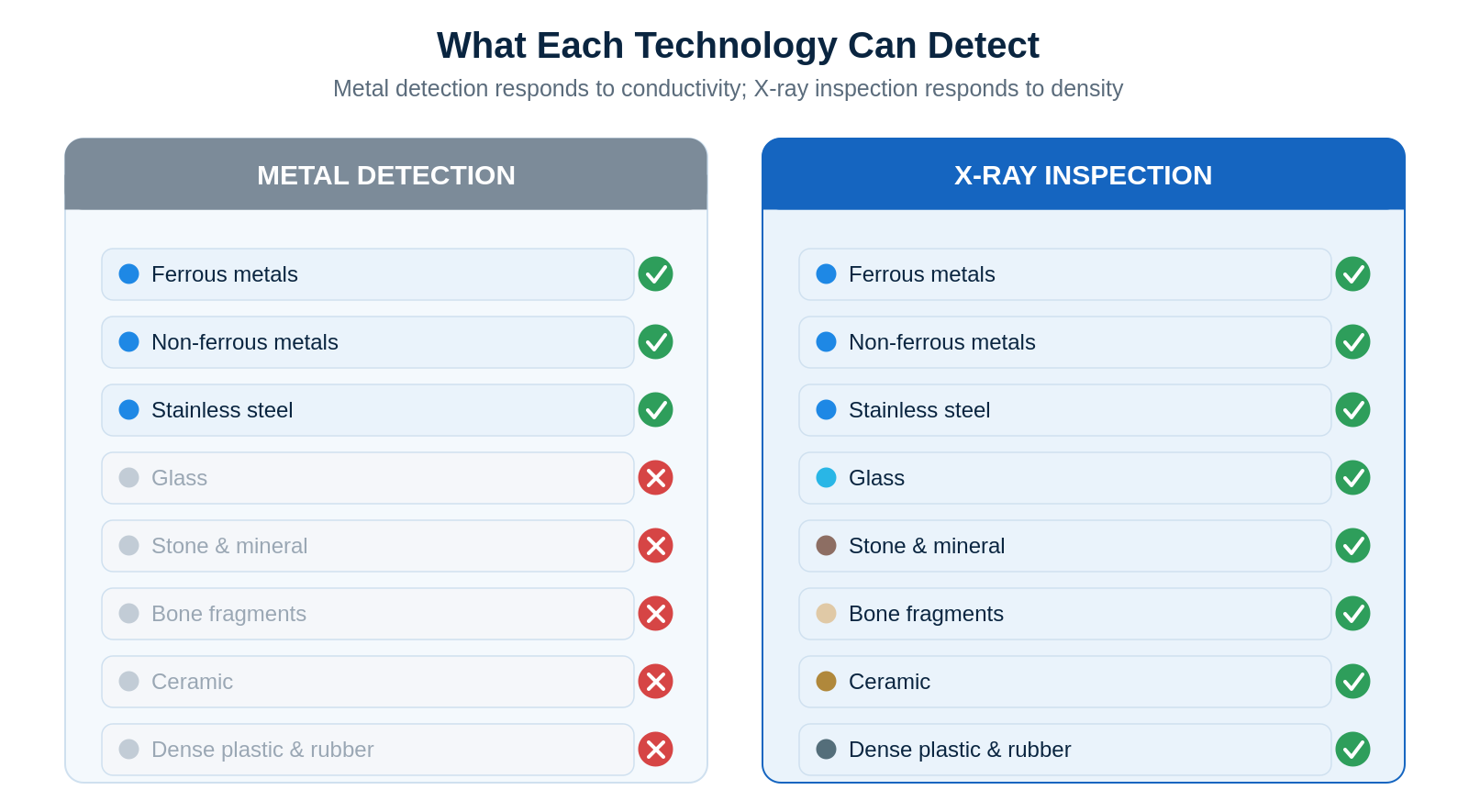
Figure 1. Metal detection covers conductive metals only; X-ray inspection extends to non-metallic contaminants.
The Growing Challenge of Foreign Material Contamination
Foreign object contamination can occur at virtually every stage of food production.
Potential contamination sources include:
· Raw material harvesting
· Ingredient transportation
· Processing equipment wear
· Packaging operations
· Human handling
· Facility maintenance activities
While metal fragments often originate from machinery wear, other contaminants may enter the production stream through different routes.
Examples include:
· Stones from agricultural harvesting
· Glass from containers or lighting fixtures
· Bone fragments in meat and seafood products
· Ceramic particles from processing equipment
· Dense rubber pieces from seals and gaskets
· Calcified materials and mineral deposits
Many of these contaminants cannot be detected by traditional metal detectors.
How Metal Detectors Detect Contaminants
Metal detectors operate by generating an electromagnetic field.
When a conductive metal object passes through the field, it creates a disturbance that triggers an alarm or rejection mechanism.
This technology is highly effective for detecting:
· Ferrous metals
· Non-ferrous metals
· Stainless steel contaminants
However, metal detectors only respond to conductive materials.
If a contaminant is not metallic, the metal detector simply cannot detect it, regardless of its size.
This limitation becomes increasingly important as manufacturers seek comprehensive protection against a wider range of foreign materials.
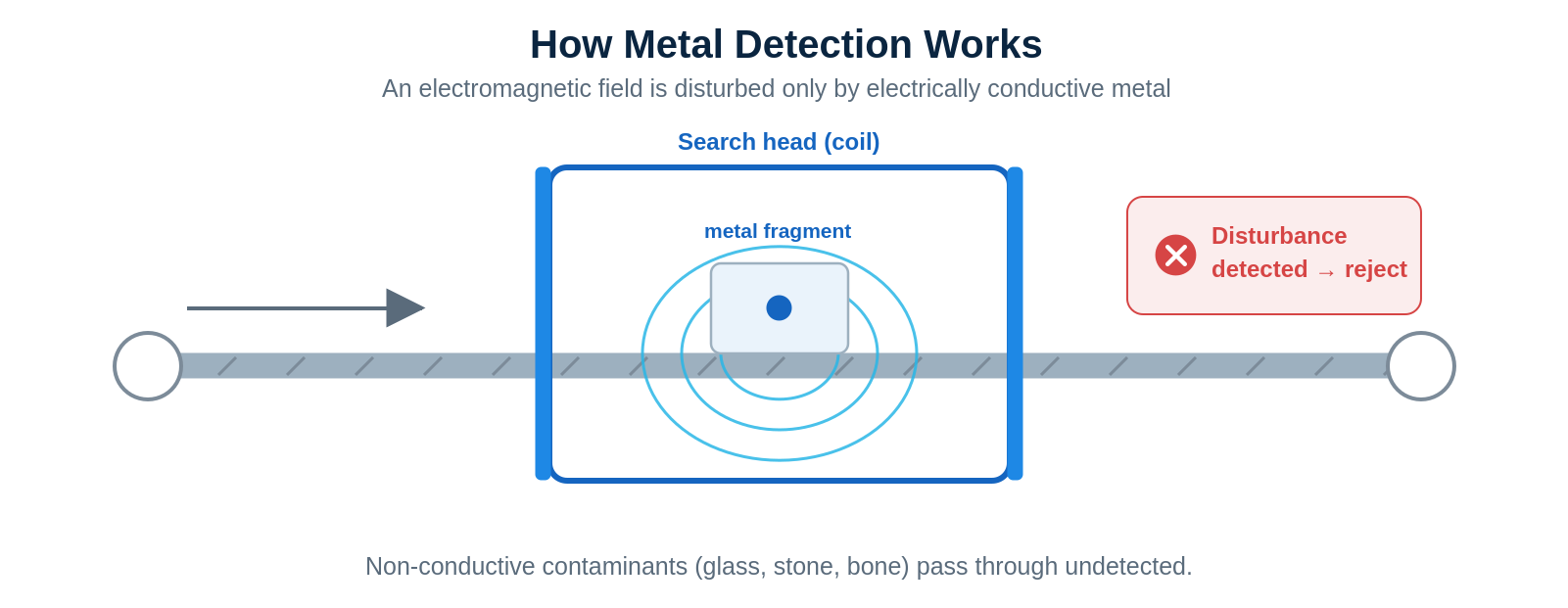
Figure 2. Metal detectors respond only to electrically conductive metals.
How X-Ray Inspection Works
X-ray inspection operates on an entirely different principle.
Instead of measuring conductivity, X-ray systems analyze differences in material density and X-ray absorption characteristics.
As products pass through an X-ray beam, the system captures an image showing how much radiation is absorbed by various materials within the package.
Denser materials absorb more X-ray energy and appear differently than surrounding product material.
Advanced software algorithms analyze these density variations to identify potential contaminants.
Because the technology is based on density rather than conductivity, X-ray systems can detect a much broader range of foreign materials.
Detecting Glass Contaminants
Glass contamination represents one of the most serious food safety risks.
Glass fragments can originate from:
· Broken jars
· Damaged light fixtures
· Inspection windows
· Facility infrastructure
Even relatively small glass fragments can cause severe injuries if consumed.
Since glass is not conductive, metal detectors cannot detect it.
X-ray systems, however, can often identify glass because its density differs significantly from most food products.
This capability makes X-ray inspection particularly valuable for manufacturers producing:
· Sauces
· Dairy products
· Beverages
· Baby food
· Ready meals
In these applications, glass detection may be just as important as metal detection.
Detecting Stone and Mineral Contaminants
Stone contamination remains a common challenge in agricultural products.
Small stones may enter the production process during harvesting or transportation of raw materials such as:
· Vegetables
· Fruits
· Nuts
· Coffee beans
· Grains
· Seafood
While processing equipment removes many contaminants, some may remain in the product stream.
Metal detectors cannot identify these materials because they lack electrical conductivity.
X-ray systems often detect stones effectively due to their relatively high density compared with surrounding food products.
This capability helps reduce customer complaints and protects brand reputation.
Bone Detection in Meat and Seafood Processing
Bone fragments are among the most challenging contaminants in food processing.
Consumers increasingly purchase:
· Boneless chicken
· Deboned fish fillets
· Processed meat products
Even small bone fragments can create safety concerns and generate costly recalls.
Because bones are not metallic, metal detectors provide no protection against this contamination risk.
X-ray inspection systems are widely used in meat and seafood processing because they can often detect bone fragments based on density differences.
Advanced systems can identify:
· Chicken bones
· Fish bones
· Pork bone fragments
· Calcified materials
Bone detection capabilities continue to improve as image processing software and AI algorithms become more sophisticated.
Detecting Ceramic and Dense Rubber Contaminants
Food processing equipment contains numerous components that can deteriorate over time.
Examples include:
· Ceramic machine parts
· Conveyor components
· Rubber seals
· Gaskets
· Wear-resistant coatings
If these components become damaged, fragments may enter the product stream.
Metal detectors are unable to detect most of these materials.
X-ray systems may identify dense ceramic and rubber contaminants when sufficient density contrast exists between the foreign material and the product being inspected.
Although detection performance varies depending on product characteristics, X-ray technology generally offers broader protection than metal detection alone.
Packaging Flexibility
Another significant advantage of X-ray inspection is its compatibility with modern packaging formats.
Metal detectors often face challenges when products are packaged in:
· Aluminum foil trays
· Metallized films
· Metal containers
X-ray systems typically inspect these packages without major performance limitations.
This flexibility allows manufacturers to maintain food safety standards while adopting packaging formats that improve shelf life, convenience, and sustainability.
Additional Quality Control Benefits
Modern X-ray systems can perform more than contaminant detection.
Many manufacturers utilize X-ray technology for:
· Missing component detection
· Fill level inspection
· Product count verification
· Package integrity inspection
· Mass estimation
These additional capabilities can improve production efficiency while enhancing product quality control.
Metal detectors generally focus exclusively on metal contamination detection.
As a result, X-ray systems often provide greater overall value for manufacturers seeking multiple inspection functions within a single platform.
Conclusion
Metal contamination remains an important food safety concern, but it is only one of many foreign material risks facing today’s food manufacturers. Glass, stone, bone fragments, ceramics, and dense rubber contaminants can all enter the food production process and potentially reach consumers if not properly controlled.
While metal detectors continue to play an important role in food inspection programs, their capabilities are limited to conductive metallic materials. X-ray inspection systems expand detection capabilities by utilizing density-based analysis, allowing manufacturers to identify a much wider range of contaminants.
For companies seeking comprehensive foreign object detection, especially in complex products and packaging formats, X-ray inspection provides a powerful tool for improving food safety, protecting brand reputation, and meeting increasingly demanding quality standards.

Related Articles
-
 Jun-04-2026
RaymanTech X-ray Inspection Systems: The Complete Guide to a Smarter, Safer Production Line
When a single shard of glass, a fragment of bone, or an unnoticed plastic tie can trigger a multimillion-dollar recall and shatter consumer trust, food manufacturers can no longer rely on yesterday’s detection technology. RaymanTech has built an entire ecosystem of X-ray inspection solutions that go far beyond traditional metal detectors, delivering density-based, shape-aware, AI-enhanced inspection across every product format imaginable.learn more -
 Jun-04-2026
Introduction to RaymanTech Optical Sorters for Farm Products and Food Processors
RaymanTech, as a leading provider of inspection and sorting solutions, has developed a comprehensive optical sorter portfolio that now serves both farm-product applications and food-processing environments. While farm-product sorters focus on capacity, adaptability, and raw-material variability, food-processor-grade sorters must also incorporate high IP protection, robust stainless-steel construction, sanitary design, and harsh washdown compatibility.learn more -
 Jun-04-2026
How Safe is X-ray Inspection of Food?
Consumers and manufacturers alike worry about contamination in food – broken glass, metal fragments, plastic or stone – entering a product and harming someone or prompting a recall. X-ray inspection systems have become a key solution: conveyors carrying packaged or unpackaged food pass through a shielded X-ray machine that “sees” inside each item. This technology complements traditional metal detectors and manual checks to catch a wider range of hazards. Importantly, extensive research and industry experience show that food X-ray inspection is extremely safe. Nearly everything we eat – from spices to snacks – is X-rayed at some point during production, and regulatory bodies (like the FDA) report “no known adverse effects” from the low-dose X-ray scans used in food plants.learn more




Follow us:


